Apr 8, 2009

wondrous words

Some of the words I have for this week are from the end of Emma, the rest are from the book I just finished, Sand. Quite a difference in subject and theme- from Victorian drawing rooms to the American West and cowboy lingo!

From Emma:

Conundrum-"Agreed, agreed. I am making a conundrum. How will a conundrum reckon?"
Definition: a riddle whose answer is (or involves) a pun

Acrostic- "I had an acrostic once sent to me upon my own name which I was not at all pleased with."
Definition: a poem or verse where the first (or last) letter of each line forms a word or phrase

Ostler- "... when Mr. Elton came back, he told us what John the ostler had been telling him..."
Definition: a stableman at an inn (I remember this word now, from Black Beauty)

Extenuation- "Let us wait, therefore, for this letter. It may bring many extenuations."
Definition: to excuse a fault (archaic meaning, the more common definition is to make something thin or stretched)

From Sand:

Nubbin- "Sometimes tho, he thought, he sure would rap them hands of his and make him let go of the nubbin."
Definition: a short, projecting part (here the saddle horn)

Rowel- "...and with a well placed rowel against the shortribs of that horse, lined him out from the one spot and set him going for other sods on a long crowhopping lope."
Definition: a sharp-toothed wheel on a spur

Senatorium- "And another thing, this camp is no riding academy, nor senatorium."
Definition: a resort for the improvement of one's health

Whang, Marlin spike- "There was rawhide hobbles, a marlin spike, a few strips of whang leather which, Skip had told him, was handy to mend things with."
M-S- a pointed metal spike used to separate rope strands while splicing
W- a thong or whip made of hide or leather

Hackamore- "Then, amongst other odds and ends, was a hackamore, a rope full of the knots which the Kid had started teaching him to tie...."
Definition- a halter or bridle with no bit, having a noose to tighten around the nose or a wide band that can be lowered over the horse's eyes, used in breaking to halter

Soogan- " 'Well, I guess it's time for me to hit the soogans,' he says"
Definition: a bedroll

Latigo- "Ropes are muddy and stiff, so are the latigoes and everything else a cowboy touches."
Definition: a strap that tigthens the saddle girth

Queer- "There been just a snag which come near to queering everything."
Definition: slang for to ruin or thwart

Visit Bermudaonion's Weblog to see what new words others have found this week.

Apr 7, 2009

No Man Knows My History

by Fawn M. Brodie

This is a very in-depth biography of Joseph Smith, the founder of the Church of Jesus Christ of Latter-Day-Saints (also known as Mormon). It's an incredibly long book. I remember struggling to read it, not only because of the length, and the (often tedious to me) numerous historical facts, but because it brought a lot of questions to my mind. This book is crammed with stuff they certainly don't teach you in sunday school. As far as I can judge, it is very well researched, and the narrative style makes the information fairly easy to absorb, taken at a slow, methodical pace. The main quip I had with this book was that beyond presenting all the facts she could dig up about Joseph Smith's life, Brodie also tried to reconstruct what he might have been thinking or feeling, what motivations he had, delving into his very psyche. That felt rather presumptuous to me. How could she know what he'd been thinking? It becomes pretty clear through reading No Man Knows My History that Brodie doesn't believe Smith was a prophet, but at the same time the pages resonate with her admiration and even respect for this man. Even if you doubt his claims, there is no questioning that he was a charismatic leader, full of passion and energy, able to inspire others and with a singularly curious outlook on life. That's all I'm going to say about this book, as there's a plethora of other reviews out there, many of them long, detailed, and heated in opinion. Go ahead and see what a few others thought (links below).

Rating: 3/5                      576 pages, 1945

More opinions at the Wiki article

winner!

.
The winner of my bookmarks giveaway is Nymeth! Hey, Nymeth, some
tigers are coming your way!!

Apr 6, 2009

My Old Man and the Sea

a father and son sail around Cape Horn
by David and Daniel Hays

A man and his son went on a 17,000-mile sailing adventure around Cape Horn, in a 25-foot boat they built themselves. The dangerous route they chose had never before been completed by a boat under 3o feet. Instead of sticking to the safety of modern gadgets and technology, they used old-fashioned sailing methods. And they took along a cat (who seemed to always be either sick, or causing trouble). They visited many interesting and remote ports and faced ugly weather (including hurricanes), getting lost due to navigation errors, and the strain of keeping their relationship intact in the confines of the small boat for days on end at sea (lots of fights). The book is written in alternating voices, pulled from the Hays' journal entries. They're not always complimentary of each other, and I had to wonder sometimes what they thought, each seeing the others' opinion (often uncomplimentary) of himself in print. They made a lot of mistakes, and freely admitted their errors- some I didn't realize the gravity of, not having ever gone sailing myself- others hit me with the danger and I held my breath to see how they'd scrape out of it alive. My Old Man and the Sea is a blast of a read- full of adventure, humor and wry observations on the father-son relationship. I felt sorry for the poor cat. He was no sailor!

Rating: 3/5                         223 pages, 1995

Apr 3, 2009

The Secret Life of the Unborn Child

by Thomas Verny

Here's another book I read way back when, about pregnancy. The Secret Life of the Unborn Child was written back when people were just beginning to question the routine use of technology in childbirth, and delves into ideas about how things experienced by the baby before or during birth, can affect it (positively or adversely) for life. It was really interesting to read about how the baby develops and all the things infants can sense while in the womb (light, sounds, etc). I think it's amazing that unborn babies can learn to recognize their parents' voices, or even certain melodies. I'm not sure if that means they can actually form memories while in the womb, like Verny claims. And other of his theories about how children can be emotionally scarred by medical interventions seemed rather far-fetched. I found the book to be both very intriguing, and worth of skepticism. I'm pretty sure many of the ideas in it have been further studied nowdays, so if you open its pages, read with a heavy dose of salt (and wonder).

Rating: 3/5                       256 pages, 1982

Apr 2, 2009

Emma

by Jane Austen

What to say about Emma. If I had not been reading this book for a challenge, I would have given up before page 20. And it did not get really interesting for me until about page 300! Even then, I could have put it down at any time. So I have some thanks to give to the 9 for '09 Challenge for stretching my brain with this one. As I did not really like it, I don't want to say much about it, and leave it to other bloggers (links below) to give better criticism, analysis and praise. To be short: Emma is about a young woman in 19th century England, whose greatest concern is who her friends will marry. She doesn't ever want to marry herself, but gets all involved in matching up her friends- and nothing goes as she thinks it will. In the end, everyone ends up being in love with someone other than who we thought- including Emma herself. Oh, and her pet project was to take a lower-class girl, Harriet, and try to educate and culture her, then make her a match with a gentleman. I'm glad it ended up well for Harriet, I was feeling sorry for her near the end.

On the whole, I found Emma incredibly dull. I've read other books (in my school days) set in this time period, even with similar themes, which have far more interesting descriptions and events. Emma is full of musings and plans, veiled conversations and quiet get-togethers. It's all talk and letters and nothing much seems to happen. (Except for one scene where two ladies walking alone were terrified out of their wits by a band of begging gypsies). The occasional quaint spelling and view of a by-gone way of life was interesting, but that was about it. I admit my mind wandered a lot, as I struggled at almost every sitting to keep from falling asleep over the book- so I probably missed a lot of subtle humor and clever plot things. But I'm not itching to try it again. After Madame Bovary and this one, I'm starting to think that classics just aren't my cup of tea anymore.

This book reminded me of The Importance of Being Earnest, although I read that so long ago (high school) I can hardly recall what it's about. And- this may sound silly- at the end I couldn't help thinking of the Harry Potter books- because at the close of every one of those you find that some of the characters had quite different intentions than you thought all along- or at least, than the main character thought.

Rating: 2/5                              367 pages, 1816

More opinions at:
Trish's Reading Nook
Becky's Book Reviews
Pages of the Mind
Faith786
inr_ainbows
Mari Reads
Things Mean a Lot

Apr 1, 2009

wondrous words

This week all my new words came from Emma. Even if I'm not enjoying the book, it's expanding my vocabulary! A lot of them are so archaic, though, I fear I'll never use them. O well, at least they'll be recognizable next time I meet them in print.

Valetudinarian- "The evil of the actual disparity in their ages was much increased by his constitution and habits; for having been a valetudinarian all his life, without activity of mind or body, he was a much older man in ways than in years..."
Definition: a sickly or weak person, constantly concerned with their own health

Mizzle- "Ever since the day that Miss Taylor and I met with him in Broadway-lane, when, because it began to mizzle, he darted away with so much gallantry, and borrowed two umbrellas for us..."
Definition: rain in a fine mist, drizzle

Cockade- "Here is my sketch of the fourth, who was a baby... and it is as strong a likeness of his cockade as you would wish to see."
Definition: a feather or rosette on a hat

Cavil- "Her eyes, a deep grey, with dark eye-lashes and eye-brows, had never been denied their praise, but the skin, which she had been used to cavil at, as wanting colour, had a clearness and delicacy which really needed no fuller bloom."
Definition: to find fault with, or make a trivial objection

Recontre- "...the history which he had to give Mrs. Cole of the rise and progress of the affair was so glorious- the steps so quick from the accidental recontre, to the dinner at Mrs. Green's, and the party at Mrs. Brown's..."
Definition: an unplanned meeting

Tippet- "Jane, Jane, my dear Jane, where are you? Here is your tippet. Mrs. Weston begs you to put on your tippet. She says she is afraid there will be draughts in the passage."
Definition: a woman's fur shoulder cape with hanging ends

There were also a lot of words I knew, but whose spelling gave them unfamiliar faces: chuse for choose, foretel for foretell, beaufet for buffet, stopt for stopped, sopha for sofa, surprize for surprise, huswife for housewife, etc. I'm not sure which of these words have different spellings because they're British, or just because spelling wasn't standardized back in the 1800's? But they made for interesting reading!

For more wondrous words, visit the host of this meme at Bermudaonion's Weblog.

Mar 31, 2009

bookmarks giveaway!

win two free bookmarks
I'm giving away these two tiger bookmarks! If you'd like a chance to win, just leave a comment here. A name will be drawn from the hat on tuesday, 4/7.

Mar 30, 2009

Smoky

the Cowhorse
by Will James

This book is about the life of a ranch horse. Smoky was born free on the range in the wild west, and wandered about just living his life amongst the wide open spaces and half-wild range cattle, until at the age of four he was caught by a cowboy named Clint. The cowboy broke him to ride, and trained him to be a cutting horse, working cattle. They became an excellent, skilled team with deep affection for each other. Halfway through the book drama ensues (beyond the everyday excitement of rounding up cattle) when Smoky is stolen from the outfit by an outlaw. This man continually mistreats the horse, until he becomes mistrusting of and vicious towards people. He becomes a famous bronco in the rodeos, then when that nearly wears him out, is sold again to be hired out from a livery stable, and finally winds up as a plow horse on a farm. By the end of the book, Smoky has been treated so badly by humans that his health is ruined and his life almost over- when in the nick of time he gets rescued by a familiar face from his days back on the ranch.

In many ways this book reminded me a lot of Black Beauty. It had very similar themes- showing how the horse grew up relatively free, his experiences being broken in and trained to work, several relatively happy years being properly cared for, and then going through a string of ignorant or cruel people who mistreat him, until at the end he is found by a friend and nursed back to health. It shows in great detail how the horse feels and perceives his situations, and how he can excel at a skill working in harmony with humans, or suffer terribly at their hands. The section of the book that describes his life as a rodeo horse made me think of When the Legends Die (although in that case it was the man who became broken and bitter towards men). The one thing I found difficult about Smoky is its language. Will James lived and worked as a cowboy for much of his life, and the grammar and spelling in his book, while adding some authentic flavor of cowboy dialect and culture, was at first very awkward to read. It took me some time to get used to it. I haven't read many books about the "wild west", but this one certainly brings it alive for me- especially the vivid descriptions of the scenery. You can almost taste the dust in your mouth.

Rating: 4/5          263 pages, 1926

More opinions at:
Bookin' It
Children's Lit and Other Bits
The Newbery Project
All the Newberys
Read the Newberys

Mar 29, 2009

more books!

I have found it. The book bonanza!! I discovered the sale where all the books culled from local school libraries end up. And they don't have this sale once a year like the one I used to frequent back in Seattle, they have it once a week. The prices are fantastic (if you buy a lot) sixteen cents a book! I simply cannot resist, and yesterday my personal collection groaned to a whopping total of 602 (yikes). I've vowed not to go more than once a month... Here's what I hauled home recently:

The Summer Country- It looked Arthurian. So I picked it up.
The Quiet Room- Never heard of this one, but I do find books about kids with mental illness interesting.
Love, War and Circuses- about "the Age-Old Relationship Between Elephants and Man."
The Dolphin Doctor- Dolphins are fascinating, and so are veterinarian books (to me).
The Secret Language of Life- "How Animals and Plants Feel and Communicate." Plants can feel? Hm. This should be interesting.
Liquid Land- "A Journey Through the Florida Everglades." That's all I know.
Return to Wild America- "A Yearlong Search for the Continent's Natural Soul" Ditto.
Beasts of Eden- I've had an abiding curiosity about prehistoric mammals since reading Ratha's Creature and its kin.
The Lost Years of Merlin- This book caught my eye because I had Nymeth's review in mind.
Seaworthy- Another book about an adventurer who took a raft across the ocean! This guy followed the fame of Kon-Tiki, just to see if he could do it.
Infidel- This one has been on my list a while. I don't remember where I first heard of it.
Raccoons: A Natural History- Hopefully better than Raccoons Are the Brightest People.
Wolf Totem- For some reason when I read the flyleaf on this book, it makes me think of Ordinary Wolves. I hope it's as good!

And I always drool over coffee-table type books about nature, so I grabbed all these. I really hope the reading is as good as the pictures look:
About pandas, orcas, alligators and crocs, lions, penguins, greylag geese and siberian tigers!

My only dismay was the condition of some of the books I found. True, most are library discards- only a few are clean, donated books. (They have tons of other stuff at the sales, too- old computers, office furniture, we brought home a standing kid's easel for my daughter). I'm used to buying ex-library books, so I don't mind the eyesore of library stamps or the task of removing the stickers. And many of the books aren't worn-out or broken, but in excellent condition (I'm guessing discarded because of low demand- just not popular). A lot of them had the library barcodes blacked out with fresh ink- that I can also deal with. But some had been deliberately damaged in order to remove the library labels. I found lots of hardbacks with gaping square holes cut out of the bottom of the spine and a back piece of the cover. This isn't too bad- you can just remove the dust jacket, after all. But there were some paperbacks with the stickers cut out of their covers, too! To me, that's just as bad as having the cover torn completely off- the book might as well go in the recycling bin. I don't mind a book on my shelves that has library stickers, or "discard" stamps or old card pockets inside- they're still perfectly readable and look nice on the shelf. But I can't imagine who would want to keep a book that had a hole in its skin like this:

Would you?

Mar 28, 2009

Letters From a Nut

by Ted L. Nancy

I sorely needed a break from Emma, so I breezed through this amusing little book. I don't usually read stuff that's strictly humor, and this is certainly like nothing I've ever encountered before. The author (I'm assuming he writes under a pseudonym) makes up letters pretending to be various wacky people in distress, or having odd requests, or wanting to make marketing suggestions- to huge corporations, famous people, large establishments, ritzy hotels, etc. The crazy thing is that then he mails them off- and more often than not, gets a response that tries seriously to deal with the customer service problem he presents- although I have to think many of the people who sat down to write him a reply were sniggering to themselves or scowling, and many are left unanswered, or get a flat refusal.

Some of Nancy's pretenses in Letters From a Nut? He saw a mannequin in a Nordstrom's window, thinks it looks just like his deceased neighbor, and wants to purchase it, to present to the bereaved family. He claims to have worked in a Florida hotel in 1960, where while cleaning a room he acquired Mickey Mantle's toenail clippings and now wants to send them to the National Baseball Hall of Fame Museum. He belongs to a nudity club and wants to attend an all-nude gambling tournament in Las Vegas. He is traveling to a resort and wants to bring his own vending machine (or ice-making machine, or stuffed easy chair, etc.) into his room. (All of these examples got replies). My favorite was the one about the ants. (You'll have to read the book.)

I have to admit some of the premises were rather lame, and a lot of them are repeated with only slight variations. But I read at least half of the letters out loud to my husband, and we laughed ourselves silly over it.

I read this book for the 9 for '09 Challenge. It's been on my bookshelf since around the time I was dating my husband- over four years ago. I won it at a game night with some church friends. I was tickled pink at having won a book- and my roommate at the time wanted to swap prizes with me- you won't even like that book! she protested. True, at the time I had no idea what it was, and maybe back then I wouldn't have appreciated the humor. But I'm glad to say that even though it took me a long time to get around to reading this book, I did like it.

Rating: 3/5          192 pages, 1997

More opinions at:
PhiloBiblos

Mar 27, 2009

Non-Fiction Five Challenge

Okay, I know I used to dismiss challenges "I never do reading challenges!" because I hated feeling obligated to read a book that was boring or annoying me (which is what I'm going through right now with Emma, augh!) But I still have all these heaps of books in my bedroom, and I've just found two more challenges that look really cool. So.... I'm signing up for Trish's Non-Fiction Five! Here's the rules:

1.Read 5 non-fiction books during the months of May - September, 2009

2.Read at least one non-fiction book that is different from your other choices

3.If interested, sign up with the link to your NFF Challenge post

At first I was going to do five books about animals, and one different, but then I decided that's not really a challenge for me, since I already read tons of animal books. So here's my picks (off my shelf):

Ice Bound by Dr. Jerri Nielsen- I won this book in a givewaway from someone, but now I can't remember who it was. If you gave away this book on your blog (months and months ago) can you remind me?

Invincible by Vince Papale- This one's about a bartender who became an NFL football player at age 30. A tribute to my husband's love for football.

It's Not About the Bike by Lance Armstrong- I don't know much about Armstrong, but when I found this one at a library sale it looked interesting.

The Ra Expeditions by Thor Heyerdahl- I enjoyed reading Kon-Tiki so much, I ordered this one from Paperback Swap as soon as I could find it.

The Other End of the Leash by Patricia McConnell- This one has been on my TBR forever. I could never find a copy at the library or to swap for, but finally picked up one at a local surplus sale a few weeks ago. I was so thrilled!

Mar 26, 2009

Meme: Best Worst Book

from Booking Through Thursday, the flip side of last week's question:

What’s the best ‘worst’ book you’ve ever read — the one you like despite some negative reviews or features?

I can't really think of any books I've liked that got lots of bad reviews. I have plenty of favorites that seem to be kind of obscure or unpopular- like Call It Sleep, The Bone People, The Lute Player.... Oh, and I do still like The Clan of the Cave Bear (read it at least four or five times) even though it's sexist, the protagonist is practically a Neanderthal superwoman and a lot of the historical details are totally inaccurate. (The rest of the series was junk, though. I struggled through The Valley of Horses and quit a few chapters into The Mammoth Hunters. Too much sex, flat characters, pointless plots).

As for a book I really liked in spite of negative features, I still have admiration for Richard Monaco's books Parsival and The Grail War, even though I found a lot of the details distasteful, nothing admirable in the characters, and the storyline wandering to the point of confusion, there was just something about the descriptions and the writing that enthralled me. I continue to puzzle over those books and wonder what to do with them- I can't imagine reading them again, yet I can't quite bring myself to pull them off my shelf for good, either.

Mar 25, 2009

Making Things Grow Outdoors

by Thalassa Cruso

I thoroughly enjoyed reading this book. Even though it is a bit outdated, the basic advice on plant care is very applicable. Thalassa Cruso writes from her own experience gardening in her yard, so the information has its limits, but as her New England climate is similar to mine and she discusses many of the things I am trying to improve in my own yard, I found it very helpful. True, I'm mostly enthusiastic about growing vegetables right now, and Cruso only addresses that in one of the final chapters of the book, but she's given me the encouragement I need to go ahead and try some new things. She discusses all the basics, from simple landscaping design (and when to call in the experts) to making your own compost and improving the soil, successfully overwintering flowering bulbs (to get more than one season's bloom out of them), lawn care, growing hedges, establishing shrub borders, controlling weeds, managing ground covers and the essentials of gardening tools and workspace. Although her growing experiments aren't as prevelant in this book as in To Everything There is a Season, she still shares many of her mistakes and failed attempts as well as innovative ways she managed plants. I appreciated that she talks about when to simply give up on a plant, make compromises in how perfect the yard looks compared to how much work it takes, and how to find positives in negative situations you can't control.

It was interesting to see some gardening culture she brought with her from England, and her comparisons of the two climates. I didn't know, for example, that English climate is perfect for grasses, so there it's easy to have a lush, immaculate lawn. I learned the difference between a sickle and a scythe (thought I doubt I'll ever have to use either one!) and that a flame gun can be effective in controlling weeds on driveways (this seems to me more dangerous than the power tools I fear to use!) Cruso is very conscientious about the dangers of pesticides and chemical fertilizers, so she has lots of other methods for getting healthy plants using safe and practical methods. Overall, I found Making Things Grow Outdoors to be an exellent resource, and the friendly style in which it is written makes it easy to absorb all the information.

Rating: 4/5 ........ 350 pages, 1971

More opinions at:
Perennial Passion

wondrous words


I found some new gardening terms this week from reading Making Things Grow Outdoors:

Tilth: "This, by the way, is what the experts mean when they tell us to keep the soil rich and in good tilth."
Tilth is the rough texture in soil

Spit, Humus: "If you have not found it [subsoil] by the time you have gone down two spits, the garden has an excellent depth of humus..."
S- the depth of a shovel blade
H- dark brown or black substance consisting of decayed animal and plant matter in soil

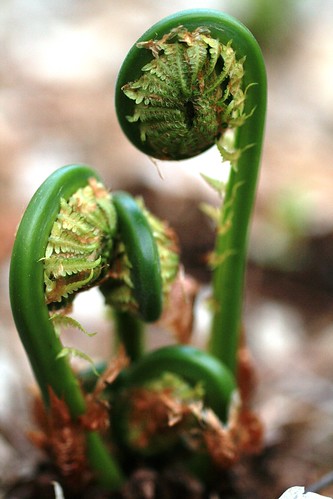
Crozier: "A whole generation of so-called gardeners are living in houses surrounded by land in which beans never uncurl like croziers from the soil..."
The curled end of a young frond, or a crook on the end of a bishop's staff

Visit the host of Wondrous Words Wednesday at Bermudaonion's Weblog.

Mar 24, 2009

Wolf Children and the Problem of Human Nature

by Lucien Malson

Another book I read about feral children several years ago. Wolf Children and the Problem of Human Nature examines numerous cases of "feral children" who for the most part were abandoned at a young age and left to fend for themselves in the wild before being discovered by someone and brought back into civilization. Unlike the other books I read which tried to determine if these children could have been raised by animals and picked apart which aspects of human behavior are learned or intuitive; this book focuses (more practically, I felt) on how the lack of social contact at such an early age affects the overall development of the child. In most cases it was pretty severe and almost irreversible. Most of the accounts were very brief with little details available; some editions of this book also include the entire text of The Wild Boy of Aveyron, as it is one of the more well-documented accounts. I expected this book to be very dry, technical reading, but was surprised to find that it felt more like reading an essay, and the writing style reminded me a lot of Konrad Lorenz.

Rating: 3/5                          179 pages, 1972

winners!

Announcing the winners of my Mary Higgins Clark giveaway:

Debs Desk won No Place Like Home

MOMFOREVERANDEVER won Let Me Call You Sweetheart

Happy readers, send me you address and I'll mail out your books!

Mar 23, 2009

mailbox monday

Two books came to me this week, both from Book Mooch (maybe I should make Mailbox Mondays a biweekly event, that might be more exciting). I found a new copy of Kon-Tiki to replace my old stinky one (the one I read was actually a borrow paperback copy), and got another book Heyerdahl wrote about his experiences living on the Polynesian Islands before he made his famous raft trip, Fatu-Hiva: Back to Nature. I'm really eager to read this one!

Visit The Printed Page to see what came in everyone else's mailbox!

* Update at 5:30 pm: I just got one more, by the same author! The Ra Expeditions, in which Heyerdahl attempted to sail from Egypt to Easter Island on a raft made out of reeds. More adventures on the seas.

Mar 21, 2009

Raccoons Are the Brightest People

by Sterling North

I always liked Rascal, which I read at a young age, so when I found this book at the local library as an adult, I picked it up with avid curiosity. In Raccoons Are the Brightest People, Sterling North describes the local wildlife that visited his backyard, his observations of and interactions with them. Most of the photos in the book are of raccoons, but he also talks about deer, foxes, birds, and other animals. While I enjoyed reading about his personal experiences with wildlife, I was actually disappointed at how much of the book contained material by other people. North said very little himself about raccoons in this book, but shared dozens of anecdotes and observations made by others. I felt like the voices of others overshadowed North's own, and it really lessened the value of this reading experience for me. If he'd left out the stories gathered from his friends and acquaintances, his own words would have barely been enough to add a chapter or two onto the end of Rascal. At least, that was my impression.

I find it curious that the title font on the cover of this book is a near match for that on My Beaver Colony. It must have been a popular look in the sixties. Or the books had the same designer... Anyway, this guy really did love raccoons.

Rating: 2/5         192 pages, 1996

Anyone else written about this book? I'll add your link.

Mar 20, 2009

Beauty

a retelling of the story of Beauty and the Beast
by Robin McKinley

Beauty is the first McKinley book I ever read, way back when I was about fourteen. And I fell in love with it. I can't count how many times I read it over again. I think I was first intrigued by how incongruous the title and the girl pictured on the cover of my old paperback (shown here) seemed- she's just so homely. Even one of my school friends remarked: wow, that girl's ugly (in a totally dismissive voice). By that point I was so enthralled by the book I felt indignant at her judgment of it by its cover!

It's quickly explained in the story that Beauty's given name is actually Honour, but when she learned at five years old what it meant, she said "Huh, I'd rather be Beauty!" and the nickname stuck. Compared to her two pretty, graceful sisters, Beauty was the tomboy of the family. She preferred working with her hands, loved studying books, and faced everything with a very down-to-earth attitude. So when her father lost his fortune and the family had to move from the city to a humble little village, Beauty tried to see the adventure in it all. Far from being intimidated by the dark forest their house butted up against, rumored to harbor an enchanted castle and a ferocious beast, Beauty was curious. When her father (as the familiar fairy tale goes) became lost in the forest and enraged the beast, Beauty offered herself up and went to live in the magic castle. The mysterious enchantments of the castle and Beauty's reactions to them are so well-described in this book. Floating candlesticks, dishes that serve themselves, self-pruning roses, and a library full of books from the future! At first, of course, she is frightened, but gradually she becomes bolder and grows used to the strangeness of her surroundings and even the fearsome Beast himself. I loved how she asserted herself, arguing with the invisible servants and trying to accustom her terrified horse to the Beast's presence. The love story here unfolds very gradually, Beauty and her Beast slowly growing more and more comfortable with each other until they find they are good friends, and perhaps something more. I also liked that the good first third of the book is about her family, how they face their initial hardships and settle into their new surroundings. It established the characters as very real people; and I was glad that her family members reappeared later in the story. The final scene was a grand confusion, but I didn't mind much.

I thought of this book today because my four-year-old was watching the Disney version. My husband was unfamiliar with the fairy tale when he first watched the film with her, and I remember him asking me afterward: but at what point did Beauty fall in love with the Beast? He couldn't pinpoint it. We talked for a bit about his gradual transformation into a more well-behaved, friendly persona, but then I looked at him sideways and said "I know the moment when she fell in love with him."
"When?"
"It was when he gave her the library."
"Ah! Don't tell me that!"
And what a library it was. I think my dream library looks like the one in the Beast's castle.

Rating: 5/5 ........ 247 pages, 1978

More opinions at:
Bean Bag Books
Things Mean A Lot
An Adventure in Reading
Rhinoa's Ramblings
Book Clutter

Mar 19, 2009

Meme: Worst Best Book

From Booking Through Thursday, suggested by Janet:

What’s the worst ‘best’ book you’ve ever read — the one everyone says is so great, but you can’t figure out why?


Well, if we're talking about classics, two jump right to mind: The Great Gatsby- I couldn't stand that one. And Madame Bovary, it just felt so tedious and the characters unlikeable. But I didn't finish either one of those, so I don't know if they really count.

Of the more popular titles, I really didn't like My Sister's Keeper (or anything Picoult) but that's no news here. I didn't care much for Cat's Eye, though I can see why others loved it. And although I recognize that Truman Capote is a great author, I fail to appreciate his stuff. Most recently, I was pretty disappointed in Chalice, and a lot of other blogs rave about that one, too.

Wow, I didn't expect to think of so many. I guess just like it's hard to think of the one all-time favorite book, it's hard to pick out the worst one, too!

Mar 18, 2009

Chalice

by Robin McKinley

In a land where magic is commonplace, the natural setting- land, plants, animals, even the weather- is sentient and responds to the people who live in it. Among the ruling body, Chalice is a woman who influences the entire domain through her rituals, incantations and potions stirred into special goblets and presented at ceremonies. Her role is to spread peace, calm and wellbeing through the land, and most importantly, to bind the land and its people together.

The Chalice usually works her magic through a particular liquid medium: water, wine, milk, etc. Mirasol is the first Chalice whose medium is honey. She was living modestly as a beekeeper when unexpectedly chosen as the new Chalice. Mirasol never went through an apprenticeship, so she has to learn everything on her own. What makes her task even more difficult is that the land has been in turmoil for seven years, the ruling body is full of unrest, and the new Master of the land is himself terribly unfit, being called back suddenly from his initiations into priesthood- of Fire. Fire which has become a part of his body so that he is no longer quite human, and strikes fear in all the those around him....

Chalice has probably the most original premise of any fantasy story I've read. The mythology, history and very fabric of the land is pretty complex, and its structure unfolds slowly piece by piece throughout the story. It is one stiff with formal traditions and politics, only slightly sweetened by the presence of honey. I am sorry to say I did not like this book very much. There's very little conversation, and most of the narrative has a musing, inward-looking tone which worked okay for me in Dragonhaven but here was tedious and dull. I did not care much about the characters, and the love story was too subtle to be very interesting. I wish there had been more details about the beekeeping, and I felt frustrated that no explanation was given for the Master's final transformation. Disappointing. My reaction, however, is in the minority, so do visit some of other blogs listed below.

I read this book for the 9 for '09 Challenge. It was for the category of a Free Book; I won it from a giveaway on Presenting Lenore. Thanks, Lenore!

Rating: 2/5          261 pages, 2008

More opinions at:
Sun and Shield                          Librarian DOA
Writing and Ruminating           Krystel's Book Blog
The Book Drop                         Bluecat Books
Jenny's Books                           Em's Bookshelf
Book Nut                                  Deep Thought
Books and Other Thoughts

wondrous words

My wondrous words of the week come from three different books. These new words I found while reading Kon-Tiki:

Cachalot- Use: "Most often they were small porpoises and toothed whales which gamboled about us in large schools on the surface of the water, but now and then there were big cachalots, too..."
Definition: a sperm whale

Spurious- Use: "On this little sailing trip up to the spurious reef we had learned quite a lot about the effectiveness of the centerboards..."
Definition: not genuine; false, invalid or lacking in authenticity

Anemometer- Use:"Herman was out all the time with his anemometer measuring the squalls of gale force..."
Definition: an instrument that measures the force and speed of wind

Polyps- Use: "But this group of islands is also known as the Low or Dangerous Archipelago, because the whole formation has been built up entirely by coral polyps and consists of treacherous submerged reefs..."
Definition: a small sea creature with a hollow cylindrical body and a ring of tentacles around the mouth

Do you know what's crazy about this word? I keep a dream diary. In one years back, I dreamt I was in a long dark room full of saltwater aquariums, and tiny marine creatures were escaping and floating in the air. I was trying to catch them, yelling about "the polyps!" But when I woke up I thought: what the heck is a polyp? I must have met the word before, as I could draw it from the dream (something like this), but consciously I had no idea what it was. (If I can find my old drawing, I'll share it with you.)

Copra- Use: "Teka had gradually acquired the supreme position because he could speak French and count and write, so that the village was not cheated when the schooner came from Tahiti to fetch copra."
Definition: dried coconut flesh

These words I came across in The Sheep Dog:

Scour: Use- "Some milk is good, but too much will cause scour."
Definition: diarrhea in livestock

Mollycoddle: Use- "We don't want to encourage mollycoddling, but we do want to give the pups a chance."
Definition: to be overprotective and indulgent

Wether: Use- "... going so fleet of foot as would outstrip a four-year-old mountain wether."
Definition: a castrated ram

Tup: Use- "A 'clean gather' must be achieved... otherwise some ewes will be missing when the tups go out, and their year's production will be lost."
Definition: a male sheep

Raddle: Use- "... the tups are caught to be fed, and raddled with bright color on their chests to mark the ewes."
Definition: to mark sheep for identification

Speaned: Use- "At this stage some of the lambs may be speaned, and the process of taking the lambs off the ewes causes some of the hardest work of the dog's year."
Definition: to wean

And these words I read in Chalice:

Demesne: Use- "... nearly the entire citizenry of the demesne seemed to have found an excuse to be somewhere in or near the House..."
Definition: realm, domain, estate or landed property

Suborn: Use- "The rods could not lie nor be suborned."
Definition: to bribe or incite (a person) to commit a wrongful act

Crabbed: Use- "...while she was urgently reading all the crabbed and fusty old records she could lay her hands on..."
Definition: difficult to read or understand

Tisane: Use- "If you're going to offer me something to drink, Mirasol, tisane would be nice, but your mead would be better."
Definition: a drink made of leaves, herbs or flowers

Sennight: Use- "Could you say to yourself, 'Yes, here is a break- a roughness, a troubling- that was not here a sennight ago'?"
Definition: a week

Perforce, Volatile: Use- "Last minute changes were destabilising, which was why battlefield cups, which were perforce rare, were also notoriously volatile."
P definition: by necessity, forced by circumstances
V definition: inconstant, fickle; easily evaporating, fleeting

Orotund: Use- "The Grand Seneschal managed to insert an orotund phrase or two..."
Definition: pompous, bombastic; or full of sound

Stooker: Use- "And once, as Mirasol skirted along a freshly cut field, she saw the late stookers lifting and tossing their sheaves."
Definition: one who sets up sheaves of grain in the field

Eligary: Use- "Before the Master had been sent to Fire by his brother, he would have been trained to use a sword, an eligary and a bow..."
I could not find a definition for this word. I'm assuming it's some kind of weapon. Does anyone know it?

Visit Wondrous Words Wednesdays for more newly discovered words!

Mar 17, 2009

Book Giveaway!

Win Two Free Books!Any Mary Higgins Clark fans out there? I'm giving away two of her books, a hardback copy of Let Me Call You Sweetheart and a paperback of No Place Like Home. These books have been loved before, and show some reading wear. You can enter to win one or both of them, just let me know your preference. Leave a comment to enter; blog about this on your site and link back here for an extra chance. Names will be drawn from a hat next tuesday, 3/24. Sorry, only open US residents this time.

A Sending of Dragons

by Jane Yolen

The third in Jane Yolen's Pit Dragon series, this book continues where Heart's Blood left off. Jakkin and his girl Akki are living as fugitives in the mountains, their only company a fast-growing, half-wild brood of young dragons- the offspring of Jakkin's first dragon. They've undergone a transformation that gave them with some of the dragon's powers- including the ability to withstand the desert night's below-freezing temperatures, and to communicate telepathically. But then they encounter a strange, primitive tribe of people who live deep in the mountain caves- and who have also discovered the changes dragons can make in human minds and bodies. These people have lived for generations without speaking, using mental telepathy to bind themselves together. Their society is full of rituals and dark secrets. Jakkin and Akki reluctantly get drawn into their world, finding it hard to resist because on the one hand, they want to rescue the dragons which are being ritually sacrificed by the mountain people, and on the other, they are susceptible to the primitive society's powerful mind-control. If anything, the storyline in A Sending of Dragons is more suspenseful than the previous two books, and it delves even deeper into the exploration of self, and moral questions about how people use dragons on Austar IV.

Thinking about it now, I find it interesting that this series looks so closely at how a society uses its animals- in the first two books, Jakkin didn't like that the dragons were raised for their meat and hides, but had no qualms about fighting them in the betting pits. In this third book, he encounters a society that sacrifices the dragons, but also honors and reveres them. I think if Jakkin had his own way, all the dragons would live wild, free of human control- but then people would barely be able to survive on the forbidding world of Austar IV.

I also couldn't help comparing this series in my mind to Clare Bell's Ratha books. In both series, the main characters encounter another society that is based on group thinking, and have to deal with the threat this difference poses. And both are series I read when I was younger, and have just discovered their continuation as an adult. I was excited to read in a wiki article that Yolen has written a fourth book about the Pit Dragons, called Dragon's Heart, which will be released in May this year. I can't wait to read it!

Rating: 4/5 ........ 312 pages, 1987

More opinions at:
First Blog
Nicole's Book Corner

Mar 16, 2009

The Sheep Dog

its Work and Training
by Tim Longton and Edward Hart

This informative little book is all about border collies. After reading Nop's Trials, The Dogs of Bedlam Farm and Dogs: A New Understanding, I was even more curious about this breed. The Sheep Dog was written by a man who worked sheep in the Lancashire hills and raised and trained his own dogs, always having at least a dozen on the farm. He describes what makes a good sheep dog, how to choose one from a litter, how the young dogs should be raised, and details of their training (fascinating, and very involved!) Longton also explains the workings of sheep dog trials, questions some of the judging standards, and goes into obedience work trials, too. He gives some of the background and history of the International Sheep Dog Society. Midway through the book there is also a chapter describing a year's work for the average sheep dog; the different tasks and conditions they face as the seasons change, working with the sheep during lambing time, breeding, dipping, shearing, sorting for market, etc. One thing I really enjoyed about this book was the numerous little anecdotes about individual dogs, which showed just how much their personalities and abilities can vary. There is a helpful glossary in the back, as the book contains a lot of words particular to the region and occupation. One small flaw I found was that I came across an unfamiliar word in the text, and next to it in partenthesis "see Glossary" but when I turned to the back, this word wasn't included! It was easy to figure out from the context, though.

I read this book for the 9 for '09 Challenge. Almost halfway done!

Rating: 3/5                     124 pages, 1976

mailbox monday

Only one book came to me through the mail this past week:

Send in the Idiots
, by Kamran Nazeer, which I got from Book Mooch. What came through your mailbox this week?

Mar 14, 2009

Kon-Tiki

by Thor Heyerdahl
translated by F.H. Lyon

Wow, this was a great book. It's been a while since I read something so enthralling, that caused continual verbal outbursts of amazement from my usual reading silence. Kon-Tiki is the story of an adventure Heyerdahl set upon to prove a point. In the 1940's this young Norwegian scholar came up with a theory that the South Sea Islands had been settled by peoples from Peru, who crossed the Pacific Ocean on balsawood rafts, traveling on the Humbolt Current. Heyerdahl could not get any scholars to read the papers he wrote summing up his theory, they thought it was so ridiculous. So to prove that it could have been possible, he decided to cross the ocean himself on a raft built in the same manner the indigenous people had used in pre-Columbian times. With five other men, he set out on a 4,300 mile journey across the empty ocean. While the raft itself had no modern fittings, being constructed entirely of natural materials like balsa wood, bamboo, palm leaves, and hemp rope, the crew carried lots of technical instruments in order to keep records, conduct experiments, and keep in touch with the mainland via radio. They were supplied with recently-developed equipment and provisions by the US Army (to test on the voyage) and each member of the crew had a particular speciality- one worked the radio, another was in charge of navigation, etc. They even experimented with two different diets- some of the men ate Army rations, others food the indigenous people would have carried- coconuts, sweet potatoes, etc- and they all supplemented this with fish caught at sea.

It was thrilling to read of their sea journey. The descriptions of their surroundings- the limitless horizon, the huge swells, the impressive weather- is vividly written. It was fascinating to read about the different things they learned by experience- like how to navigate by the stars, or how to steer the raft effectively (it had no motor power, and could not be halted en route). I was astonished to read about them drinking seawater, eating plankton, making ice, and creating a dangerous game of catching sharks (with bare hands) by the tail! And of course, I loved reading about the ocean life they encountered. In addition to whales and many kinds of fish, they saw large squid, giant whale shark, snake mackerel (never before seen live), octopus, flying fish and sea turtles. Many mysterious creatures came up to the surface at night, drawn by the lights on board. I was continually confused by references to dolphins, which here meant mahi-mahi, not the porpise-like mammal I kept picturing. They also had a parrot on board for some time, and his antics were amusing.

Lots of Polynesian culture and history is discussed in this book, and I was fascinated by the explanations of how those huge statues on Easter Island were raised. When the Kon-Tiki finally reached the South Sea Islands, the natives there went crazy with excitement seeing a craft just like those their ancestors had used. I felt a thrill at this recognition, just like the thrill I felt in reading Roots, when the author set foot in the village his great-great-whatever-grandfather had originally come from, and the villagers, upon hearing how his ancestry matched up with their own oral lineage, welcomed him as a long-lost family member, with joy. The tone and themes of this book also brought to my mind two others- Paddle to the Amazon by Don Starkell and 20,000 Leagues Under the Sea, by Jules Verne.

I read Kon-Tiki for the 9 for '09 Challenge. I did have to replace my first copy. Even after being sealed up with some deodorizing agents for over a week, the book still smelled offensive and I had to put it in the recycling bin. I don't think I've ever actually thrown away a book before, and felt shamed doing it! But worse would be to pass that copy on to someone else, and inflict the same discomfort on them, when reading it should be pure enjoyment.

Rating: 5/5                    240 pages, 1950

More opinions at:
All Manner of Thing
Books and Literature for Teens
Do you have one? Tell me, and I'll add your link here.

Mar 12, 2009

blog award

A few days ago I met a new book blogger, and received an award at the same time! Diane who writes Bibliophile by the Sea gave me the PROXIMIDADE award. Thank you so much, Diane! I followed this blog back through more than a dozen to Marie of A Day in My Life... Photos and More, where she credited the blogger who passed it to her, but there was no link so I couldn't follow it further. I found a lot of new blogs along the way- first many book blogs, then several knitting and sewing blogs, then a few general blogs. Here's the description of what the award means:

"This blog invests and believes in the PROXIMITY-nearness in space, time and relationships. These blogs are exceedingly charming. These kind bloggers aim to find and be friends. They are not interested in prizes or self-aggrandizement! Our hope is that when the ribbons of these prizes are cut, even more friendships are propagated. Please give more attention to these writers! Deliver this award to eight bloggers who must choose eight more and include this clever-written text into the body of their award."

I'd like to pass this award on to:
Bookfool of Bookfoolery and Babble
Leslie of Books 'N Border Collies
Wendy of Caribousmom
Trish of Hey Lady, Whatcha Readin'?
Natasha of Maw Books Blog
Chris of Stuff as Dreams Are Made On
Nymeth of Things Mean a Lot and
Susan of You Can Never Have Too Many Books

You are among the friendliest bloggers I know!

Mar 11, 2009

wondrous words

These new words (including some I've seen before, but was unsure of their exact meaning) came from Enslaved by Ducks:

Bovid- " 'I had no idea,' I marveled, still stricken by the bovid apparition."
Definition: Of the family Bovidae, which includes hoofed, hollow-horned ruminants such as cattle, sheep and goats (I had to look this one up because I thought bovine were just cattle. I didn't know it also meant sheep and goats)

Filbert- "His smorgasboard included Cheerios, freshly grated filberts, succulent garden peas, sweet corn sliced off the cob each morning, and an occasional dollop of pasta."
Definition: A hazelnut

Hokum- "I like to think that my decisions in life are guided by the rudder of common sense rather than blown willy-nilly by folkloric hokum and balderdash."
Definition: Something that is nonsense, untrue (balderdash has almost exactly the same meaning)

Sebum- "Weaver would land on my head and gleefully begin drilling for dander and sebum."
Definition: Oily substance secreted by the sebaceous glands, naturally lubricates your hair

Bromeliad, Docent- "Truly he belonged in the open sky or, at the very least, in a large aviary packed with palm trees, bromeliads and docents."
B- a type of tropical american plant with long, stiff leaves (including pineapples)
D- a tour guide (or professor)

Mesmer, Grommet, Phlogiston- "Here and there a flanged mesmer valve or grommeted phlogiston regulator emerged from the heaped earth like a Chichen Itzan artifact, but the body of the antique pump remained hidden."
M- Mesmer was an Austrian physician in the 1700's. I still don't know a mesmer valve is
G- an eyelet reinforced with metal or plastic
P- an imaginary element formerly once believed to be the substance of fire

And these words are from Kon-Tiki:

Mole- "I intentionally stopped the car a long way off and walked the whole length of the mole to stretch my legs thoroughly for the last time for no one knew how long."
Definition: a stone wall built in the sea as a breakwater

Dolphin-"...when a big flying fish thudded on board we used it as bait and at once pulled in two large dolphins weighing from twenty to thirty-five pounds each. This was food for several days."
Definition: a large, brightly colored marine game fish with a steep blunt forehead and a long continuous dorsal fin (also called dolphinfish or mahi-mahi)

Philologist- "... philologists have pointed out that on all the widely scattered South Sea islands the name of the sweet potato is kumara, and kumara is just what the sweet potato was called among the old Indians in Peru."
Definition: a classical scholar or student of the liberal arts

Pelagic- "And so the Kon-Tiki soon began to swarm with stowaways. They were small pelagic crabs."
Definition: of ocean waters, especially those far from land

Check out Wondrous Words Wednesdays on Bermudiaonion's weblog for more new vocab!