by Eowyn Ivey
Suprised at how much I liked this novel, which is kind of like a modern fairy tale, haunting and grittily real at the same time. Tender and harsh, it is the story of an older couple who make a new start homesteading in Alaska. They have long been childless, and one day playfully make a small figure out of snow. The next morning the snow has been scattered, the scarf and mitten they'd placed on it missing, and a single set of footsteps leading away. Then a thin, strange girl starts to show up near their cabin- flighty and shy yet fierce and wild. She apparently lives alone in the woods. Concerned for her well-being, the couple tries to draw her into their lives, while their friendly neighbors are frankly skeptical of her existence, wondering if the middle-aged wife has symptoms of cabin fever. Years pass with the girl coming and going when the first snow falls, disappearing all summer. Until finally one day the neighbors' son, a young man who's been helping out at the homestead, spies her in the forest and realizes there is some truth to the crazy tales. The story isn't just about this wild mystery child, it's also about their struggle to live in the remote wilderness, the toll it takes on the couple's relationship, and what turns to bring them together again. How they come to depend on the neighbors, and help each other out when times are hard. How the wild animals circle in the dark trees, admired for their beauty or hunted for their pelts and meat, but always with their own secret lives just offstage. It's an intriguing story that I enjoyed very much, in spite of some frustration that there's no clear answer at the end, with a broad streak of sadness through it all.
Rating: 4/5 391 pages, 2012
more opinions:
Page 247
Savidge Reads
You've GOTTA Read This!
Things Mean a Lot
Don't Be Afraid of the Dork
Showing posts with label Speculative Fiction. Show all posts
Feb 12, 2020
Sep 4, 2019
Fresh Eggs
by Rob Levandoski
Kind of a modern fable. It's fiction, with all the horrors of factory farming, and the tenderness of a young girl's heart. The main characters in the story are father and daughter- Calvin Cassowary has an abrupt career change when his father suddenly dies, leaving the family farm in sad state. Calvin doesn't want to sell the farm to developers to be turned into housing, as some of his neighbors have done. But he can't keep it running the way his forefathers did, there's no profit. Instead of growing multiple crops and raising a variety of animals, he signs a contract with a huge corporation that produces eggs, and builds layer sheds on his land. His young wife keeps a small flock of hens in the yard and sells eggs to the local customers, while the confined company hens - literally a million of them- keep the farm afloat. Until they don't . . . Meanwhile, Calvin's daughter Rhea loves tending her mother's chickens, but is horrified by what she sees in the layer sheds. As her father starts to sink under growing debt, falling egg prices and strict company rules that never allow him to get ahead, Rhea becomes more involved with the chickens and more determined to do something about those million layer hens locked up in the sheds, forced to produce for a mere eighteen months before they are turned into pet food . . . Calvin's wife passes away, and Rhea carries on her memory with the small backyard flock, and then something very strange happens which draws the attention of local media. There's lawsuits and drama galore. I can't say what or it would spoil the story for any of you. It's disturbing and intriguing and by the way it all has a very tidy ending. Unrealistic maybe, but nice- and why not, for such a quirky story.
The tone of the book kind of reminds me of Jane Smiley. There's a slight mix of fantasy and reality akin to Tender Morsels (although this book doesn't have such heavy topics). There's a part that takes place at the county fair, reminding me a lot of Geek Love. It's also a story of young first love, and a lot of it is about how the daughter's relationship with her father changes over the years, and how she finds acceptance with who she is.
Side note- one interesting detail is that Calvin's second wife suffers from multiple allergies and sensitivity to chemicals in the environment. Basically everything makes her sneeze or itch or both and she's always miserable except when having sex- it's the only time when her allergic symptoms abate. Oddly, there was another character in the story who had an unusual physical affliction, which only started to go away after the loss of virginity. I keep trying to figure out what the author meant by this, if there's some symbolism to it.
Found this one at a used book sale.
Rating: 3/5 252 pages, 2002
May 7, 2019
Touch Not the Cat
by Mary Stewart
Took myself by surprise, here. The book is a mystery and a romance- genres I don't usually read, but I could not put it down regardless. The characters are well-written, the situation intriguing, the descriptions of place vivid and real. Heroine is a young woman named Bryony, who grew up on an old family estate- now slowly falling into ruin, held together by a trust established by one of the family ancestors, and part of it rented out to strangers. Bryony had been living away from home for a while, but hurries back at news of her father's sudden death- and hears from their lawyer that the estate will now pass into the hands of her older cousin Emory. There's several older male cousins- Bryony has always found them rather attractive (this is back in the day when it was okay to marry your cousin?) and she wonders if one of them is he who has spoken with her telepathically since she was a child. It's a family gift handed down from a gypsy woman who married into the family once- but for Bryony it is much more than just an exchange of thoughts. She feels so close to the one she's been mentally communicating with, she calls him her lover, even though they've never met in person. I found this- really odd and uncomfortable- especially with the idea it was her cousin- and I don't usually like stories that include paranormal elements at all- so that tells you what a darn good writer Stewart is, to get me intrigued anyway.
Well, Bryony finds a lot of subtly suspicious things going on when she gets home to the estate. She starts to wonder who is lurking in the shadows, who her "lover" really is, and was her father's death an accident- or did someone purposefully run him down. His last words were written down and handed to her- they seem to include a warning and she's determined to figure it out. Meanwhile, there's a wealthy American family living in the better part of the huge old house, Bryony soon meets them and that was pretty interesting- sorry to say I sometimes find English opinions of Americans to be rather- disparaging? - but this one was admiring and astute. She also meets some childhood friends who still live nearby, peruses old books in the near-empty library in search of clues (there's some lovely literary references, I always like it when characters in books are well-read), and puzzles out the overgrown maze in the center of the garden- which might also hide secrets to some long-ago obscured scandal.
I won't say more, except that this story surprised me at so many turns. What was hidden at the center of the maze- I really thought it was going to have some magical properties- an ancient curse perhaps- but the truth turned out to be much more matter-of-fact! Who the un-met lover was- this part surprised me too, but I also found it very satisfying. The cousins turned out to be nasty fellows, and really deserved what they got in the end, I thought. I don't know if I'd pick this one up again- I'm still a bit weirded out by the closeness of cousins and the telepathy stuff- but if I ever feel game to read a mystery again, I'll probably reach for a Mary Stewart.
Rating: 3/5 336 pages, 1976
more opinions: Indextrious Reader
Jan 1, 2019
Unicorn Mountain
by Michael Bishop
I have a feeling I may have tried this book once before, so long ago I remembered very little except the general premise. It's set on a Colorado ranch, where several disparate characters end up together- Libby who runs cattle on the land, her Ute ranch hand, her ex's cousin who comes to stay. He's dying of AIDS- this was written in the eighties- and some of the ways in which people talked around him, admittedly made me uncomfortable. I gather from reading more opinions on Goodreads, that at its publication date, this book was way ahead of its time depicting gay men and issues they had to deal with- so it ought to be read in a historical context. But that isn't what bothered me. Nor the outright lack of unicorns- although I know they come more into the book later in the story- up to where I read they were mainly background material, a group up in the hills, their presence kept secret by the landowner and her very few friends. The unicorns appear to be unhealthy, and somehow they weave into the story with the other characters trying to put their lives back together, or keep things going as best they can. I didn't get far enough to find out though, because something put me off. It was when ghosts came into the narrative. I just don't do ghost stories.
Abandoned 406 pages, 1988
More opinions: Speculiction anyone else?
Feb 19, 2018
The Devil's Children
by Peter Dickinson
This one was a bit odd. It's apocalyptic fiction where humanity is seized by some kind of mass infectious horror of machinery. They smash cars and radios, go berserk in riots against technology and then flee cities en masse. Disease plagues spread and society breaks down with small groups of people surviving in isolation, wary of outsiders.
However most of the book isn't actually about that- it's only described briefly in the forward and epilogue, with a few instances where the main character herself is seized by a mindless urge of violence when she sees someone try to start a bus, for example, or hears someone talk about farm equipment or radios by name. She's ten or twelve, I was never sure of the age, and lost her family in a riot. She attaches herself to a travelling group of Indian Sikhs, originally immigrants. For some strange reason people of other nationalities were not affected by the madness against machines, only the English. The Sikhs let her join them as a kind of insurance, they call her their "canary" because she can tell them what kind of actions or conversation will trigger the rage of their English neighbors. They set up a community on abandoned farmland but then have to deal with nearby English group who have formed themselves into a feudal system. These neighbors are suspicious and afraid of the Sikhs, even rumoring them to be Old Ones or Fae. Most of the story is about the girl's adjustment to living among people foreign to her- I'm not sure how accurately it describes Sikh culture but it depicted them as very honorable and relatively proud people. In the later part of the book, the girl takes a key role in their dealings with the English group, being a go-between and carrying messages, then later forming key strategies when it ends up in a battle. It seemed a bit improbable that a young kid would have such a leading role in strategies against the enemy, but what do I know. However I was doubtful enough that it kind of flattened my enjoyment of the story.
I got this book on swap because I acquired its sequel at a hotel, and wanted to read the series in order. Turns out this one was rather lackluster for me, but luckily the second one seems to stand on its own and I'm already enjoying it more.
Nothing to do with the story itself, but I did really like the decoration on the cover and chapter headings, which has a medieval or celtic-looking pattern intertwining with gear cogs.
Rating: 2/5 187 pages, 1970
Jan 9, 2017
Winter's Tales
by Isak Dinesen
A book I've had to read in pieces, it's kinda slow going. These short stories are thoughtful, romantic in the old sense of the word, and very introspective. I had to read them slowly because the style is very different from modern narrative prose- a lot about each character's inner thoughts and perceptions of the world and their past relationships to other people and their half-formed dreams of the future and so on- there is very little conversation and nothing much seems to happen until you get to the end when there is a often a sudden inexplicable connection to something else, which makes you sit up and take notice. The endings can be very odd, and often leave the reader with more questions- I frequently had a wait, what? type of response.
There is a story about an adopted child who naturally assumes himself to be from a grand family, even though he was raised in squalor, and the gracious airs he puts on affects everyone around him. There is a story about a pastor's daughter who helps her orphaned cousin (adopted into the household) fulfill his wish to run away to sea- meeting their disaster together. A young sailor rescues a falcon that tangled itself in the rigging, and later his compassionate act is repaid in a strange manner, when he runs afoul of some drunken men while trying to court a young girl in a town their ship stops at. A king muses on his past actions and friendships, rides down to the sea to speak to a hermit who used to be in his service, and finds something unexpected when a fish is presented to him for a meal. A young man falls in love with a beautiful lady at a resort (such establishments were called "the watering place" in these stories, which sounded quaint) only to find out all his assumptions about her position in life were wrong. And so on.
It's hard to describe these stories. They feel very old-fashioned, most are set in a time period well before Dinesen's own day, and I believe she meant to infuse them with an archaic feeling. They are often solemn. The viewpoints in them sometimes baffled me- not just the stern religious feeling and ideas about God, but also the rather stereotypical notion that poor people felt content with their lot in life and were simple, dull folk and that on the other hand folk born into high station felt an inherent nobility- even if they had not been raised in a grand household. Hm.
I'm not sure if I can say I enjoyed these stories, but they certainly made me think and the mood in them is very tangible, like a dark landscape that presses on you. Many of them have a fantastic element just a bit removed from normalcy, which is more unsettling and surprising than delightful or wondrous. I feel like I ought to read them all over again just to puzzle out the characters' separate motives and try to understand what was the point.
In case you are unaware, Isak Dinesen is the author's pen name. She is Karen Blixen, who wrote Out of Africa. Which was a much easier read and has long one of my favorites, by the way.
Rating: 3/5 313 pages, 1942
more opinions:
A Striped Armchair
Like Fire
Sep 12, 2016
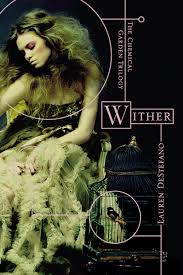
Wither
by Lauren DeStefano
In the not-so-far future, every continent apart from North America has been annihilated by nuclear warfare. For a time afterwards America was like a utopia- cancer and other diseases erradicated, only perfectly healthy babies born due to genetic manipulation. Then the dark reality sets in- those born in the next generation die in their early twenties. All of them.
What this means for the story is that our main character finds herself kidnapped at age sixteen, taken to a mansion and coerced, along with three other girls, to marry a wealthy man who is among the desperate- they want to breed as many children as possible in hopes of finding a cure before humanity dies out. The main character is one of these girls kidnapped to be a bride. She is suddenly jerked from being in poverty and uncertainty to living in luxury and being well-cared for. But she isn't free, she's not happy, and she knows when she's going to die...
It's an interesting idea, but this one didn't work for me. The characters were uninteresting. I never got a sense of them as real people. And I didn't quite buy the premise. If everyone was suddenly dying young, would the reaction of wealthy men really be to kidnap young girls and marry them in order the get lots of progeny? To me it was an odd idea. Another issue I had was that the story is told a lot in flashbacks, so the background events are revealed in pieces. I prefer my narrative to be linear. I think if I'd had chapters describing the chaos, the sudden flux of orphans when people started dying, the struggles the main character faced before suddenly being shoved into this mansion... it would have made more of an impact for me.
But again, I'm not the target audience for this book. It's the kind of thing my near-twelve-year-old might gobble up. Except when I started to tell her about the premise (to see if she wanted to read it before I return it to the library) she said "wait, so all these girls are getting raped by a rich guy?" Well... they got married to him, but against their will, so yeah, rape. The whole idea of it is pretty distasteful once you start seeing past the descriptions of opulence hand-in-hand with oppression. However, as far as I read in the book, I didn't come across any sex scenes at all. The girls discuss consummation, who spent the night when with their husband, one of them gets pregnant, that's it. I can't be sure though- I started to feel distracted around thirty pages in, and just skimmed a bunch after that before ditching this one.
Abandoned 374 pages, 2011
more opinions:
Presenting Lenore
Rhapsody in Books
Dear Author
There's a Book
Jul 13, 2016
Fledgling
by Octavia Butler
The narrator wakes up alone, in the dark, with a severe head injury and a desperate hunger. She has no idea where she is, what has happened to her, or even her own name. She feeds on animals she catches (craving raw meat) and slowly healing, starts walking out of the forest. Gradually the names of items around her come back, and she starts to make sense of the world. But other things she cannot recall, so when she first meets a human she has no idea of their differences. She stumbles through the world unknowing, and so does the reader along with her.
She is Ina. An ancient species that lives by feeding on human blood, that cannot stand the daylight, that has extra-heightened senses and strength. Vampires, but not exactly the same as those in human folklore (even the characters in the book have misconceptions of the Ina). For example, they can't convert humans into their own kind, they are not undead, they raise their young and live in family groups separated by gender. The main character here- who looks like she's ten but in Ina years she's over fifty- gradually learns about herself as she comes across others of her own kind. It's an urgent matter, because almost as soon as she discovers what she is and where her people are, she finds out that someone is very seriously trying to kill them, and maybe they are targeting her in particular. Because it turns out she's not quite like the others of her kind. Her skin is darker and she can walk around in the daytime. She barely understands herself what these differences mean, but it's very apparent that someone else finds them threatening.
I liked the idea behind this book, and the themes it explores. Especially how it showed the Ina creating symbiotic relationships with the people they fed on- becoming bonded, giving something of value to the humans in return. Their social structure is different from what I expected, and it takes the humans in the story time to adjust to that as well. Her first human partner is a grown man but oddly enough I didn't find it disturbing to read descriptions of this to-all-appearances pre-pubsecent girl being in such a relationship. I suppose because I expected a vampire story to be creepy or disturbing in some way. And this one doesn't really have any gross factors. But the other reason might be because I never really felt connected to the characters, it never felt real or engaging. The prose often felt stiff, the descriptions were not of things that interested me, and even though the backstory and explanations came through other characters, it felt like they were just there to do that: lots of people standing around telling each other stuff, in the most deadpan ways. I admit I skipped an entire chapter in the middle because I was loosing interest, then picked up reading again and skimmed more near the end.
Read more about it in the reviews linked to below- I didn't even tell you some of the more interesting points because I'm tired now.
Rating: 2/5 316 pages, 2005
more opinions:
Things Mean a Lot
Speculative Book Review
Amy Reads
Savidge Reads
Rhapsody in Books
Literary Omnivore
Dec 26, 2013
Let the Right One In
by John Ajvide Lindqvist
This was intense. I saw the movie version a few years ago (subtitled). The first thing that struck me about the book was that it goes into far more detail (of course) about the characers, and there are lots of minor characters whose lives weave into the storyline, which the movie left out entirely. I liked that. The book also, aside from the bloodiness involved in a vampire story, shows the plain ugliness of human nature- especially those who are lonely, desperate, bored- much more than the movie did. Not far into it I was about to set it aside, not wanting to read about lonely, drunken men who are pedophiles or kids who beat each other up- but there were other parts of the story that interested me so I kept reading. There is a prominent thread in the story about bullying, for example. The main character, Oskar, is a lonely bitter kid with divorced parents and few friends. He gets picked on mercilessly at school and dreams of revenge, has a fascination with serial killers. After striking up a tentative friendship with the strange girl next door he learns how to stand up to the bullies. But they don't back down, they just come back at him harder.... meanwhile a series of mysterious murders are happening more and more frequently, and the whole neighborhood becomes tense and suspicious. By the time Oskar realizes what is going on he feels more inclined to protect his new friend than anything else. There's all kinds of subplots going on here- the teenager whose mother's new boyfriend is a policeman involved in searching for the murderer. The handful of drunken men who hang out together doing practically nothing- they get roped in when one of their gang disappears. I don't really know how to say more about this, but that the look at a lonely and dysfunctional society was more interesting to me than the vampire aspect of the story. In the end it got too brutal for my taste and I doubt I'll read this again. Definitely creepy.
This is a pretty famous book, and a lot of reviewers have done it more justice than I. See the links below for just a few.
Rating: 3/5 472 pages, 2004
more opinions:
You've GOTTA Read This!
Novel Reflections
Avid Reader
Vishy's Blog
Book Monkey Scribbles
The Ranting Dragon
Dec 8, 2010
The Memoirs of Elizabeth Frankenstein
by Theodore Roszak
Roszak retells the story of Frankenstein from the viewpoint of Victor's unfortunate bride, Elizabeth. An inquisitive and intelligent young woman, she is taught by tutors in the household, and more particularly, by her adoptive mother the Lady Caroline. Her closeness to Victor is encouraged; more than just brother and sister, they are destined to marry and their union is (apparently) also part of some great experiment (which I could not make head or tails of, as you shall see). So... as part of her education Elizabeth learns to take no shame in her body and gets initiated into a secret cult of women which reveals to her all kinds of ancient female knowledge. I was blasting through the book, enjoying the writing and intrigued by the story until it got to a certain point. Elizabeth's gradual awareness of her sexuality was not repugnant to me, but things started to get really weird when Victor was included in some of the secret rites, which started to combine alchemy with eroticism. It was so bizarre. I thought alchemy had to do with turning stuff into gold? what does that have to do with sex? and all the obscure symbolism made no sense either and I got weary of trying to figure it out. The more interesting part of the story was the constant contrast between Victor's hunger for scientific knowledge- dissection, mathematics, the new discovery of electricity (we all know to what use he put that!)- and Elizabeth's blossoming understanding of the strengths of women- founded in the wonders of nature. But all that alchemy/mystic sex stuff was just too bewildering. It actually started to bore me. Who else has picked up this book? what did you make of it?
I am remember now and have no idea how this book got onto my TBR list. I think I read a review of it somewhere online that sparked my interest, but can't find that now. For a few other reader's opinions, check out the links below.
Abandoned........ 425 pages, 1995
more opinions at:
Las Risas
somewhere i have never travelled
The Actress and the Bishop
Roszak retells the story of Frankenstein from the viewpoint of Victor's unfortunate bride, Elizabeth. An inquisitive and intelligent young woman, she is taught by tutors in the household, and more particularly, by her adoptive mother the Lady Caroline. Her closeness to Victor is encouraged; more than just brother and sister, they are destined to marry and their union is (apparently) also part of some great experiment (which I could not make head or tails of, as you shall see). So... as part of her education Elizabeth learns to take no shame in her body and gets initiated into a secret cult of women which reveals to her all kinds of ancient female knowledge. I was blasting through the book, enjoying the writing and intrigued by the story until it got to a certain point. Elizabeth's gradual awareness of her sexuality was not repugnant to me, but things started to get really weird when Victor was included in some of the secret rites, which started to combine alchemy with eroticism. It was so bizarre. I thought alchemy had to do with turning stuff into gold? what does that have to do with sex? and all the obscure symbolism made no sense either and I got weary of trying to figure it out. The more interesting part of the story was the constant contrast between Victor's hunger for scientific knowledge- dissection, mathematics, the new discovery of electricity (we all know to what use he put that!)- and Elizabeth's blossoming understanding of the strengths of women- founded in the wonders of nature. But all that alchemy/mystic sex stuff was just too bewildering. It actually started to bore me. Who else has picked up this book? what did you make of it?I am remember now and have no idea how this book got onto my TBR list. I think I read a review of it somewhere online that sparked my interest, but can't find that now. For a few other reader's opinions, check out the links below.
Abandoned........ 425 pages, 1995
more opinions at:
Las Risas
somewhere i have never travelled
The Actress and the Bishop
Oct 25, 2009
House of Stairs
by William Sleator
Five orphaned teens of widely differing personalities find themselves unwillingly involved in a behavioral experiment. They're all placed in a House of Stairs- an environment made up of staircases, small landings, occasional bridges- no walls, no floor, no place to feel safe. There's a small computer that flashes colors and dispenses food- but only in response to certain actions. Which they have to decipher by guesswork- and the results become more and more bizarre, until the kids are barely holding onto their sanity. I read this book a long time ago as a teen and it really made an impression on me. The characters are a bit flat and stereotypical, but the dynamics of their interactions and the different ways they respond to the challenges they face make it an interesting read. It really gave me the shivers back then, but now I want to read it just to pick apart what made some of the kids come out of it okay, and the others drive themselves to disintegration.
Rating: 3/5 ........ 166 pages, 1974
More opinions at:
Journeys with Books
Reading is My Superpower
Opinions of a Wolf
Five orphaned teens of widely differing personalities find themselves unwillingly involved in a behavioral experiment. They're all placed in a House of Stairs- an environment made up of staircases, small landings, occasional bridges- no walls, no floor, no place to feel safe. There's a small computer that flashes colors and dispenses food- but only in response to certain actions. Which they have to decipher by guesswork- and the results become more and more bizarre, until the kids are barely holding onto their sanity. I read this book a long time ago as a teen and it really made an impression on me. The characters are a bit flat and stereotypical, but the dynamics of their interactions and the different ways they respond to the challenges they face make it an interesting read. It really gave me the shivers back then, but now I want to read it just to pick apart what made some of the kids come out of it okay, and the others drive themselves to disintegration.Rating: 3/5 ........ 166 pages, 1974
More opinions at:
Journeys with Books
Reading is My Superpower
Opinions of a Wolf
Sep 7, 2009
Oryx and Crake
by Margaret Atwood
There is something about Margaret Atwood's books that both fascinates and repels me. I found The Handmaid's Tale to be chilling, in a remote way. Cat's Eye was terribly dismal and depressing to me. And Oryx and Crake gave me the creeps- but at the same time I simply could not put it down. It is a horrifying vision of the future- a future in which humankind has altered the face of the world beyond belief. The effects of global warming are only a sidenote here; popultation growth beyond control causing a huge rift between the wealthy and poor, spawning violence and crime alongside ruthless pursuit of scientific answers to all problems. Genetic engineering and other kinds of tinkering has created things like pigs that grow human organs, fake boulders that water your lawn, babies with chosen characteristics. And society's utter moral degredation. It all eventually falls into chaos, until a man who calls himself Snowman is the only real human being left, alongside a group of genetically altered people who are impervious to many ills- sunburn, disease, hunger (they eat grass). Jealousy, hate, love? humor? There's not a lot left to make them human, so many things in their brains have been rewired by the scientist Crake. Who was once Snowman's childhood friend.
The main character in this story is Snowman and his younger self, Jimmy. The plot follows him through his daily struggle to survive in the present altered and (to him) harsh new environment, full of dangerous wildlife and killing heat. He starts off on a journey back to the ruins of civilization for supplies, on the way reminiscing on his childhood and all the events that led up to the final disaster- how he watched the world change and the part he played in key events.
And now a word about what frustrated me; skip this paragraph if you want to avoid spoilers. I found some things in this book really disturbing. Namely, the blatant s-x everywhere, and how the boys would watch violence (executions, suicides, killing of animals etc) for entertainment. I suppose this was to show how far society had gone, but it was pretty sickening. And I really didn't understand why Jimmy was so drawn to Oryx. For a character with such an important role, there wasn't much told about her, and she hardly felt real to me. Perhaps she was meant to remain a mystery. Then the ending of the book drove me crazy, because I got excited just as Snowman did, and hoped in those final pages to see a confrontation or discovery of some kind, and I got- nothing. For the first time I wanted to throw a book across the room! But then I found out that her upcoming book Year of The Flood, is a sequel to this one, so maybe my questions will be answered. I'm going to wait a while before I read it, though. I can't take this kind of heavy stuff one book after another.
Rating: 4/5 ........ 376 pages, 2003
More opinions:
Shelf Love
Book Maven's Blog
There is something about Margaret Atwood's books that both fascinates and repels me. I found The Handmaid's Tale to be chilling, in a remote way. Cat's Eye was terribly dismal and depressing to me. And Oryx and Crake gave me the creeps- but at the same time I simply could not put it down. It is a horrifying vision of the future- a future in which humankind has altered the face of the world beyond belief. The effects of global warming are only a sidenote here; popultation growth beyond control causing a huge rift between the wealthy and poor, spawning violence and crime alongside ruthless pursuit of scientific answers to all problems. Genetic engineering and other kinds of tinkering has created things like pigs that grow human organs, fake boulders that water your lawn, babies with chosen characteristics. And society's utter moral degredation. It all eventually falls into chaos, until a man who calls himself Snowman is the only real human being left, alongside a group of genetically altered people who are impervious to many ills- sunburn, disease, hunger (they eat grass). Jealousy, hate, love? humor? There's not a lot left to make them human, so many things in their brains have been rewired by the scientist Crake. Who was once Snowman's childhood friend.The main character in this story is Snowman and his younger self, Jimmy. The plot follows him through his daily struggle to survive in the present altered and (to him) harsh new environment, full of dangerous wildlife and killing heat. He starts off on a journey back to the ruins of civilization for supplies, on the way reminiscing on his childhood and all the events that led up to the final disaster- how he watched the world change and the part he played in key events.
And now a word about what frustrated me; skip this paragraph if you want to avoid spoilers. I found some things in this book really disturbing. Namely, the blatant s-x everywhere, and how the boys would watch violence (executions, suicides, killing of animals etc) for entertainment. I suppose this was to show how far society had gone, but it was pretty sickening. And I really didn't understand why Jimmy was so drawn to Oryx. For a character with such an important role, there wasn't much told about her, and she hardly felt real to me. Perhaps she was meant to remain a mystery. Then the ending of the book drove me crazy, because I got excited just as Snowman did, and hoped in those final pages to see a confrontation or discovery of some kind, and I got- nothing. For the first time I wanted to throw a book across the room! But then I found out that her upcoming book Year of The Flood, is a sequel to this one, so maybe my questions will be answered. I'm going to wait a while before I read it, though. I can't take this kind of heavy stuff one book after another.
Rating: 4/5 ........ 376 pages, 2003
More opinions:
Shelf Love
Book Maven's Blog
Jul 22, 2009
The Animal Wife
by Elizabeth Marshall Thomas
I have a hard time thinking what to say about The Animal Wife. It is a companion novel to Reindeer Moon, telling about the same group of prehistoric people, also a coming-of-age story, but about a young man this time. Kori, the main character, sets off on a journey to live with his father's people after having spent his childhood with his mother. He is eager to prove himself a man, and earn his place. He is just beginning to find his place among the grown men when he makes a brash move and takes captive a woman from an unknown tribe. His rash action condemns his new "wife" to live among total strangers- but also makes Kori something of an outcast himself, and places his own family group in danger...
It was hard for me to like Kori. He gave little consideration to what his captive wife might be feeling, and was mostly concerned with hunting, his status among the men, and his enjoyment of women. Women in this primitive society were pretty much regarded as possessions, without will or rights of their own. I suppose it might well have been like that so many thousands of years ago, but still it made me feel awful how callously some of them were treated in the story. I did like reading about how closely tied the people were to the land, how their lives depended upon the weather, change of seasons, movements of animals. Their constant interactions with wildlife. But it wasn't nearly as magical as Reindeer Moon, and at the end of the book I was left thinking: what a desolate story. In the epilogue the author explained how her story was based on ancient Asian legends of an animal wife- think fox, in Japanese literature- and for a moment I had to think why, because unlike Reindeer Moon where people died and their spirits took different animal forms, in this story the woman never became an animal (although I expected her to!) No, she was seen as an animal because her captors in ignorance treated her as one, they assumed she was stupid because she could not speak their language or understand their customs. It was really very sad. I was pleased at first to see the reappearance of the tamed-wolf theme, but it did not end well even for the poor wolf. Everyone was left with less in the end. And yet I could not put the book down... Elizabeth Marshall Thomas is a darn good storyteller.
Rating: 3/5 ........ 289 pages, 1990
more opinions:
Snips and Snails and Puppy Dog Tales
I have a hard time thinking what to say about The Animal Wife. It is a companion novel to Reindeer Moon, telling about the same group of prehistoric people, also a coming-of-age story, but about a young man this time. Kori, the main character, sets off on a journey to live with his father's people after having spent his childhood with his mother. He is eager to prove himself a man, and earn his place. He is just beginning to find his place among the grown men when he makes a brash move and takes captive a woman from an unknown tribe. His rash action condemns his new "wife" to live among total strangers- but also makes Kori something of an outcast himself, and places his own family group in danger...It was hard for me to like Kori. He gave little consideration to what his captive wife might be feeling, and was mostly concerned with hunting, his status among the men, and his enjoyment of women. Women in this primitive society were pretty much regarded as possessions, without will or rights of their own. I suppose it might well have been like that so many thousands of years ago, but still it made me feel awful how callously some of them were treated in the story. I did like reading about how closely tied the people were to the land, how their lives depended upon the weather, change of seasons, movements of animals. Their constant interactions with wildlife. But it wasn't nearly as magical as Reindeer Moon, and at the end of the book I was left thinking: what a desolate story. In the epilogue the author explained how her story was based on ancient Asian legends of an animal wife- think fox, in Japanese literature- and for a moment I had to think why, because unlike Reindeer Moon where people died and their spirits took different animal forms, in this story the woman never became an animal (although I expected her to!) No, she was seen as an animal because her captors in ignorance treated her as one, they assumed she was stupid because she could not speak their language or understand their customs. It was really very sad. I was pleased at first to see the reappearance of the tamed-wolf theme, but it did not end well even for the poor wolf. Everyone was left with less in the end. And yet I could not put the book down... Elizabeth Marshall Thomas is a darn good storyteller.
Rating: 3/5 ........ 289 pages, 1990
more opinions:
Snips and Snails and Puppy Dog Tales
Jun 18, 2009
Reindeer Moon
by Elizabeth Marshall Thomas
I've read a few of this author's non-fiction books, but I had no idea she wrote fiction until I picked up Reindeer Moon, a story set twenty thousand years ago in a cold northern region of forest and steppes. Like Clan of the Cave Bear, it's full of harsh realities and bitter struggles for survival, especially when it comes to people's interactions. In Thomas' novel, the people are so few that one individual's error or misdeed can jeapordize the entire group. The main character is a young woman named Yanan, who after a streak of catastrophic events finds herself alone with her younger sister, traveling through the wilderness to try and find her people again. They take shelter in an old abandoned lodge, only to find a mother wolf has made it her den. For a time they co-exist with the wolf and its cub. In this incident and the following events, I could see a scenario arising of how the first wolf was tamed. Only it didn't happen in the span of the book- which rather disappointed me, but also made it more realistic; I think the development of a partnership with animals would probably have taken more than one person's lifetime. I also really liked (of course) parts of the story where when a person died, their spirit could take on the form of an animal- and at times the spirit would just live the animal's life, forgetting what it had originally set out to do in that form. It was really interesting to see the different animal perspectives: deer, lion, bear, owl etc. The first time it happened I was surprised: wait, she's a wolf now? but then I eagerly awaited the person-into-animal moments.
Anyway, I'm getting off track. The wolf thing was not the focus of the story, although I found it fascinating. It's mostly about Yanan's efforts to live her life the way she wants to- sometimes against the tenants of her society. Not nearly as dramatic (or rich in detail) as Clan of the Cave Bear (which I couldn't help comparing it to, as one of the few other novels I've read set in prehistory) but full of grim realities- death in childbirth is common, many children never survive to adulthood, winter brings starvation, people fight over food and mates, illness and injury go ignored. It was sometimes hard to read descriptions of them suffering in ways which the reader knew were totally preventable but the characters were ignorant of. Often the people acted totally callous towards each other. And yet they were also skillful, manipulative and imaginative- very human. This is one of the few books I've ever read where in the society arranged marriages made complete sense- the population was so small, and life so risky, the people had to carefully choose who joined with whom. Resistance to these arrangements could cause lots of turmoil .... Reindeer Moon is a story of a woman growing up, learning some hard lessons in a very harsh land, a book about nature and nurture, about discovery and loss...
This book reminded me of so many others. The part where the girl and her sister are struggling to survive alone brought to mind Into the Forest. The way they came to live in the wolf's den made me think of Incident at Hawk's Hill. The closeness to nature, paired with brutality and a sense of wonder, echoed themes of An Imaginary Life. Needless to say, I really enjoyed this book and I'm eager to get my hands on the companion novel, The Animal Wife. (I'm hoping it continues to speculate, even as backdrop to the main events, how someone tamed a wolf...)
I read this book for the TBR Challenge
Rating: 4/5 ........ 336 pages, 1987
more opinions:
Snips and Snails and Puppy Dog Tales
I've read a few of this author's non-fiction books, but I had no idea she wrote fiction until I picked up Reindeer Moon, a story set twenty thousand years ago in a cold northern region of forest and steppes. Like Clan of the Cave Bear, it's full of harsh realities and bitter struggles for survival, especially when it comes to people's interactions. In Thomas' novel, the people are so few that one individual's error or misdeed can jeapordize the entire group. The main character is a young woman named Yanan, who after a streak of catastrophic events finds herself alone with her younger sister, traveling through the wilderness to try and find her people again. They take shelter in an old abandoned lodge, only to find a mother wolf has made it her den. For a time they co-exist with the wolf and its cub. In this incident and the following events, I could see a scenario arising of how the first wolf was tamed. Only it didn't happen in the span of the book- which rather disappointed me, but also made it more realistic; I think the development of a partnership with animals would probably have taken more than one person's lifetime. I also really liked (of course) parts of the story where when a person died, their spirit could take on the form of an animal- and at times the spirit would just live the animal's life, forgetting what it had originally set out to do in that form. It was really interesting to see the different animal perspectives: deer, lion, bear, owl etc. The first time it happened I was surprised: wait, she's a wolf now? but then I eagerly awaited the person-into-animal moments.Anyway, I'm getting off track. The wolf thing was not the focus of the story, although I found it fascinating. It's mostly about Yanan's efforts to live her life the way she wants to- sometimes against the tenants of her society. Not nearly as dramatic (or rich in detail) as Clan of the Cave Bear (which I couldn't help comparing it to, as one of the few other novels I've read set in prehistory) but full of grim realities- death in childbirth is common, many children never survive to adulthood, winter brings starvation, people fight over food and mates, illness and injury go ignored. It was sometimes hard to read descriptions of them suffering in ways which the reader knew were totally preventable but the characters were ignorant of. Often the people acted totally callous towards each other. And yet they were also skillful, manipulative and imaginative- very human. This is one of the few books I've ever read where in the society arranged marriages made complete sense- the population was so small, and life so risky, the people had to carefully choose who joined with whom. Resistance to these arrangements could cause lots of turmoil .... Reindeer Moon is a story of a woman growing up, learning some hard lessons in a very harsh land, a book about nature and nurture, about discovery and loss...
This book reminded me of so many others. The part where the girl and her sister are struggling to survive alone brought to mind Into the Forest. The way they came to live in the wolf's den made me think of Incident at Hawk's Hill. The closeness to nature, paired with brutality and a sense of wonder, echoed themes of An Imaginary Life. Needless to say, I really enjoyed this book and I'm eager to get my hands on the companion novel, The Animal Wife. (I'm hoping it continues to speculate, even as backdrop to the main events, how someone tamed a wolf...)
I read this book for the TBR Challenge
Rating: 4/5 ........ 336 pages, 1987
more opinions:
Snips and Snails and Puppy Dog Tales
May 4, 2009
The Handmaid's Tale
by Margaret Atwood
I don't think I can say much about this book that hasn't already been said (see a small sampling below), and I read it several years ago, so the details aren't clear. But the chilling feeling the book gave me was. The Handmaid's Tale, like 1984, is set in a frightening version of the future, in a society totally constricted by government -and religious- control. Some catastrophe has caused fewer and fewer children to be born, until women are pretty much only valued for their childbearing ability- and used as objects to that purpose. They have no rights. Their manner of dress, who they speak to, where they go- all is restricted. The protagonist, Offred, is one of the "handmaids" kept to bear children- and as she slowly unfolds her story, we learn more and more exactly what that role entails. Probably one of the most depressing things about the story is that Offred can remember what life was like before- she used to have a family, a job, live in a society we could recognize. Comparing her current situation to how she remembers life used to be, Offred observes how quickly everyone's perceptions - even her own- have changed to fall in line with the prevailing brainwashing. She tries to find little ways to keep her spirits up and assert her personality without bringing undue attention to herself -that would be dangerous- but it's a stark life, a depressing existence, with no happy ending.
The only other book I've read by Atwood, Cat's Eye, didn't really touch me strongly, but Handmaid's Tale is a compelling, horrifyingly fascinating book. I really ought to try more by this author.
Rating: 4/5......... 350 pages, 1985
More opinions at:
Read Warbler
The Curious Reader
Melody's Reading Corner
Passion for the Page
Things Mean a Lot
Under the Dresser
Reading Reflections
Jenny's Books
BlackSheep Books
I don't think I can say much about this book that hasn't already been said (see a small sampling below), and I read it several years ago, so the details aren't clear. But the chilling feeling the book gave me was. The Handmaid's Tale, like 1984, is set in a frightening version of the future, in a society totally constricted by government -and religious- control. Some catastrophe has caused fewer and fewer children to be born, until women are pretty much only valued for their childbearing ability- and used as objects to that purpose. They have no rights. Their manner of dress, who they speak to, where they go- all is restricted. The protagonist, Offred, is one of the "handmaids" kept to bear children- and as she slowly unfolds her story, we learn more and more exactly what that role entails. Probably one of the most depressing things about the story is that Offred can remember what life was like before- she used to have a family, a job, live in a society we could recognize. Comparing her current situation to how she remembers life used to be, Offred observes how quickly everyone's perceptions - even her own- have changed to fall in line with the prevailing brainwashing. She tries to find little ways to keep her spirits up and assert her personality without bringing undue attention to herself -that would be dangerous- but it's a stark life, a depressing existence, with no happy ending.The only other book I've read by Atwood, Cat's Eye, didn't really touch me strongly, but Handmaid's Tale is a compelling, horrifyingly fascinating book. I really ought to try more by this author.
Rating: 4/5......... 350 pages, 1985
More opinions at:
Read Warbler
The Curious Reader
Melody's Reading Corner
Passion for the Page
Things Mean a Lot
Under the Dresser
Reading Reflections
Jenny's Books
BlackSheep Books
Dec 19, 2008
Seal Child
by Sylvia Peck
This haunting little book is a modern story based on the myth of selkies, seals who change themselves into people. Its main character is Molly, a young girl spending a vacation on a Maine island with her family. One day Molly hears a baby seal crying, and following the sound finds a horrible scene: a skinned dead seal on the beach. Shortly after, she discovers a strange girl named Meara living with her elderly neighbor. As the girls become acquainted, Meara's secret gradually unfolds: she is really a seal, and the dead body on the beach was her mother. Before long Meara and Molly are inseperable, until their friendship is finally tested and Meara must choose to stay on land or return to the sea. Seal Child is a lovely book, well-written and intriguing. It has a few quiet surprises. The secondary characters (the elderly neighbor, Molly's little brother, her parents) are not well-developed, but as the narrative is focused on Molly's concerns and Meara's oddities, this doesn't weaken the story much.
Rating: 3/5 ........ 200 pages, 1989
More opinions at:
Good Reads
This haunting little book is a modern story based on the myth of selkies, seals who change themselves into people. Its main character is Molly, a young girl spending a vacation on a Maine island with her family. One day Molly hears a baby seal crying, and following the sound finds a horrible scene: a skinned dead seal on the beach. Shortly after, she discovers a strange girl named Meara living with her elderly neighbor. As the girls become acquainted, Meara's secret gradually unfolds: she is really a seal, and the dead body on the beach was her mother. Before long Meara and Molly are inseperable, until their friendship is finally tested and Meara must choose to stay on land or return to the sea. Seal Child is a lovely book, well-written and intriguing. It has a few quiet surprises. The secondary characters (the elderly neighbor, Molly's little brother, her parents) are not well-developed, but as the narrative is focused on Molly's concerns and Meara's oddities, this doesn't weaken the story much.Rating: 3/5 ........ 200 pages, 1989
More opinions at:
Good Reads
Sep 22, 2008
The Disapparation of James
by Anne Ursu
A family takes their two young children to the circus. Their usually shy, withdrawn little boy volunteers to be part of the clown's final magic trick. At first his parents are pleased with James' participation- then shocked, angered and dismayed when he actually disappears from the stage. The Disapparation of James then examines all the emotional turmoil following the incident- ranging from sorrow and rage to disbelief and denial. It not only covers the reactions of parents and sister, but delves into responses by the police, media, neighbors, even the clown himself. Interesting, but the brief chapters covered so many characters it was hard in the end to really care about any of them. The most intriguing one was the little girl, who seemed more determined than her parents to solve the mystery of James' disappearance. Being a parent myself, the book certainly did touch a chord: what would I do if my child suddenly vanished in a public place? how would I feel, how would I deal with it? how would I find her again? But as a reader, the lack of a final explanation for what happened to James left me feeling frustrated, and as a whole it was rather disappointing.
Rating: 2/5 288 pages, 2003
A family takes their two young children to the circus. Their usually shy, withdrawn little boy volunteers to be part of the clown's final magic trick. At first his parents are pleased with James' participation- then shocked, angered and dismayed when he actually disappears from the stage. The Disapparation of James then examines all the emotional turmoil following the incident- ranging from sorrow and rage to disbelief and denial. It not only covers the reactions of parents and sister, but delves into responses by the police, media, neighbors, even the clown himself. Interesting, but the brief chapters covered so many characters it was hard in the end to really care about any of them. The most intriguing one was the little girl, who seemed more determined than her parents to solve the mystery of James' disappearance. Being a parent myself, the book certainly did touch a chord: what would I do if my child suddenly vanished in a public place? how would I feel, how would I deal with it? how would I find her again? But as a reader, the lack of a final explanation for what happened to James left me feeling frustrated, and as a whole it was rather disappointing.Rating: 2/5 288 pages, 2003
Sep 13, 2008
The Music of Dolphins
by Karen Hesse
It "began as a book about speech development, and evolved into something very different," the author says. The Music of Dolphins is the story of a feral child, a teenage girl found after living with dolphins in the ocean for twelve years. Rescued and taken to a research facility where scientists try to teach her to speak and act human. They also want to learn from her how dolphins communicate. Mila, the dolphin-girl, is confused by her new surroundings, ambiguous human behavior, and why people who profess to care about her keep her imprisoned. Although she likes learning English, and especially music, her greatest desire is to return to the ocean and the dolphins. Alongside her story is that of another girl, Shay, taken from neglectful parents who had kept her locked in a dark room. While Mila is constantly learning and thriving, Shay's rehabilitation goes very poorly. Told through Mila's diary, which begins as awkward sentence fragments (and presented in a very large font size), the story grows in complexity as Mila continues to learn and understand more and more (whereupon the font gets smaller). Targeted to a younger audience, the story is still well-enough crafted to be enjoyed by older readers who are interested in such examinations of human and animal nature.
Rating: 3/5 181 pages, 1996
It "began as a book about speech development, and evolved into something very different," the author says. The Music of Dolphins is the story of a feral child, a teenage girl found after living with dolphins in the ocean for twelve years. Rescued and taken to a research facility where scientists try to teach her to speak and act human. They also want to learn from her how dolphins communicate. Mila, the dolphin-girl, is confused by her new surroundings, ambiguous human behavior, and why people who profess to care about her keep her imprisoned. Although she likes learning English, and especially music, her greatest desire is to return to the ocean and the dolphins. Alongside her story is that of another girl, Shay, taken from neglectful parents who had kept her locked in a dark room. While Mila is constantly learning and thriving, Shay's rehabilitation goes very poorly. Told through Mila's diary, which begins as awkward sentence fragments (and presented in a very large font size), the story grows in complexity as Mila continues to learn and understand more and more (whereupon the font gets smaller). Targeted to a younger audience, the story is still well-enough crafted to be enjoyed by older readers who are interested in such examinations of human and animal nature.Rating: 3/5 181 pages, 1996
Sep 10, 2008
Other Lives
by Andre Brink
This novel is composed of overlapping stories about three men in modern South Africa, whose lives are subtly interconnected. In the first two tales, the protagonist faces a sudden change which makes him question his very identity. A painter arrives at his studio to find an unknown family waiting for him; they enfold him into their lives with total familiarity, yet he has no idea who they are. When in confusion and guilt (at how delightful he finds this new woman who thinks she's his wife) he tries to return to the home he remembers, there ensues a Kafkaesque scene of frightening futility as he cannot locate his old apartment in the building. He has no choice but to return to his new family, now afraid of exposing how much he is a stranger to them.
The second story is about a successful white man who is an architect. He wakens one day to find that his skin color has suddenly, inexplicably changed- it is now black. At first terrified of being discovered as an intruder in his own home, he soon realizes that no one else notices anything amiss. Yet his sense of self has altered so much he cannot help acting differently to those around him- with some disturbing results.
The last story lacks a sudden, dreamlike change as impetus; its surreal elements move in undertones. It centers around the relationship of a concert pianist and the beautiful, famous soprano singer he accompanies. He is strongly attracted to her, but all her previous relationships ended badly, with suspicious and mysterious deaths. She makes him promise he will never, ever touch her. She says "I cannot risk dividing my concentration"- professing a need to focus all her passion on her music. But then they find themselves alone in her family's old, half-abandoned rambling farmhouse...
As the characters each engage in self-examination, many secrets they keep from each other become slowly revealed, betrayals that link each story to the next like threads twisted under the ground. Sex is a large part of these stories; some scenes are tender, others rather horrific. I have to say the architect's confrontation of his children's au-pair disturbed me the most. I found the first two stories more fascinating, the last one lost me at the beginning with a plethora of musical references (mostly names) unfamiliar to me. Mention of culture and political situations in South Africa went over my head as well, but did not detract from my enjoyment of the book, which I could hardly put down. Trust (or lack of it), self-identity and racism are all strong themes in Other Lives, which raises unsettling questions: how well can we know each other? and: how well do we even know ourselves? Like my last experiences reading short stories, the endings left so many unanswered puzzles- and yet that made them all the more intriguing to me.
This title I received as an ARC from Sourcebooks.
Rating: 4/5 321 pages, 2008
This novel is composed of overlapping stories about three men in modern South Africa, whose lives are subtly interconnected. In the first two tales, the protagonist faces a sudden change which makes him question his very identity. A painter arrives at his studio to find an unknown family waiting for him; they enfold him into their lives with total familiarity, yet he has no idea who they are. When in confusion and guilt (at how delightful he finds this new woman who thinks she's his wife) he tries to return to the home he remembers, there ensues a Kafkaesque scene of frightening futility as he cannot locate his old apartment in the building. He has no choice but to return to his new family, now afraid of exposing how much he is a stranger to them.The second story is about a successful white man who is an architect. He wakens one day to find that his skin color has suddenly, inexplicably changed- it is now black. At first terrified of being discovered as an intruder in his own home, he soon realizes that no one else notices anything amiss. Yet his sense of self has altered so much he cannot help acting differently to those around him- with some disturbing results.
The last story lacks a sudden, dreamlike change as impetus; its surreal elements move in undertones. It centers around the relationship of a concert pianist and the beautiful, famous soprano singer he accompanies. He is strongly attracted to her, but all her previous relationships ended badly, with suspicious and mysterious deaths. She makes him promise he will never, ever touch her. She says "I cannot risk dividing my concentration"- professing a need to focus all her passion on her music. But then they find themselves alone in her family's old, half-abandoned rambling farmhouse...
As the characters each engage in self-examination, many secrets they keep from each other become slowly revealed, betrayals that link each story to the next like threads twisted under the ground. Sex is a large part of these stories; some scenes are tender, others rather horrific. I have to say the architect's confrontation of his children's au-pair disturbed me the most. I found the first two stories more fascinating, the last one lost me at the beginning with a plethora of musical references (mostly names) unfamiliar to me. Mention of culture and political situations in South Africa went over my head as well, but did not detract from my enjoyment of the book, which I could hardly put down. Trust (or lack of it), self-identity and racism are all strong themes in Other Lives, which raises unsettling questions: how well can we know each other? and: how well do we even know ourselves? Like my last experiences reading short stories, the endings left so many unanswered puzzles- and yet that made them all the more intriguing to me.
This title I received as an ARC from Sourcebooks.
Rating: 4/5 321 pages, 2008
Jun 11, 2008
When Fox is a Thousand
by Larissa Lai
Another failed attempt at magical realism. When Fox is a Thousand is a fantastical tale told from three viewpoints: a young Asian-American woman living in modern-day Vancouver, a female poet in medieval China, and a fox who has lived almost a thousand years, using magical powers to animate the bodies of dead women and cause mischief. I was really enjoying the prose, and the modern characters. But the others parts really lost me. I'm sure all the characters' stories weave together in the end, but when after more than fifty pages I still can't really tell what is going on, I don't see the point in continuing. I read seventy-two pages of this surreal book before leaving it behind.
Abandoned 236 pages, 1995
Another failed attempt at magical realism. When Fox is a Thousand is a fantastical tale told from three viewpoints: a young Asian-American woman living in modern-day Vancouver, a female poet in medieval China, and a fox who has lived almost a thousand years, using magical powers to animate the bodies of dead women and cause mischief. I was really enjoying the prose, and the modern characters. But the others parts really lost me. I'm sure all the characters' stories weave together in the end, but when after more than fifty pages I still can't really tell what is going on, I don't see the point in continuing. I read seventy-two pages of this surreal book before leaving it behind.Abandoned 236 pages, 1995
Subscribe to:
Posts (Atom)