Showing posts with label Nonfiction (general). Show all posts

Dec 19, 2020

The Ancestor's Tale

A Pilgrimage to the Dawn of Evolution 
by Richard Dawkins 
with Yan Wong

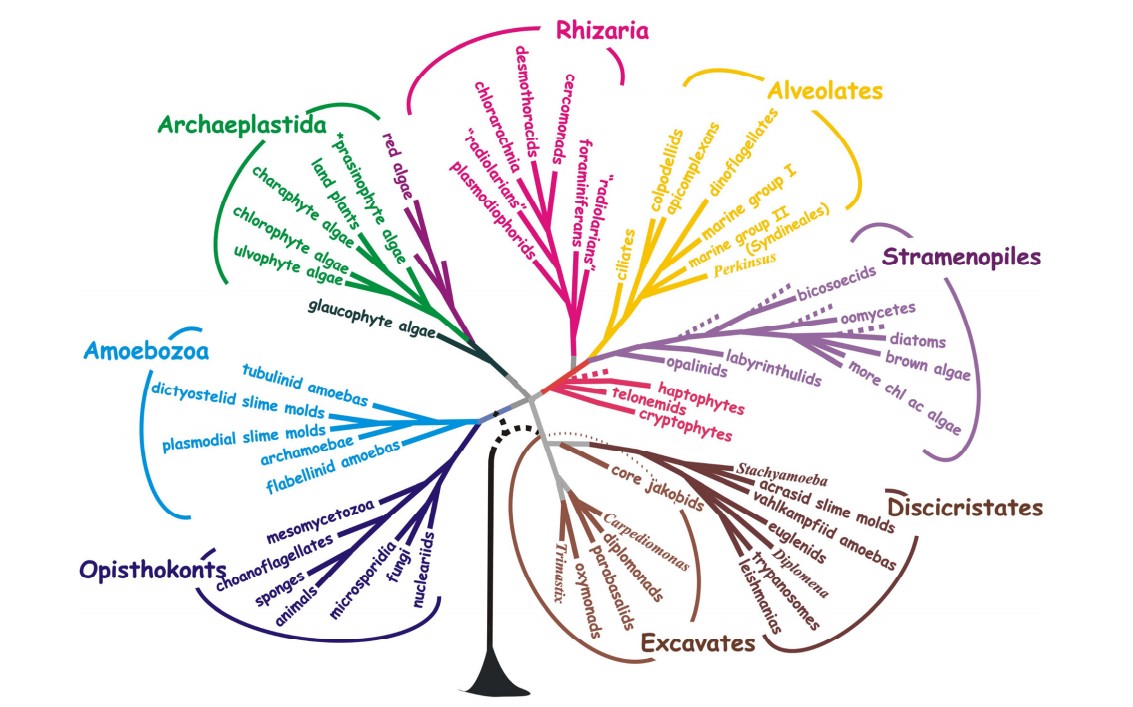
I don't think anything I write can do this book justice. It's staggering in scope, dense with details, mind-expanding and yet surprisingly readable. The premise bases a look at evolution loosely on The Canterbury Tales- the idea being that we time-travel skipping backwards to points where can meet up with common ancestors (the first is shared with chimpanzees) then on down through the ages meeting up with common ancestors of other primates, smaller mammals, fishes, etc etc on down to the one-celled organisms that arose at the dawn of time (and so many of them are still here on earth with us). Calling each chapter something like "The Peacock's Tale" or "The Rotifer's Tale" was a bit of a stretch- these weren't narrative tellings of anything, but very brief descriptions of the varied life forms and then lessons on what they can teach us about how we are all related. About gene transfer and how enzymes build proteins, about divergence and likewise convergence of species, about drifting and inheritance and molecular biology and tons more. I admit I did not understand it all, there were plenty of sections I had to read twice, but I didn't skip anything. Some of the stuff about molecular clocks and the math and chemistry when you get the end chapters about one-celled organisms that existed before plants converted solar energy into what others could consume- well it felt over my head. But there was so much that made me go wow, or sit and think hard, or feel just boggled by the huge swarms of life that we can't even see- like this diagram that shows how all life is related via molecular comparisons? it's got about eight branching groups each with five to eight branches in there- the others are all things like algae, slime moulds, amoebas, fungi and things I don't even know- radiolarians and pelobionts and so on. Plants are one tiny branch. Animals are another- and we are such a tiny fragment of that it's not even visible on the diagram! It is mind-numbing the way that Watchers at the Pond is. One main idea stated here was that we are more closely related- at the molecular level- to some bacteria, than those bacteria are to other bacteria. That's how huge and varied the expanse of life really is.

Some things of wonder in this book: this "brain map" that shows parts of the body in size difference according to how much of the brain is devoted to sensory input from and control of them. On the star-nosed mole biggest are the nose tentacles and then the digging paws. On humans, it's the hands, and only slightly less the facial features especially the mouth (for speaking). Ever wonder why a tiny injury on your hand can hurt so much? well they're so dang sensitive and your brain has so much invested in their control and dexterity. So many things I looked up more about: the bdelloid rotifers which have been reproducing asexually- apparently there are no males- for 40 million years. The trichoplax, a tiny organism only a few cells thick that reveals a lot about early life, and I never knew it existed. The tooth-billed pigeon otherwise known as the little dodo- because it's the only living relative of the dodo and is on the verge of disappearing now, too. The microorganisms that live in termite guts- without them, the termites could not digest cellulose. To those microbes, the termite is the whole world. Who is serving whom in that regard. I thought of all the little things living in my own gut. I thought much more closely about viruses and bacteria near the end of this book.

It was hard to wade through some of the later chapters about the tiny microscopic life forms, simply because all the terminology about them is unfamiliar to me. But I was wowed by the next-to-the-last chapter. I really liked the explanation comparing the spread of fire, to how reproduction can happen without heredity and why that's significant. Also the description of what the atmosphere and basic components on earth were like before oxygen really existed. There were other things that, when a scientist put them all in a vat and left it sitting for a few weeks, turned into a "soup" of biological compounds- which with the right catalyst could spring into life. My husband tells me he's read of an experiment where basic elements were put together and a living cell was made, unlike any other living cell that's existed before. I had no idea. Look up synthetic biology.

And here's another big picture idea- Dawkins tells how many times evolution has come up with specific things- eyes for example, or the power of flight. Very few things have happened only once (there's one bacteria that created a wheel!) So he posits that if most of life were wiped out, it would eventually all arise again- because the basic pieces would still be here- and just like the dinosaurs had all kinds of animals that filled all the niches- some that ate plants others that ate the grazers, some that climbed or flew or ate insects or used sonar in the ocean- the mammals spread to fill them after the dinosaurs were gone. On isolated islands like Madagascar or the continent of Australia, a slightly different form evolved to fill all the niches (think the marsupials). If an asteroid nearly wiped out all life, it would rise again and proliferate into all the diverse forms- maybe not with humans in it, but eventually with something pretty darn close. It's a lot to think about. I will say, I don't feel as much dread of us ending everything with our destructive ways- LIFE will recover again, we just wouldn't be here to see it! ha. And I'm also not quite so leery about GMO's either, if the commonality of genes between all living things like Dawkins outlines in here, is what I understood from it. We are all interrelated, much closer than you'd imagine.

No way is this even a fraction of what I gleaned from this book. I borrowed a copy to read from my brother in-law, but I'd sure like to have this in my own library someday. Maybe the newer edition, which I gather has a few updated chapters.

Rating: 4/5                      671 pages, 2004

Nov 23, 2020

The Stranger in the Woods

the Extraordinary Story of the Last True Hermit 
by Michael Finkel

     I hadn't heard of this story before- in 1986 a young man named Christopher Knight drove as far as he could on back roads in rural Maine, left his car depleted of gas, and walked into the forest. Eventually he found a hidden clearing in some very thick tangled trees and brush, where he made a camp and lived alone for nearly three decades. Very like Into the Wild. This Chris however, was successful for a long time. He had survival skills, he was adept at moving quietly through the trees without leaving tracks, and he had a steady source of supplies- stealing from nearby vacation cabins around a lake. Was ashamed of his thievery but kept doing it- for twenty seven years!- until finally he was caught. He only wanted to be alone, to live in solitude, he never accepted handouts people offered on their porches when they got tired of the break-ins. He suffered a lot living out there in the winter- from hunger and cold for months on end. Kept himself occupied by reading books and magazines (stolen of course), listening to a radio or just sitting quietly thinking. Once apprehended he was incarcerated for a while, then forced to live in society again. Where this journalist found him and gained his trust enough to be able to write his story (but later kept approaching him when Chris obviously asked to be left alone). It also includes the perspective of the vacation home-owners around the lake, some of whom constantly felt uneasy, or their children fearful of the thief, while at their cabins. There are brief examinations of various people who have lived in seclusion throughout history and what compels them to do so, and some criticism of Walden. Many people who profess to be modern-day hermits shun the North Pond Hermit (as he became known by those in the area) for his criminal ways. The story is kind of a quandry for me. I get a lot of what Chris said- I'm an introvert myself, I know what it's like to feel more comfortable in quiet places, apart from the noise and bustle and pretense of general society. As a kid I used to daydream about living in the woods off survival skills (but knew very well I didn't have any!) But to do so for decades by stealing- this man did so literally hundreds of times, from some thirty families- even though it was for the most part inexpensive items- I can't condone that.  There's several news articles about him if you do a quick search.

Rating: 3/5            192 pages, 2017

Nov 20, 2020

Walden and Other Writings

by Henry David Thoreau

     I finally read this, after two previous attempts (years ago) and a break in the middle for something easier. My copy contains not only Walden: or Life in the Woods but also Civil Disobedience, Slavery in Massachusetts, A Plea for Captain John Brown and Life Without Principle

Here's the thing: this is not at all what I expected. I always thought it was some wonderful if slightly archaic nature writing full of observations on the weather, birds and creatures, growing things etc. Not really. It's a lot more about politics (as they were back then), protests on slavery, umbrage at modern developments ruining mankind (there's pages and pages about how the train makes people hurry and rush about), how government should or should not affect our lives, why people should be engaged in something useful and soul-lifting instead of just working to earn money, etc. He criticizes his fellow man a lot. He does mention a few birds here and there, how peaceful it is to just sit under the trees, how much he appreciates the simple life. But he wasn't far off in the woods in isolation. Tons of people visited him all the time it sounds like, really curious what he was doing out there by himself. The train ran very close to his cabin, the pond was a regular fishing spot for many, farmers and kids out picking berries walked close by, and he could hear cattle in the adjacent fields. It was walking distance to the village. He eschewed coffee and other so-called luxuries to live pretty much just off what he grew or gathered (I think): mainly his beans, and fish he caught. I thought there I would relate, there's a whole chapter about cutivating the bean plants and I'm a gardener too, but nope. It starts out about hoeing the beans and how nicely meditative that task can be, but soon unravels into other lofty topics that supposedly relate to what bean plants with their nice broad leaves made him think of but I can't make head or tails out of it.

That was my main problem. Thoreau is very much a philosopher and it either makes my mind wander, or go in circles, or I have to read a passage three, four, five times in a row and I still don't get what he was saying. So many pages of this book I was actually thinking about something else as the printed words marched through my head unheeded (so now I know how a fellow book-blogger could sing while she reads, which I didn't comprehend before). The parts I liked? where Thoreau describes in detail the ice on the pond, the air bubbles into it, the way it forms and later on breaks up in the springtime, the industry of hired people who come to cut blocks of it, harvesting for use in summer- people had ice-boxes back then, not fridges and freezers, so this was interesting to read how that was done and how it was stored to prevent melting. How mud makes weird shapes during the spring thaw (but again he turned this into some lyrical comparison I did not get). The voices of owls, a mouse that got used to his presence, the geese he observed on the pond and fish under the clear water. I liked reading how he undertook to plumb and measure the pond's depth, as people in the vicinity claimed it was bottomless, but nobody had ever really tried find out. I liked a lot of his sentiments and agreed with many of his opinions on what's valuable in life etc, but it sure was tough to wade through all the words. Philosopy and political rants are really not my thing. 

Note on below: this is obviously one of those great books which I personally have difficulty appreciating. I didn't exactly enjoy reading it, though I do feel enriched by it. It was pretty hard to get through. If it had been easier and more enjoyable, definitely would have given it a 4. The publication dates noted span the five works in this volume.

Rating: 3/5                368 pages, 1849-1863

Oct 6, 2020

Wild Ones

-Looking at People Looking at Animals in America
by Jon Mooallem

     In this book the author explores the attitudes of everyday people to threatened and endangered wildlife, and the convoluted efforts of conservationists and scientists to save them. Convoluted because the more closely you look at each issue, the more insurmountable and unrealistic the effort appears to be- even though of course we can't bear to let go and stop trying. In this regard, it shared a lot of sentiment with Inheritors of the Earth- the world is going to keep changing, we have now moved beyond the point of being able to halt our impacts on wildlife and the land.

It starts with the author deciding to visit three areas where he can see in person animal species that are struggling, on the brink of extinction as it were. For some of the trips he takes his young daughter along- so part of this is also looking at what children understand of wildlife issues (most young kids don't care and are very human-centric and selfish, he concludes, while older children express concern for the welfare of wild animals) and how his own three-year-old responds to seeing them. He goes to Churchill to view the polar bears- which every year face a longer stretch of fasting waiting for sea ice to form, while more cubs starve and never make it to adulthood. He goes to Antioch Dunes, a place where the endangered Lange's metalmark butterfly lives on one host plant species that thrives on shifting dunes- but by the time it was made into a wildlife refuge so much sand had been mined and trucked away the ecosystem changed drastically, and now it's only through the constant efforts of humans to eradicate 'weeds' and plant the butterfly's naked stem buckwheat that keeps the species going. Finally, he travels to Michigan to join the team of Operation Migration and see how whooping crane chicks, raised in captivity by men masked in crane costumes, are led by ultralight planes on their first migration. In each case, the author talks with scientists, conservationists, and bystanders alike. He interviews the camera crews and the host who puts out birdseed (whooping cranes unexpectedly visited her yard). He talks about shifting baselines, how the public's perception of wildlife issues is influenced and changes over the years, how charismatic species get all the attention while lesser-known and smaller ones quietly disappear. There's discussion on how bison were nearly wiped out and since recovered and how canada geese went from being seen as rare harbringers of changing seasons to outright pests. There's the true story about a humpback whale that swam up a river and stranded itself- and so many people came to view this one animal in trouble, they trampled all over the butterfly refuge which was even worse for that species and its host plant. The parts about the legal tangle of how individual species get protection, are listed or de-listed as endangered, and suffer from lack of funding, was a bit tedious to read through. 

But it becomes very clear that for many species, people are obviously propping them up, and if we withdrew our support, they would simply disappear- in some cases, very quickly. How long do we continue that effort? (For example, the whooping cranes led by aircraft on their flight paths have successfully migrated on their own afterwards- considered a success because now they can live free of human assistance. But when this book was written, none of them had raised their own chicks. So that population could only continue if people kept hatching, raising and releasing cranes to supplement it. Never was self-sustaining). I don't know what to think of the message this book gives me. On the one hand, it's encouraging to see how many people do care about wildlife and are going to great efforts to help our fellow creatures survive- even if some of them don't act as wild as they used to (whooping cranes visiting bird feeders, whitetail deer in backyards). On the other hand, the glum none-of-this-matters-in-the-end attitude makes me feel very depressed. What we have done to our Earth is dismal. As long as humans keep taking up so much space and increasing our numbers and use of resources, I don't see how things can change or even be sustainable. Much less remain habitable for the diversity of species it once supported, in the long run.

Note: I shortened the subtitle in my heading. In entirety it is: A Sometimes Dismaying, Weirdly Reassuring Story About Looking at People Looking at Animals in America.

Rating: 4/5                339 pages, 2013

Sep 19, 2020

Lab Girl

by Hope Jahren 

This was great. It was not what I expected all round- I delighted in reading about experiments on the lives and methods of plants (especially details about tree biology, which read as little independent essays), how Jahren and her fellow scientist Bill came up with their ideas, the meticulous work involved, the scrounging for lab equipment and funding, the long hours and sleepless nights, the road trips and field work . . . What took me by surprise was to find myself also reading about mental illness, the mania and depression of bipolar described very frankly. And to read a birth story when she had her son. It kind of all is one long birth story- the story of how Jahren found her life's work in science, and struggled to grow into the best person she knew to be, doing the best science, hoping it would all get seen someday. Some parts are laugh-out-loud funny, some parts are very tense, and some incredibly insightful. Definitely keeping this one to enjoy and learn from again. Wish I could say more about it but not finding a lot of words right now. It is rather significant the things the author did not tell throughout this memoir, but they didn't really bother me until I read some other reviews and thought about them more. For example: she tells about a nearly-disastrous, ill-planned road trip to  a conference where she's supposed to present a paper, but then there's nothing about the conference and only one comment about the presentation itself. Hm. Well, I liked it regardless. Might read it more closely next time. There will be a next time.

Rating: 4/5             290 pages, 2016

More opinions:

Jul 3, 2020

The Reason I Jump

The Inner Voice of a Thirteen-Year-Old Boy with Autism
by Naoki Higashida
translated by K.A. Yoshida and David Mitchell

This book was written by a Japanese boy who has autism. He couldn't speak, but learned to use an alphabet board and later a computer- touching one character at a time- to write out his thoughts and responses to people's questions. It's clear that in spite of his difficulty with speech and sensory input, he's quite intelligent and perceptive. His body just doesn't do what he wants it to, most of the time. I didn't expect the format though- it's not written as a narrative (except for a few very short stories) here and there- but instead a series of question-and-answer: things like why do you echo questions back at the asker?  or why do you write letters in the air? or Do you have a sense of time? and of course What's the reason you jump? This was interesting- very intriguing to learn some of the reasons for what seem odd behaviors to most of us, and others were honestly surprising to me. There were a few things he simply couldn't explain, but he was honest about it. It's mostly about the difference in perceptions, in how his brain processes things. It's also a huge plea for understanding and patience: he says more than once in the book- I know I do this over and over again, but please don't give up on me. Please remember that I'm human. He speaks for himself in particular, and for autistic people in general- noting clearly the cases in which he feels differently than other autistic people. I was reminded strongly of a book I read years ago called I Raise My Eyes to Say Yes- in that both are about a person who is unable to communicate until they have a tool which gives them a voice.

The introduction written by David Mitchell is particularly thoughtful. (There's a very good article by Mitchell here (his son also has autism) including some excerpts from this book). I got nearly as much out of that as from the body of text itself. I also really like the illustrations by Kai and Sunny. This book was written over a decade ago, so I was immediately curious to see what else Higashida may have written since: Fall Down 7 Times Get Up 8 sounds like this is more about his actual experiences so I really want to read it too.

Borrowed from a family member.

Rating: 3/5                 161 pages, 2007

More opinions:
Stuff As Dreams Are Made On
Farm Lane Books Blog
anyone else?

May 12, 2020

Talking to Strangers

by Malcolm Gladwell

I finished a book. I didn't really like it, so am having a hard time thinking what to say. The subtitle: What We Should Know About the People We Don't Know. Which seems to be, in a nutshell: you'll never be able to judge strangers accurately. You will misread their facial expressions, truthfulness and intentions more than half the time. This book has lots of examples from famous court cases, encounters with police gone badly wrong, incidents of sexual assault and pedophilia, meetings between enemy leaders of countries, high ranking FBI agents who were duped by spies for years and so on. All about how people who are trained to pick out the lies and find the wrongdoers are so very often wrong. There's a part about studies that show how deprivation and torture makes prisoners very bad about providing information- it affects the brain, the memory- so the info they do give is probably inaccurate. So why do people keep getting tortured in order to extract information? There's another section all about suicides- in particular with details on Sylvia Plath- which I found educational to read in one sense, and very upsetting in another. The takeaway seems to be: as a human race we're bad at judging people we don't know. We guess wrong. So stop trying? It doesn't really give any suggestions on that. Only that we shouldn't be too harsh on people who were taken in by strangers or misled, because it's so very easy to fall prey. I found the implications depressing honestly. There's a lot more, but I don't really feel like thumbing through the book to remind myself of them right now. Check out Goodreads, or some of the links below. Lots of different opinions on this one.

Borrowed from my sister.

Rating: 2/5            386 pages, 2019

more opinions:
Book'd Out
Rhapsody in Books Weblog
anyone else?

Jan 7, 2020

Unbound

Transgender Men and the Remaking of Identity
by Arelene Stein

A sociologist examines the choices made by several individuals who had elective surgery to remove their breasts. Most- but not all- identified as male and had the procedure to address gender dysphoria. I thought this was going to be a volume of personal stories- their personalities, struggles, reasons for choosing the surgery, how their lives were changed by it, and so on. It is, but it's also a lot more. The book is just as much about social norms and how they are changing in regards to gender identities, how perceptions are shifting and how they might continue to evolve. It's got quite a lot on the history of LGBTQ rights. It's about the importance of people feeling comfortable with who they are, and making the choice to do something often considered drastic- altering body parts- so that other people will see them as they see themselves. Those who agreed to share their stories here- the author meets them in the surgical clinic, visits them in recovery, and follows up with a few several months later to see how they are doing- are very different in circumstance. They don't all have the same reasons or needs- one doesn't even identify as trans. Some have family support and others don't. Some felt dysphoric and others didn't. I'm glad the author shows people beyond the stereotypes. Sounds like they were all happy with the results. It was really interesting to read the more detailed examination of how their lives were different afterwards- not only how it affected their families, their employment, the reactions (or rather, easy acceptance) of strangers to their changed appearance, and their own individual self-perception. I did think it a little strange when the author compared trans men to lesbians, going into some tangents on how the feminist movement has changed over recent years as gender is being understood in new ways. This book is a lot more dense with more information than I expected it to contain, so I've actually been reading it in pieces over the past six weeks. Sometimes it was just difficult to get through a single chapter. While I didn't always agree with the author's viewpoint and some of her statements made me feel uncomfortable, I do feel like I have a better understanding now. Or at least, I would hope that I do.

Borrowed from the public library.

Rating: 3/5                   339 pages, 2018

Dec 4, 2019

Becoming a Veterinarian

Masters at Work
by Boris Kachka

Little book packed with stuff. Kind of an overview about what it takes to be a vet, it follows several different veterinarians through what led them to the career, how they got into vet school and fulfilled their on-the-job training, what motivates or discourages them, what keeps them going- including job switches when they start to face burnout. The author follows one rural vet to farm visits treating cattle- it's not at all like it was in the James Herriot books, he keeps pointing out. Then there's a day spent in a small animal practice, one in a busy city on a mobile spay/neuter unit providing low-cost services, another in an animal hospital ER, and a high tech specialty treatment center where innovative procedures are created. Kind of shows a little bit of everything- hectic working conditions, co-worker conflicts, difficulty with finances, managing owner's expectations and making decisions based on their ability to pay, long hours and stress. How veterinary medicine compares to the very similar work in human medical care- although the gap is closing in many ways (procedures available more and more for animals that used to be just for people), the pay certainly isn't. Some of the chapters- the one in the small animal practice in particular- felt very jumpy, abruptly moving from one moment to the next but it just shows how fast-paced that can be. I was surprised and pleased to read about how much animal care has improved in shelters across the country. It was also nice to see how many varied types of jobs are actually out there- some veterinarians end up working in public health or in education, not being hands-on with the animals. Some people enjoy the tension and challenge of a high-pressure environment like the ER, others find they like working at a slower pace and getting to know patients better at small local practices, or that they prefer the technical side of things, not being near animals at all. Of course there's a good number of very brief case studies in here, telling how the animals were treated- but mostly the book's intent was to give an honest look at the realities and options out there for work in the field nowadays, and I think it probably does a good job of that.

Borrowed from the public library, found browsing the shelves.

Rating: 3/5                  152 pages, 2019

Jul 9, 2019

Depression and Bipolar Disorder

Your Guide to Recovery
by William R. Marchand, M.D.

Following No Love Allowed, I wanted to know more about bipolar and this was the only other book on the subject when I browsed the shelf, though I have since made a to-read list from the catalog. It's a very thorough guide (as far as I can tell) on mood disorders- mostly concerning depression and bipolar but also others such as anxiety. The book details what is known about mood disorders and brain chemistry, how a diagnosis is reached, what to expect when visiting doctors, how treatment choices are made, management of symptoms, prevention of relapse and more. It's all very methodical and straightforward. Not much about what it's like to live with the disorder, or to know someone who has it, but more about how to seek treatment and manage care. I appreciate that the author outlined his credentials, explained how trials are done on medications, what risk factors actually mean and how to find credible sources of information. It all appears to be very useful and factual. I feel it's a bit unfair for me to give this book a rating, because I didn't really read all of it- I skipped lots of pages that had charts on medications, forms to track symptoms and the like. Or parts that just weren't that interesting. But I did go through it entirely front-to-back and feel like I learned quite a lot from what I did read- the majority.

Borrowed from the public library.

Rating: 3/5                 360 pages, 2012

Apr 10, 2019

Eating Animals

by Jonathan Safran Foer

This book has made my heart heavy. It put a lot on my mind and now I hardly know where to start talking about it. It starts as a personal narrative- the author had waffled for most of his life about eating meat or not- and finally decided to do some research on it: why do we eat animals? where does it come from? how are the animals treated? He also tells quite a few family stories, illustrating how important food is in culture and family heritage, emphasizing how difficult it is to change, and to reason out why. A lot of it is about how screwed up the food system is in our country, particularly factory farming of animals. The author took a very close look at all this. He interviewed many: a man who runs a large operation, a small scale farmer who personally knows all his animals, an activist who sneaks into chicken sheds. It's not just about how appallingly the livestock is treated in the poultry, cattle and hog farming industries, it's about how terribly they pollute the environment, how dangerous they are for our health, how wretched the working conditions are for humans employed there. How the power of the corporations enables them to shrug off fines or ignore audits and inspections that don't get enforced. I was shocked to read that over ninety percent of the meat now sold in America comes from large factory farms. Humanely raised animals are so few- not from lack of demand, but because the system makes it so hard for small farmers to function- they would never feed us- not even one city. Apparently even fish isn't a good choice- if you're not worried about mercury poisoning, or alarmed at how devastatingly commercial fishing ravages the ocean (killing hundreds of species for each one they actually keep), farm-raised fish isn't all that better: the conditions on fish farms are just as bad for the animals as those in land-based facilities, and are even less regulated. Foer makes it sound like the only way to avoid being part of all this nastiness and horror is to simply not eat meat. For the first time it sounds like a proper idea to me.

This book was written a decade ago- I'd like to think that things have improved, but I'm rather pessimistic about that. However, there are at least two restaurants near me that specialize in farm-to-table fare, we are definitely going to patronize them although it's expensive (for good reason) I will just eat out less. As if I did much before, anyway.

Rating: 4/5              341 pages, 2009

more opinions:
words by Annie
So Many Books
Stuff as Dreams Are Made On

Nov 26, 2018

Small Wonder

by Barbara Kingsolver

Collection of thought-provoking and beautifully worded essays. On everything important, it seems. Many are very personal and close to home- she writes about family life, what it means to be honest, raising food for yourself, connections with the land. She writes about her youngest daughter's chickens. She writes a letter to her teenage daughter, and another to her mother- very heartfelt. Other essays range more broadly- the importance of biodiversity, and what currently threatens it (I did not realize before, just how scary GMOs are), the nonsensical pervasiveness of war, patriotism wrought into a fervor against others, how large impassionate corporations are pushing out small business. In particular I liked her essay about writing, love of books, how small independent bookshops helped her career as a young writer, her feelings for the importance of poetry in schools, and the time she first wrote sex scenes into a novel (makes me look at Prodigal Summer differently, I admit). There are also has several essays written in response to 9/11, and to the Columbine school shooting. I struggled a bit with the first of these, but dealt better with the other two, later in the book. Woven seamlessly through these essays are also some lovely bits of nature writing- observations on habitats in Arizona where she lives part of the year, especially the delicate, richly diverse belt of riverside plant and animal life. Close look at a hummingbird building a nest. Retelling of an account where a bear apparently nurtured a young child until it was found. And so much more. Homelessness. The strength of being a woman. The dangers of ignoring what's going on around us. Why she doesn't have a TV in the house. How fiction can teach truths, why mythology is important. Definitely a book that's staying on my shelf, that deserves many re-reads, that inspired me to give another honest try at appreciating her early works The Bean Trees and Pigs in Heaven (I've attempted both a few times, never got far). Also, she has made me want to read Middlemarch, even though I am not really a fan of Victorian novels.

Rating: 4/5           267 pages, 2002

more opinions:
Stuff as Dreams Are Made On

Oct 30, 2018

The Real Doctor Will See You Shortly

A Physician's First Year
by Matt McCarthy

Narrative of a doctor's training year working in a New York City hospital as intern, this one caught my eye browsing library shelves. Probably because I had Farmer's work on my mind, which not surprisingly the author references once himself. Compared to an older book I've read about internship, this one is very modern (so modern that I got a little tired of the author referencing popular TV shows and describing his co-workers by what famous actor their looks or manners reminded him of). (Also tedious is his frequent use of swear words in tense situations- particularly the F one). But mostly it was a good read, one I constantly found interesting and hard to put down. Even when some scenes were distressing. McCarthy did a small stint in surgery- realized it wasn't for him- and then worked in the critical care unit, then intensive care, also doing some time in general practice. The book is really about how his skills as a doctor were built up- from nervous and fumbling to confident and leading teams himself. He describes the structure of the hospital; the different teaching styles various supervising residents gave him, panicky moments when he made a wrong diagnosis, the checks that saved his butt from serious error, the difficulties in figuring out what was wrong with unconscious (or just uncooperative) patients, the long hours and incredible stress of it all.

A lot of it is not only about his learning curve in practicing medicine- how to actually do procedures, use the equipment, etc.- but about how he gradually develops a better bedside manner, starts to connect with his patients, finds the balance between keeping himself dispassionate (so he can think critically about a case) and showing the patient that someone cares. Some of the doctor-patient interactions he describes are very touching, others actually nerve-wracking. He describes his euphoria at being part of a team that literally brings a person back from death- and the depression when it goes the other way. The second half of the book also has a lot of internal quandry and fear, as he accidentally gets a needle stick from a patient with a serious, highly infectious disease- then has to take a severe regimen of medication proactively, while waiting for his own diagnosis. It really gave him some perspective on how patients might feel about their treatment.

Borrowed from the public library.

Rating: 3/5              323 pages, 2015

more opinions:
the 3 R's Blog
anyone else?

Oct 28, 2018

Mountains Beyond Mountains

the Quest of Dr. Paul Farmer, A Man Who Would Cure the World
by Tracy Kidder

I admit I'd never heard of Paul Farmer before, although I recoginzed this title. He was a brilliant doctor and anthropologist who as a medical student had already traveled to third world countries, and appalled by the lack of medical care for poor people, started doing something about it. In particular he focused his efforts on a community in Haiti that lived above a lake caused by a dam which had flooded their farmland. Most of them never moved anywhere else, just up the hillside, and suffered from starvation because they could no longer grow enough food. Widespread tuberculosis and other diseases were exacerbated by poor nutrition and squalor. Farmer set up facilities and procedures to treat and cure tuberculosis among hundreds of impoverished families, but he did so much more than that. He learned about their native culture especially voodoo beliefs and how it affected their view of illness. He traveled personally (sometimes hiking an entire day to read isolated huts) to visit the sick in their homes, especially entire families affected by tuberculosis. He made efforts to provide the poor with clean water, concrete floors and tin roofs for their modest homes (replacing dirt and leaking thatch), and dietary supplements. He conducted studies to find out exactly what types of treatment would have the best results, and worked tirelessly to bring the plight of thousands to the attention of the global medical community, raised money, started programs in other countries. Peru and Russia are featured large in the book although Haiti was always his base. It amazed me that he was so dedicated to his patients- insisted on treating people even when medication for tuberculosis was expensive, unavailable to the poor- and of course they couldn't pay- and proper treatment took years. Missed or late doses caused drug-resistant strains of TB to arise (it's a bit more complicated than that) so Farmer would often personally go find the patients to find out why they had missed their appointments- sometimes tracking them down to prison and extracting them in order to give them medical care (his phraseology). I learned so much more about tuberculosis than I ever wanted to know.

I am in awe at the work this man did, the far-reaching influence he extended, even when others didn't believe in his methods at first. For example, when he found out how horribly expensive medication to treat drug-resistant strains of TB were, he personally did things to drive the price down. And it had a cascading effect. He also worked with AIDS patients in parts of the world and among impoverished communities that no one else wanted to touch, saying it wasn't worth the effort. This book is kind of a jumble- it leaps around some, tells of the author's connection with Farmer, but not much explanation about how he managed to earn the role- travelling around with Farmer to learn what he was doing in order to write this book- reminiscent to me of In Africa with Schweitzer by Dr. Edgar Berman- also his habit of questioning Farmer about his views and then noting them down in the text. Several chapters tell of Farmer's childhood and how he got to where he was when Kidder met him. The rest is a complex, eye-opening account of his life's work, ranging from squatting in mud-floored huts to take the blood pressure of his patients to flying around the globe for various meetings and conferences in his quest to do whatever it takes. Wow. (Another similar read: Witness to War by Charles Clements, inasmuch as they both deal with bringing medical care to marginalized people who desperately needed it). Did I mention? Farmer founded Partners In Health, and was a renowned infectious disease expert (among other things). There are a lot of other people in this book, who worked alongside Farmer or donated or otherwise helped with his cause, but I can't possibly name them all. You have to read the book!

Rating: 4/5           322 pages, 2003

More opinions:
Steph Su Reads
anyone else?

Oct 22, 2018

The Blue Sweater

Bridging the Gap Between Rich and Poor in an Interconnected World
by Jacqueline Novogratz

This book is, ultimately, about helping people to help themselves. The author started out as a Wall Street banker but soon left her job to follow her dream instead: travel the world and find ways to solve problems of poverty. Initially she worked with companies that provide microloans to the poor, consulting and helping them evaluate if their systems actually worked or not. She saw firsthand in many different areas (mainly India, Pakistan and parts of Africa) that traditional charity often does not provide a lasting solution. She wanted to put power in the hands of the people, to listen to their needs and give them what would be most beneficial in the long run. Her vision changed as her experiences grew, in the end she developed (if I understand the final chapters right) a new type of enterprise to help the poor which was based on capitalism but seems to make sense...

The message is strong, and the examples clear, so this book doesn't really deserve the rating I gave it except that: I had to make myself finish reading it. I got a lot more out of reading the anecdotal accounts of the author's personal experiences with impoverished people she aimed to serve and teach, than I did reading about her theories, her management strategies, her meetings with people and travels to and fro all over. The names start to blur. What stood out to me were stories like the one of the women's bakery in a slum, or how she worked to get malaria-preventing mosquito nets distributed to the poor, or of her visits to Rwanda shortly after the genocide to find people she had known and hear their stories. I really admire that she was honest in writing about her mistakes, in admitting that at first many local people resented her assignment, as an outsider, to help them run their fledgling enterprises. Some places she was never really accepted and did not return. Other places she made lasting friendships and revisited years later.

But honestly, a lot of the book was difficult for me to stay interested in. Probably someone going into the business of humanitarianism would find this a lot more engaging.

Rating: 2/5                262 pages, 2009

Mar 21, 2018

In Africa with Schweitzer

by Dr. Edgar Berman

I knew very little about Albert Schweitzer before picking up this memoir at The Book Thing out of curiosity. Schweitzer was a brilliant philosopher, theologian and a virtuoso on the organ. His great loves were writing, studying religion and music. As far as I understand it, he was Lutheran and wished to travel to then-French colonized Africa to preach to the natives, but the church declined to send him because his historical studies of the life of Jesus were considered heretical. So at the age of thirty he took a three-year course at a medical school and then went to Gabon to set up a hospital in the jungle on the edge of a river. There was no other medical care available in the area at the time, people would travel from hundreds of miles away. Schweitzer treated the impoverished native people for myriad diseases and injuries, in appallingly primitive conditions, while indulging in his desire to preach the gospel (his view of it, over the supper table more or less) to them. Schweitzer received the Nobel Prize in 1953 for his humanitarian work. He used the money to build a sanatorium for lepers on his hospital grounds. He ran his hospital, living in rough conditions without electricity and many other conveniences, for some fifty years.

Anyway, this book was written by a surgeon who deliberately volunteered to go work at the hospital in Gabon because he wished to get to know the famous man, and question him personally about his views. He was honest about his intentions and Schweitzer reportedly said well, if you work hard and prove yourself, we'll get to know each other. So part of the book is about conditions in the hospital, how the local people were treated, how the staff was managed, certain medical cases and surgeries the author assisted at or performed himself. The rest of it relates the private talks he had with Schweitzer (which some of the staff resented, as they were not on such close terms with the man in spite of having been there much longer, and had to often act as interpreters for these conversations as well). They discussed religion, medicine, music, touched a bit on recent history- the atrocities of WWII were painfully close and that subject often avoided- and especially Schweitzer's personal philosophy of reverence for all life. He had a pet deer, pig, owl and myna bird, and allowed various monkeys, goats and chimpanzees to roam the hospital grounds freely. I liked reading the few descriptions of the animals. One incident where an elderly tribesman brought his wounded, ill dog in for treatment, which Schweitzer took quite seriously, was very touching.

In all, the description of work at the hospital was very interesting, the chapters on philosophy and religion could get tedious- either because they were frankly over my head, or simply outside of my interest. There was an obvious contrast when the author once went downriver to perform an emergency surgery at another small hospital (because its surgeon was drunk, a state he cultivated to forget the horrors he had survived as a prisoner of the Nazis). This other hospital had more modern, pristinely clean facilities which impressed the author, but the surgical tools were so crude he had difficulty performing the operation. After several months spent working at Schweitzer's hospital and living in awe of the man's company, the author returned home, obviously relieved at having modern comforts again. He returned once more to Gabon some twenty years later, after Schweitzer had died and the hospital was run differently, and reflected upon the improvements made, but the loss of "spirit" that had once pervaded the place.

I looked up some stuff after reading this book. The hospital still exists in Gabon, it is now a world heritage site. The original buildings are part of a museum, and newer ones operate as a research and medical facility providing care to the locals.

Rating: 3/5                308 pages, 1986

Dec 11, 2017

Word Freak

Heartbreak, Triumph, Genius and Obsession in the World of Competitive Scrabble Players
by Stefan Fatsis

My favorite game is Scrabble. But I play it casually compared to the people in this book. The author is a reporter who took an assignment to write about Scrabble tournaments. Enjoying the game himself as a "living room player," he quickly became an insider in the odd subculture of Scrabble fanatics. Hung out with the "parkies" in New York City, went to Scrabble clubs, learned from some of the best how to study word lists, and worked his way up to the level of the pros.

So the book is a mix of descriptive journalism and personal endeavor to master the game, character studies on some of the top players (fairly eccentric people), history of the game itself (invented during the Depression by a guy named Albert Butts- that chapter was really interesting), involvement of the two companies that own rights to the game, how Scrabble tournaments are conducted, difference between acceptable words in American and British English, arguments between players about acceptable words and best methods of study, and so on.

Early on I realized that making notations of all the curious words I don't know that cropped up in the book, was really bogging me down and squelching the enjoyment of reading it. All the words used in games described in the book (or in verbal word-games played by people as part of their study) are in all-caps, so it was easy to thumb back through afterwards and jot them down. I ended up with a sheet of notebook paper filled with four columns of words on each side. And that's just a drop in the bucket compared to the lists of words serious players work at learning (many of which are no longer included in any extant dictionary- having fallen out of use long ago). I'm just curious what they mean, I don't think I'll ever seriously study up on lists like the pros in this book do.

Reading about the tournaments and worldwide competitions was pretty intriguing. It's not the same now, with online versions of the game that let you immediately look things up. During the time period Fatsis describes, word lists were tediously worked out by hand, serious top-level players poring through the dictionaries to compile them. The kind of mental gymnastics people play with anagrams, finding letter combinations and learning strategies to make the best play based on probabilities are beyond me. I never write down my racks throughout a whole game to study missed possibilities later, or play games against myself for practice. But the book didn't spoil it for me either (I already knew I'm not that good): after finishing the read I invited my teen daughter to play a round of Scrabble, and it was just as fun as ever.

Rating: 3/5                372 pages, 2001

Sep 22, 2017

Journey on the James

Three Weeks through the Heart of Virginia
by Earl Swift

It was written because a journalist decided to paddle a canoe the entire length of the James River- from one of its beginning trickles of a stream- the Jackson- high in the mountains -down to the broad river mouth. Twenty-two days, some four hundred and thirty miles. The first part of it he hiked alongside the stream, then tried floating an inner tube (the water was usually too shallow at first). Canoed most of it and kayaked the last day when water infused with tide and buffeted by wind got too choppy. He talks about finding ways around dams, and muses on pollution probably caused by the paper mills, power plants, factories, etc on the water's edge. Talks about devastating floods from times past. I liked the parts about the personal river trip, the efforts to find camp sites (glimpses of wildlife were brief. I bet the creature that stole their cup was a raccoon), arrange portages, even just locate food in the small towns they passed through. He had a photographer accompanying him in a car- to meet up at prearranged points along the river, document the trip with photos, etc. There's brief descriptions of local folks they meet along the way, and a lot more about deserted towns- gradually abandoned when river travel gave way to rail and highways- and local history. Especially revolutionary war history. I wanted to read it mostly because I like canoeing myself (I know what he's talking about when he describes the estimated paddling difficulty by class levels), enjoy the descriptions of scenery, and thought it would be nice to learn a bit of Virginia history (since I didn't grow up here, I didn't get that in school). But for some reason the last forty pages were hard to get through- it just wasn't quite as engaging anymore.

It was originally a local newspaper series. What I gather from the notes in the back is that a lot of the history stuff was added in, to flesh it out in book form. For a book detailing a day-to-day river trip, especially with all the historical points of interest, it really could have used a map. And I was a bit surprised at how few photos were included- considering he had a photographer along.

Rating: 3/5                    239 pages, 2001

May 4, 2017

Fish Decks

Seafarers of the North Atlantic
by William McCloskey

This book is about fishermen. Not casual sportsmen but those who ply the ocean for their daily living. It's also partly about the economics of the industry, the history of various regions and how fisheries are managed. Mostly a close, personal look at the men who catch fish for consumers, and what their daily labor is like. It sounds like throughout history, the lot of fishermen has been a hard one, although modern machinery and conveniences have improved a lot of things, they also have a detrimental side...

McCloskey himself really enjoys being on the ocean. He was able to write such detailed, personal depictions of fishermen because he volunteered to go along, pitching his weight with the crew and working alongside them. Thus learning something of the various skills involved (often refrained from, or denied, doing particular tasks aboard that required certain dexterity and practice to avoid spoiling the catch) and earning the respect of the men, who would share stories and explain things to him. He shows the hardships they endure and the freedom they enjoy, and also a bit of local culture, some of which remains unchanged through centuries (in one region the men looked askance at him for eating the skin of his potatoes at meals!)

The areas he visited included New Bedford, Gloucester, the Newfoundland Grand Banks, the coast of Labrador, Chesapeake Bay and Norway. In each region he spent time both among permanent residents of fishing communities (often very isolated) and also transient folk, who were only there during the main season. He went aboard big ocean trawlers that fished in international waters and smaller boats that stayed closer to shore. He helped place seine nets, longlines and dredging equipment. He went tonging for oysters and even accompanied some men on a sealing hunt- one of the few places where the locals met him with deep suspicion- their livelihood seriously threatened by "save the seals" environmentalists who protest the clubbing of seals as being cruel. But McCloskey shows how efficient their methods were, and also the long-reaching impact when sealing was outlawed in many areas- the resulting population boom of seals then impacted fishermen- starving seals tangled their nets far more often than the fish they wanted to catch. There are other parts of the book that show how regulations made by lawmakers often don't work out the way they're supposed to, how fishing methods can be vilified, how the issues of overfishing pressure on the oceans isn't as simple as it seems...

And probably a lot of this has changed in the decades since the book was written. It felt insightful to read it, though. The author writes well, describing places and people vividly, often breaking a laugh from my reading demeanor. Some parts about the fishing rights and international treaties and how catches are measured and so on can be a bit dry, but overall a good read.

Rating: 3/5           307 pages, 1900

Sep 26, 2016

The Tigris Expedition

by Thor Heyerdahl

Once again Heyerdahl set out to prove that ancient peoples could have used reed ships to travel the seas. This time, he started on the Tigris river and built a boat from the local reeds (different from the Egyptian papyrus). The book has the same pattern as the other two I've read: an explanation of his theories about contact between ancient cultures (in this case Egypt, Mesopotamia and the Indus Valley), his efforts to research and find people who could built him a ship of local materials, the building process, and the journey. It was interesting to read about how the reeds were used and tested, how locals reacted to seeing the reed ship built, and how it was launched across the Persian Gulf. A large part of the journey is about navigational difficulties- they had to avoid a lot of shipping traffic until got free of the Gulf, and it was not easy to steer the ship in tight quarters. Reeds under sail (which float excellently- he kept describing it as riding high on the water like a rubber duck) respond differently to wind and maneuvers than wood hulls powered by engine. So a lot of the narrative is about narrow misses with other boats, tricky maneuvering and encounters with locals along the way- in many places they were told certain areas were hostile- they did run into extortioners- and so could not always land when needed. The boat rode out storms with ease- although it could not always be steered in bad weather, there was no fear of sinking or capsizing.

The part where they cross the Arabian Sea was more to my taste- the going became easy and the writing was more about oceanic life they encountered- particularly the movements of fish that sheltered near their hull and small creatures that lived off the sea grass and shellfish that started to grow there. I really liked reading about that micro-environment that developed under their boat and the various fishes and sharks they observed. More distressing is to read about the pollution encountered. By the time they reached the tip of Africa- making final port in Djubouti- the waters on all sides were banned from travel due to warfare and hostilities, so although they had been five months at sea and the boat was still in great condition, they ended the expedition, setting fire to their reed boat in protest against the war.

Throughout the narrative there is a lot of history interspersed, in particular about ancient Sumerians. And about ancient building sites they visited, and stonework Heyerdahl was interested in. These parts weren't as engaging, and I started skimming quite a lot before I got to the end where the marine life is described when they finally cross the ocean. I'm sure I would have learned a lot from it, but my mind wandered when the history got more and more detailed, so I actually skipped reading about a third of the book.

You can read a little more about the expedition here.

Rating: 2/5      349 pages, 1984