Showing posts with label 4/5- Great Book. Show all posts

Feb 18, 2021

The Exotic Garden

Designing with Tropical Plants in Almost Any Climate 
by Richard R. Iversen

     This book is about growing tropical plants in a temperate climate. It has information on design- including how to artfully combine the varied textures, colors and growth habits of different plants to best effect. It tells how to cultivate them, including keeping in pots or setting out into beds, and overwintering- which consists of either bringing plants inside, keeping seed, rhizomes or tubers to grow from next year, or taking cuttings. Some plants sounds like it's easier or more economical to just buy new plants in the spring- as once it is warm enough outside, if properly fed and watered, tropical plants can grow very fast. While much of the information in here is repetitive to me, the specifics on tropicals in my kind of climate was very useful. The author is really enthusiastic about tropical plants and his delight in them is infectious. I thought at first well, my choices are limited- I don't have a lot of space indoors to overwinter plants with bright light- nor can i afford to buy tons of basically disposable plants every spring (though I do try to add some perennials to my yard every year). Then I realized hey wait a minute- I already do some of this: I grow and take coleus cuttings every year. I bring my bay laurel, potted figs and geraniums indoors for the winter, set them out again in spring. The book taught me that I could do a few things differently- such as saving the tubers of my decorative sweet potato vine dried and stored in a small box, instead of keeping cuttings growing in pots. This would save space, giving me room for a different plant, and also maybe curtail my problem with whitefly and/or tiny leaf hoppers every winter, which tend to come in on my plants especially the sweet potato vine, even though I take measures against them. So! the book encouraged me. I started taking notes- jotting down names of all the plants that caught my eye in photos as being particularly striking or pretty, and then writing down species I liked the sound of from the some hundred plants in the detailed glossary. Sticking to only those I think I could handle their overwintering needs and mature size, I still ended up with a list of forty plants. It's like my never-ending TBR, the lists I make of plants I'd like to try and grow- after learning more about them and hoping I can actually find a specimen to bring home someday. Now more eager for spring and a new growing season to try my hand at a few new things!

Rating: 4/5           170 pages, 1999

Feb 13, 2021

You Grow Girl

by Gayla Trail

     When I started reading this book, I thought it wouldn't teach me much new. I could not have been more wrong. Yes, it covers the basics of gardening, keeping things simple and small-scale whether you just have a balcony space or a patch of backyard. Includes explanations on things like mixing potting soil, making compost, cleaning tools, reading plant labels, thwarting pests, mulching, starting seed, saving the harvest and so much more. There's also lots of crafts such as making a planter box, sewing a gardener's apron with pockets, creating plant labels and seed packets, building a trellis, and custom stepping stones. There's directions for many things I've never tried before such as candied flower petals, floral-infused vinagers and homemade hand salve. I already have ideas to try a few new things, or grow several plants I never considered before, due to her enthusiastic recommendation. Sunchokes and calendula are now on my list. It's all presented in a very cheerful, friendly style, telling you up front what to be concerned about and what to shrug off. This book really made me feel interested in picking things up for the garden again- I had been feeling quite blah about the cold weather lately but it is halfway through february after all, so before turning the last page I went and started seventeen trays of seed for my spring garden. Oh, and I finally found the name of the 'scat plant' I grew one year! This book tells me it's coleus canina, also known as 'scaredy cat plant' (which info I had before but somehow missed the correct ID looking that up). Kinda odd because it's not in the coleus family? so I'm still a bit confused about this one but now I know how to find it again. Very happy to have that little mystery in my head solved.

Rating: 4/5                    208 pages, 2005

Jan 25, 2021

Ella Minnow Pea

A Novel in Letters 
by Mark Dunn

     I've had this book on my shelf for some two years, but hesitated reading it because well, from some reviews it just sounded too gimicky. It was- and it wasn't. Very clever the wordplay, plenty of charm and humor throughout and yet how sobering the underlying message. The premise starts out with something rather ridiculous- there's a small self-governing island where everybody loves language and letter-writing. It was founded by the man who created the famous pangram (a sentence using all the letters of the alphabet) the quick brown fox jumps over the lazy dog. He's so revered there's a statue to him with the sentence below in tiles. One day a tile falls off: the letter Z.

The ruling Council declares that this must be a sign from their dead founder, who now wishes them to all quit using the letter Z, whether speaking or writing. The citizens don't see that as much hardship and go along. But then more letters start to fall, and one after another is banned from use. The Council puts in place serious punishments for those who don't comply. As the story is told in letters written between some of the island inhabitants, you can see how the restrictions of language starts to make things fall apart. At first people just choose different words to avoid problematic ones- making for sentences full of interesting word choices- I had to look so many up! Then their sentences get less prosaic and descriptive, more brief and to the point. Eventually so many letters are banned they have to substitute numerals, or use creative phonetic spelling (which was a bit tricky to puzzle out in the final pages). Some people outright give up and quit writing at all. Also as the governing Council tightens its control on people you see how they all respond- some quickly report each other for infractions, others band together and help those in need. The library is shut down, schools soon close, people deliberately leave the island, or are forced out- and so other business start to fail as there are fewer customers. Suspicions abound. 

However there's a possible solution- as the original revered pangram was presumed divine simply because it was so unique, if someone can come up with a new sentence using all the letters (without anything superfluous), it will prove the founder wasn't godlike. (Because at this point, most of the Council were treating it like a religion and getting fanatical about things).

I thought the solution just so clever as the rest of the book- especially how it was discovered (made me laugh though, because the detail it came from was something I'd wondered earlier why it was in the book at all). I didn't really get a sense of any characters in this story told through letters though- my focus first being what they were saying (especially when I had to figure out the meanings of invented or oddly phonetic words), and the second being what the letters told me about what was happening to the society at large. The individuals, I kind of just glossed over them. 

Ella Minnow Pea has been reviewed all over the book blogs. Below is just a sampling:

Rating: 4/5                            208 pages, 2001

Jan 24, 2021

Afternoon of the Elves

by Janet Taylor Lisle

     Hillary is intrigued when the girl who lives in the house behind her shows her tiny little cottages built of leaves and twigs. Sara-Kate tells her in whispers they were built by elves, and soon has Hillary wrapped into the imaginary world of the elf village. The other kids at school scorn the idea, and talk unkindly about Sara-Kate- her worn clothes, thin appearance and wild temper. Hillary listens uneasily to their warnings to stay away from Sara-Kate, but she wants to go back and see the elf village again, so slowly the two become friends. She's never invited inside Sara-Kate's house though, and never sees any lights on either, not even after dark. When Sara-Kate stops coming to school, Hillary worries something has happened and screws up her courage to knock on the door of the silent house. She's shocked to find that some of her friend's stories had a scrap of truth- Sara-Kate is in a rather desperate situation, but Hillary doesn't want to betray her friend by seeking help. She tries to offer some assistance herself, even though this means doing things she knows is wrong- stealing and lying to her parents. Soon an adult steps into the situation though, and then everything changes very quickly.

This story was compelling and in the end, rather sad. It's another that I read in one sitting, quite unable to put it down. While the exact nature of illness in Sara-Kate's household was never revealed, the hints are clear enough. More interesting is how completely Sara-Kate invented the details of the elf world for Hillary, drawing her back day after day with the curiosity and hope the magic would actually be real- all the while hiding her real difficulties. She left a mark on Hillary, too- who always looked more closely at things afterwards, who noticed tiny details others might skip over. Though it was just secondary material, I also liked the bits about her father's garden, the work he did there and how he missed it during the cold winter months. It was nice that Hillary found a way in the end, to conserve the elf village the two girls had worked so painstakingly on. And that she recognized the greatest lesson she learned from their strange friendship- that other people's reality might not be the same as yours, that you have to work hard and put aside your assumptions to truly see things from another's point of view. 

Rating: 4/5                       122 pages, 1989

More opinions: Becky's Book Reviews
anybody else?

Jan 23, 2021

Garden Open Today

by Beverley Nichols

     Delightful book written by an avid gardener who was famous in Britian. He wrote lots of books about his gardens- this is one of the later ones and frequently makes references to past events or plants he used to grow or things he mentioned in other volumes, but never in a way that left me feeling in the dark. This book seems to have a focus on flowers, in particular ones that he considered rare or at least less-well-known. There were of course lots of plants mentioned I have never grown or even heard of, but also plenty that I'm familiar with, so I enjoyed learning new things all around. As even the familiar ones had interesting bits of info.

In particular, Nichols writes effusively about lilies, old style roses, clematis and various other climbers, dwarf sweet peas and nicotiana, flowers that are blue and many that are white, plants that have beautiful delicate scents and how they bring memories back so strongly, why he considers a water feature essential in a garden and what to do with it, irises, lamb's ears, rhododendrons, tulips and many many more. There are growing tips and little stories and many times I laughed aloud. I didn't really relate to the chapter on flower arrangements and the appendix at the back is a list of recommended nurseries and growers- all in Europe so not of much use to me. I did look some of them up out of curiosity and quite a few are still operating today. Would be nice to have an index but I took notes (it's been a long while since a gardening book prompted me to do that) on some things I want to remember. 

I would now someday like to have a pink-berried rowan tree, if it's feasible in my part of the world. Also Euphorbia lathyrus, or the 'mole plant'. Not that I have moles, but because maybe it would keep the chipmunks from tunneling in certain areas. I've been wanting to read Beverley Nichols for a while, very glad to have this book at last and now wish for all the others.

Rating: 4/5                            252 pages, 1963

Jan 14, 2021

Heart and Blood

Living with Deer in America 
by Richard Nelson

     Marvelous book. It looks at all sides of the relationships deer and people have in this country. The author is a hunter himself but holds great respect for the animals and their environment, which you can palpably feel in his personal descriptions. The opening and closing chapters detail time he spent in the woods with his border collie dog- whom he depends on for alerting him to the proximity of wildlife with her keen senses. He follows deer but also has a close encounter with a marten (riveting scene) and is tailed by a brown bear, and in the final pages tells of witnessing a doe actually giving birth. It's incredible. All the other chapters tell about deer, both from his research and personal experiences as he crosses the country witnessing how people live alongside or utilize the cervids. There is a chapter that tells of the evolutionary history of deer (more in brief than Whitetail Tracks) another that explains the difference between North America's three deer species, their physiology and way of life. Most of the book is about deer / human interactions, with far greater depth and understanding than I once gleaned from Nature Wars.

Nelson visits many areas in turn: first an island in Alaska where deer are being studied, and discusses the impacts of various types of studies in general- including whether or not their means are considered humane. (Some studies have deliberately allowed deer to starve, others subject wild deer to a lot of stress). He visits an island off the California coast, and another near New York, where deer populations have far outgrown the space, looking at the various methods used to attempt controlling population numbers and why they don't work. He goes to an area of Texas that has a very healthy deer population, where the wildlife live alongside cattle on ranches (they eat different plant types) and then are thinned each year by hunters who pay for access- and it's very specifically managed.. He accompanies several Wisconsin hunters on public lands, where the control is slightly different, and contrariwise, also goes along with a group of animal rights activists in a different part of Wisconsin, whose aim is to interrupt the hunters (very civilly done, I might add). The varied hunts include stalking deer through the forest on foot, sitting in tree platforms near open areas where deer might visit, and walking with a group of men on a drive across fields and hillsides. Finally, he visits farmland in southern Wisconsin, where deer are also hunted- in this case mostly to protect the crops. Which is a very serious thing- it sounds like not a single crop grown could be brought to reasonable harvest if deer are not fenced out (which is often impractical) or shot. 

Overall I felt like this was a really well-rounded look at the deer situation, one approached with admiration for the animal, honest friendliness towards various types of people the author visited and interviewed, willingness to try and understand other points of view, interpretation of the science for laypeople like myself, and finally, a love for the beauty of the land and wildlife. I was struck by how time and time again, occasions were reported where deer that were troublesome in suburban areas were relocated in attempts to control their numbers- and what a failure that is. Some die of shock during handling, and most or all of the rest die within the first year of being moved. And it's expensive. Birth control for deer doesn't work, which is explained. Natural predators are for the most part missing, so it leaves human hunters to keep the population in check. Otherwise the deer destroy habitat leaving it unfit for other animals as well. Oh, and there's a chapter about forest growth, and how monocultures of trees replanted after logging usually don't support deer or other wildlife and why. The author himself personally witnessed the state of deer starving in winter in an overpopulated area; it sounds like the misery and suffering of the emaciated animals deeply affected him. He not-so-subtly hints that he disagrees with the animal rights people who assert that starvation is nature's way of handling the problem, opining that a hunter's precise mark which ends their lives quickly and gives them purpose as someone's dinner (for a family, it can supply a year's worth of protein) is a far more humane option.

I found that many of his sentiments closely harmonized what I read recently in Braiding Sweetgrass. In particular I marked a few quotes:
Organisms we buy in stores and array on the table are our makers, the creators and nurturers of our bodies, until eventually we die and nourish other organisms in turn. As a society, we could benefit enormously by finding ways to remember, acknowledge, and celebrate this process, to accept with gratitude and respect the plants and animals who keep us alive, who weave us into the living tapestry of earth.

A true ecological wisdom, it seemed to me, is one that keeps people and land together in the business of producing food while they develop a more balanced and sustainable relationship with the natural environment.
This is one of those books I lingered over, then read through the pages of references in the back, to add more to my never-ending, always-growing TBR. Including now several other titles by the author which look just as good.

Rating: 4/5              390 pages, 1997

Dec 29, 2020

The Beginning

Animorphs #54 
by K.A. Applegate

     Wow, hard to believe it's actually over. I finally finished this sixty-two book middle-grade sci-fi series (counting in the four Meagamorphs and four Chronicles. I didn't read the offshoots called Alternamorphs, which it sounds like are in Choose Your Own Adventure style). Warning for some SPOILERS.

Jumps right into the action showing how the battle ended- and yes Rachel ends up in a fight with Tom/Yeerk and his followers. They both die. The rest of the team manages to end the war against the alien Yeerks, the Visser is taken captive, Jake cleverly talks the Andalites into doing things their way (don't want the Andalites running Earth or taking credit for the victory) without much loss of face (amusingly, Earth becomes a tourist destination for Andalites who want to taste food). The Animorphs kinda go their separate ways and we see what happens to each of them- and I found all their paths fitting (although Tobias made me feel sad- he's distraught at loosing Rachel and basically leaves to just live as a hawk). After a year the Visser is brought to trial for war crimes. Jake has been suffering ever since it ended- most of the others found a purpose to their life, but Jake is depressed and directionless. The trial brings back all his memories as he has to testify and feels the mountain of guilt again for his role in killing innocents. The other Animorphs force him into morphing dolphin in the ocean so he can physically release some tension and feel a bit of joy again- and they all have a long serious talk about the war, its effect on them, where the guilt lies, etc. Very good stuff!

Then the story takes a sudden turn- I knew before that a lot of fans hate the ending of the series, but it really took me by surprise what it was. Jake receives a report that Ax had been scouting around in outer space (he's a Prince and captain of his own ship now) and encountered a suspicious, seeming-empty huge ship. He went aboard with part of his crew, something went wrong, there's only one survivor. Of course Jake gets together the few remaining Animorphs (addition of two new people who have been studying under Jake and minus  Cassie who stays behind) and they secretly take what used to be a Yeerk ship, out there to investigate. They find that Ax and his crew were subsumed by a huge new alien thing- and they get ready to face off to it, even though they have no chance. And that's it.

The book abruptly ends. You can only assume that they were all taken by this new alien. I nearly yelled aloud in frustration because- I wanted to know what happened! But after some thinking I kinda get what the author was aiming at. A lot of this book was showing what happened to the main characters in the aftermath of war, how they were able to adjust and go on with their lives, or not. (Strange that the families were hardly mentioned). But then this new threat comes up and they go face it- so the message I take from that is: there's always another battle. You think it's all over and you have peace but something else will eventually rear up and make you fight again. And sometimes- you just can't win.

It sure would be nice if someone wrote another series continuing where this one dropped off- do the Animorphs still retain a thread of consciousness or individuality in that alien thing? Could they be rescued? what happens if that alien finds Earth- where Cassie still is, with all the other humans, Hork-Bajir and visiting Andalites. Hm, maybe there's some fanfic out there on this one . . .

The book is on my e-reader.

Rating: 4/5               176 pages, 2001

 More opinions: 

Dec 28, 2020

The Answer

Animorphs #53 
by K.A. Applegate

     Man, this one was intense. Events moved quickly, but I wasn't glossing through them like the last book. Unavoidable SPOILERS: It's down to all or nothing for the Animorphs. The aliens have destroyed their home town. A new Yeerk pool is being built, and when they go there to try and sabotage the construction, they get trapped. Totally surprised to find allies among the Taxxons who having seen what the morphing power can do, foresee a way to escape their relentless hunger. (Did Cassie really guess this might happen? or only thought of in retrospect. It nullifies her betrayal but only a little). Jake finally has a determined, multilayered and dangerous plan- and this time he doesn't back down when it involves putting his friends and allies in danger. He even blackmails the pacifist Chee into assisting them- right on the battlefield as it were. Early on in reading this you get a sense someone is going to die- and they sure did. Secondary characters but still, that was hard to stomach, how coldly Jake had to go through with his plan even as he watched them dying for the cause. They pull some insanely successful bluffs, and infiltrate the Pool ship, sneak right in to where the Visser is, who knows of their capabilities but still fails to detect their presence until it is too late. Blustering and bragging as always. When the last chapter abruptly ends (because I gather this is really an ending told in two parts which concludes in The Beginning) Jake in the Pool ship in a tense situation next to the Visser is facing his brother Tom/Yeerk who is attacking them from a Blade ship- because Tom's Yeerk has his own idea about snatching power and escaping offworld with the morphing cube. 

In spite of all the fighting and subterfuge and quickly escalating scenes, there were also elements in here which brought back what I like about the Animorph books- the senses of being in animal forms. Jake with the wild flight and altered sense of being a fly. The lithe power and heat-sensing acuity of an anaconda. A new one was dragonfly.

This one's also on my e-reader.

Rating: 4/5                   176 pages, 2001

More opinions: 

Dec 23, 2020

Tarka the Otter

by Henry Williamson

This is a book I put on my TBR over a decade ago- probably before I even started blogging. Now I also want to read the author's book Salar the Salmon, though it's also out of print so that will be happenchance. And whatever else of his I might come across.

It's the life of a river otter, though the animal does spend some time on the edge of the sea as well. It's mostly the otter's rovings, endlessly going up and down waterways, chasing fish with delight and wondrous dexterity, fiercely driving others off his food one moment, playing with them the next. It depicts the otters as very gregarious and friendly to their own kind, while driven off and hunted with dogs by men (the fishermen view them as competition and vermin). Very specific to a place- around the Taw river in North Devon. Detailed descriptions of the animal life, plants, weather, lay of the land etc- and specific local dialect when the otter encounters man. I liked this as it gives a real sense of place, but had to refer to the glossary a few times, which oddly isn't in alphabetical order but it's not long so easy enough to find a word. I didn't know before how avidly otters were once hunted with dogs and guns. From the wild animal's perspective it sounds terrifying, to be harassed by the hounds even to death- which is how this otter finally meets his end. Not without pulling a dog down with him. I think what stands out most vividly to me through this reading was how fluidly the otter moves through the water, using the course of rivers and streams to his advantage.

My edition has an introduction by Fortescue (who was a friend of the author), and an afterward by Williamson which is a very personal account of the circumstances surrounding his writing of the book- including how ill his wife and baby son were at the time. It's also got a curious feature I only noticed halfway through- each page has a word at the top not a chapter title but naming a place the otter was on that particular page. It's distinctive on every page, never saw that before. Also I really liked the illustrations by Barry Driscoll, and the heavy inky smell of the pages- as if my copy, in spite of being so old, had never been opened and read before. I fanned and smelt the pages way more often than I usually do in reading (which is probably at least once per book haha).

One to treasure. It's very like String Lug the Fox or Argen the Gull in tone.

 Rating: 4/5              265 pages, 1927

Dec 19, 2020

The Ancestor's Tale

A Pilgrimage to the Dawn of Evolution 
by Richard Dawkins 
with Yan Wong

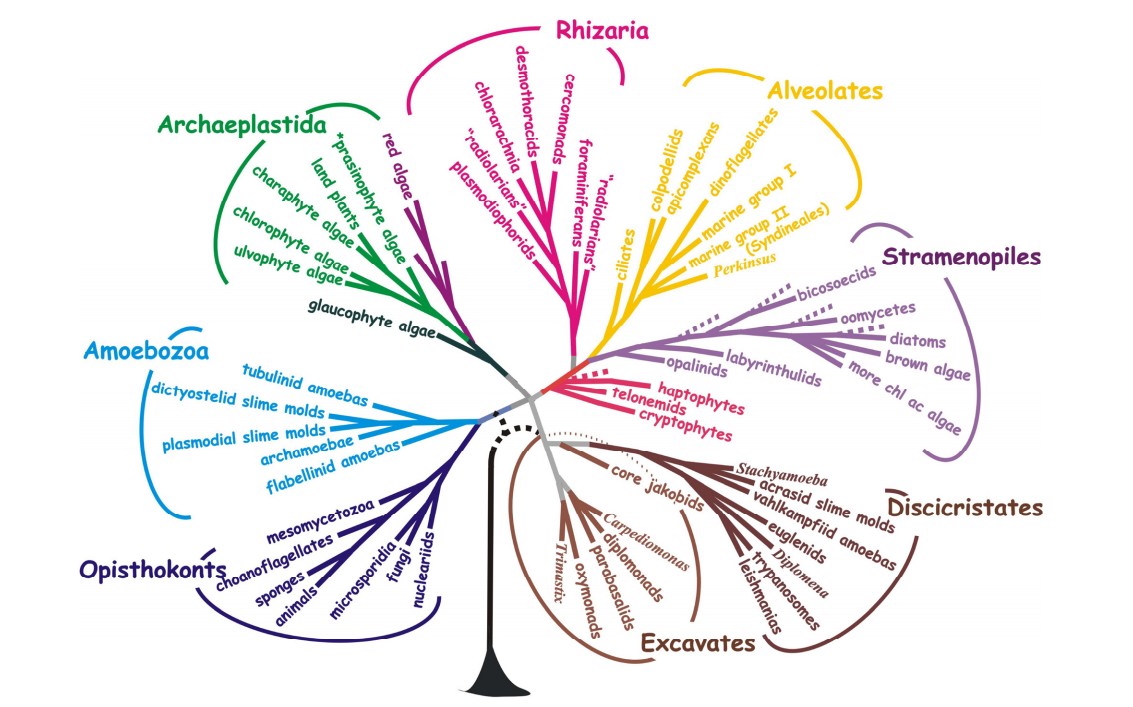
I don't think anything I write can do this book justice. It's staggering in scope, dense with details, mind-expanding and yet surprisingly readable. The premise bases a look at evolution loosely on The Canterbury Tales- the idea being that we time-travel skipping backwards to points where can meet up with common ancestors (the first is shared with chimpanzees) then on down through the ages meeting up with common ancestors of other primates, smaller mammals, fishes, etc etc on down to the one-celled organisms that arose at the dawn of time (and so many of them are still here on earth with us). Calling each chapter something like "The Peacock's Tale" or "The Rotifer's Tale" was a bit of a stretch- these weren't narrative tellings of anything, but very brief descriptions of the varied life forms and then lessons on what they can teach us about how we are all related. About gene transfer and how enzymes build proteins, about divergence and likewise convergence of species, about drifting and inheritance and molecular biology and tons more. I admit I did not understand it all, there were plenty of sections I had to read twice, but I didn't skip anything. Some of the stuff about molecular clocks and the math and chemistry when you get the end chapters about one-celled organisms that existed before plants converted solar energy into what others could consume- well it felt over my head. But there was so much that made me go wow, or sit and think hard, or feel just boggled by the huge swarms of life that we can't even see- like this diagram that shows how all life is related via molecular comparisons? it's got about eight branching groups each with five to eight branches in there- the others are all things like algae, slime moulds, amoebas, fungi and things I don't even know- radiolarians and pelobionts and so on. Plants are one tiny branch. Animals are another- and we are such a tiny fragment of that it's not even visible on the diagram! It is mind-numbing the way that Watchers at the Pond is. One main idea stated here was that we are more closely related- at the molecular level- to some bacteria, than those bacteria are to other bacteria. That's how huge and varied the expanse of life really is.

Some things of wonder in this book: this "brain map" that shows parts of the body in size difference according to how much of the brain is devoted to sensory input from and control of them. On the star-nosed mole biggest are the nose tentacles and then the digging paws. On humans, it's the hands, and only slightly less the facial features especially the mouth (for speaking). Ever wonder why a tiny injury on your hand can hurt so much? well they're so dang sensitive and your brain has so much invested in their control and dexterity. So many things I looked up more about: the bdelloid rotifers which have been reproducing asexually- apparently there are no males- for 40 million years. The trichoplax, a tiny organism only a few cells thick that reveals a lot about early life, and I never knew it existed. The tooth-billed pigeon otherwise known as the little dodo- because it's the only living relative of the dodo and is on the verge of disappearing now, too. The microorganisms that live in termite guts- without them, the termites could not digest cellulose. To those microbes, the termite is the whole world. Who is serving whom in that regard. I thought of all the little things living in my own gut. I thought much more closely about viruses and bacteria near the end of this book.

It was hard to wade through some of the later chapters about the tiny microscopic life forms, simply because all the terminology about them is unfamiliar to me. But I was wowed by the next-to-the-last chapter. I really liked the explanation comparing the spread of fire, to how reproduction can happen without heredity and why that's significant. Also the description of what the atmosphere and basic components on earth were like before oxygen really existed. There were other things that, when a scientist put them all in a vat and left it sitting for a few weeks, turned into a "soup" of biological compounds- which with the right catalyst could spring into life. My husband tells me he's read of an experiment where basic elements were put together and a living cell was made, unlike any other living cell that's existed before. I had no idea. Look up synthetic biology.

And here's another big picture idea- Dawkins tells how many times evolution has come up with specific things- eyes for example, or the power of flight. Very few things have happened only once (there's one bacteria that created a wheel!) So he posits that if most of life were wiped out, it would eventually all arise again- because the basic pieces would still be here- and just like the dinosaurs had all kinds of animals that filled all the niches- some that ate plants others that ate the grazers, some that climbed or flew or ate insects or used sonar in the ocean- the mammals spread to fill them after the dinosaurs were gone. On isolated islands like Madagascar or the continent of Australia, a slightly different form evolved to fill all the niches (think the marsupials). If an asteroid nearly wiped out all life, it would rise again and proliferate into all the diverse forms- maybe not with humans in it, but eventually with something pretty darn close. It's a lot to think about. I will say, I don't feel as much dread of us ending everything with our destructive ways- LIFE will recover again, we just wouldn't be here to see it! ha. And I'm also not quite so leery about GMO's either, if the commonality of genes between all living things like Dawkins outlines in here, is what I understood from it. We are all interrelated, much closer than you'd imagine.

No way is this even a fraction of what I gleaned from this book. I borrowed a copy to read from my brother in-law, but I'd sure like to have this in my own library someday. Maybe the newer edition, which I gather has a few updated chapters.

Rating: 4/5                      671 pages, 2004

Dec 9, 2020

Jonathan Livingston Seagull

by Richard Bach 

     On the heels of Argen the Gull I felt like revisiting Jonathan Livingston Seagull, especially since I knew I could read it in one sitting. It was a brief but lovely sitting. I had forgotten how very short it is (half the book is pictures of gulls, very nice pictures too although many are blurred to the point of abstraction). I must've read this five or six times somewhere between ten years old and college age, I was so taken by it. Younger me loved this book. Older me- well, I rolled my eyes a few times, then shrugged and just enjoyed it for what it is.

It's an allegory on religion or philosophy- some parts feel very much like Jonathan Seagull is supposed to be a messiah figure, other parts he's suddenly transcending space and time, talking of previous lives that led into this one, so- reincarnation? But the overall message is simply: be true to yourself. Strive for what you love to do best, and be kind while you're at it. At least, that's what I got. On the surface, it's a story about a seagull who wants to fly higher and faster, push himself beyond the limits. When the others are searching for food, he's out blazing around in steep dives over a hundred miles an hour (how a gull clocks his own speed is beyond me, but hey, one of the things you just have to shrug off). His antics get him banned from the flock, who have rules of conduct and a leader (not at all how gulls actually live, shrug again). Jonathan Seagull is shunned for being different. He flies away to perfect his aerial stunts by himself, and then finds other seagulls, though few in number, who also love flying just for the sake of flying. He joyfully strives to learn more with them. Then one day decides to go back to the old flock and see if there's anyone else stuck where he had been so long ago. He thinks of how much faster he would have progressed, if he'd had a mentor then. And starts teaching some eager young gulls his specialized flying skills, right in front of the disbelieving flock . . . 

Some of the far-out-there ideas in this book: death is just a shift to a different level of consciousness. You can transcend the limits of your body simply by putting your mind to it. Seagulls can communicate telepathically and instantly travel through space and time! But I still really like a lot of the rest of it. Bits like this: 
His vows of a moment before were forgotten, swept away... Yet he felt guiltless, breaking the promises he had made himself. Such promises are only for the gulls that accept the ordinary. One who has touched excellence in his learning has no need of that kind of promise. 

If our friendship depends on things like space and time, then when we finally overcome space and time, we've destroyed our own brotherhood! But overcome space, and all we have left is Here. Overcome time, and all we have left is Now. And in the middle of Here and Now, don't you think that we might see each other once or twice?

You will begin to touch heaven, Jonathan, in the moment that you touch perfect speed. And that isn't flying a thousand miles an hour, or a million, or flying at the speed of light. Because any number is a limit, and perfection doesn't have limits. Perfect speed- is being there. [this is where he learned to move from one place to the next in a blink]
Heavily colored with nostalgia for me, of course. If today was the first time I were reading this, well I don't know what I'd think. If you've read the book, go look at the reviews on LibraryThing, you have to read the one that posits Jonathan Livingston Seagull being on Oprah. It's absolutely hilarious. I laughed so hard.

Rating: 4/5            93 pages, 1970

More opinions:

Dec 8, 2020

Argen the Gull

by Franklin Russell 

     There is not a single word of dialog in this book. Yet it is overwhelmingly full of sound- the birds scream, gurgle, choke, mutter and mew at each other. They communicate even more strongly with gestures- stretching tall to threaten, hunching down submissively, flattening their feathers in fear. Frequently launching outright attacks with stabbing beaks and flailing wings. Especially the protagonist, a herring gull named Argen who lives mostly around an estuary on the edge of an unnamed ocean. After his short period as a nestling dependent on his parents, and a few years spent exploring the area while learning how to find various food sources, he asserted himself against the other gulls with such an aggressive drive to gain food and live, that he was often described as being full of rage against the other birds. This story is not at all a pretty picture of nature. The gulls are scavengers and hunters- they squabble and steal from each other, smash shellfish, grab herring and smelt from the sea, pull apart carcasses found on shore (the aftermath of storms was a time of plenty for a seagull) and even pillage eggs and hatchlings from rookeries- including their own- in times of hunger. Any opportunity was taken. 

I thought the narrative- all from the viewpoint of one gull as he grows, learns from experience and observation driven by instinct, and makes his way through the world- would have a lot about raising the young, that his strong demeanor would soften when he fed his own chicks- but actually that's just a brief thing- it describes the urge he feels to find a mate, return to the offshore island when they breed, and the ceaseless to-and-fro bringing food to the offspring, but not any tender feelings for them. Well, I should have expected that by the time I got so far. Not all his breeding years are successful- sometimes other birds kill his young, or the weather is too cold, and once there is a famine. But there are many good years, and with three different partners he has through his long life, Argen raises many young gulls successfully. 

Overwhelmingly through this book is the power and sensation of the elements, the huge forces that sweep across the shores- changes in weather and currents that affect all the living things in a cascading effect. The swarms of other seabirds, fishes, shrimps and myriad tiny things in the surf and across the sand wax and wane. Argen witnesses a whale being killed by ocras one time, sees ducks dragged down by seals, evades hawks, eagles and falcons, and one year survives an injury to his wing that sends him creeping through the marsh to hide- a strange environment for him. I honestly though at some point I was going to start finding this account a bit tiresome- but at the end of each chapter I would turn another page and keep on reading- wrapped into the tides, the pushing winds, the blinding sun rising over the edge of the winking water. It's pretty incredible how well the author conveys the powerful forces of nature, with the life of one relatively small but definitely fierce creature thriving in it- until finally he reaches old age (for a bird) and time stretches differently, things that once filled him with passion simply don't anymore, and things wind to an end. It was very moving.

Rating: 4/5                      240 pages, 1964

Dec 6, 2020

Gull Number 737

by Jean Craighead George 

     Luke spends summers with his family in a small building on an island beach, where his father does research on seagull behavior. In particular, he's attempting to recreate experiments done by Dutch scientist Niko Tinbergen, to show that the birds have the same instinctive behavior in completely different areas of the world. I found this particularly delightful, as I've read Tinbergen's book myself, remember it very well and knew exactly what they were talking about. Luke's father is adamant about doing his studies scientifically and collecting enough data- which means repeating the same thing over and over. Luke himself gets frustrated with the tedium of the work, and sees different things in the birds' behavior that he wants to explore, but his dad gets angry and dismissive, sees this as a distraction and doesn't want to go into those other ideas. Luke also has a difficult relationship with his sister, jealous that when she gets a job on a lobster boat against their father's wishes, he lets her go ahead and keep working there, while Luke is forced to continue helping with the gull research. He chafes under his father's rule and wants to find another avenue for himself. Yet at the same time he finds himself becoming fond of certain individual seagulls and interested in their daily doings (some chapters are from the gulls' point of view, which is nice). When the summer winds down his father can't find anyone who will fund continuation of their study, and the reluctant decision is made to close the bird lab. Luke is surprised that he's actually disappointed their summers at the gull rookery might end.

The final chapters take a sudden turn when an accident at a local airport is caused by seagulls and other birds that frequent the airfield (and a man they know from the island was on board, making it very personal). Suddenly his father's knowledge of seagull behavior is in demand, as the airport authorities try to solve their bird problem. Luke gets to see first hand how the research material can be of use in the real world, although he still is at odds with his father, as they have different ideas on what the best solution is.

This book was pretty wonderful. I don't think I've ever read another juvenile fiction that had such a clear picture of field research work before- including the difference between applied and basic research, the struggles to obtain funding, the long boring hours of observation when nothing happens. It's also rather dated- sometimes in a quaint way. I can't imagine a teenager being allowed to just wander through an airport and go up into the traffic control tower! The sister gets roundly chastised for saying a mild swear word at the dinner table (her parents dramatically blame the rough compnay on the lobster boat as a bad influence) and the main character's attitude towards girls- especially his own sister- are rather demeaning even though he means it kindly. I didn't find this bothersome though, it just reminded me soundly of the timeframe.

Rating: 4/5                198 pages, 1964

Dec 4, 2020

The Cats of Lamu

the Feral Cats of an Exotic African Island
by Jack Couffer

     It was lovely to re-visit this book. I would not change one word of what I said on it eleven years ago. Delightful and intriguing account of a study on feral cats the author delved into while living as an expat on Lamu Island (off the coast of Kenya). What I found more interesting this time around, that I don't think I mentioned before: more tidbits of culture, like how the author felt he had to hire a housekeeper and then a cook, because that's simply how it was done on the island. The letter he includes that his housekeeper wrote to him when he was back living in America, is so different in syntax it takes concentration to read as if the person who wrote it thinks in different patterns.

The mention of how islanders interacted with the cats, even thought at first it was assumed most were wild and untouchable. A few would let themselves be petted, or even rub against people in greeting. One man once gave a beach cat a bath in the sea "because he looked dirty". Several people he found out sheltered dozens of cats in their homes- one old woman routinely fed about forty of them in her three-room house. Also at the village school, some fifty cats were regularly fed and hung out all the time, sitting among the children- which surprised the author when he discovered it, and a few photos showing the cats among the boys are just charming. There's mention of the island donkeys that provide nearly all transport and load-carrying, as the streets are too narrow for cars. There are bats- both insect-eaters and frugivores. 

I loved a description of kids on the beach making toys out of palm fronds that skidded across the sand, pushed by the wind, how a kitten pounced on one repeatedly. And of course, all the little observations of the cats' lives in their various groups- some claim the beach, others live at the dump, yet others in town where they get regular handouts. They fight for status, court each other, some move from one group to another. Kittens are born and raised, hierarchy shifts when an older male dies. Many hours just spent in quiet companionship, the cats sitting together, or each in its little patch of shade spaced evenly apart. They often go about their own affairs, where the author couldn't follow (through strangers' gardens and private courtyards), much of their lives remaining a mystery that he tried to piece together. Beautiful photographs. 

Though relatively brief, the book spans many years, and he mentions at the end how things have changed from when they first moved to Lamu. I can only assume it has changed even more since then. Yet it looks such a timeless place in the pictures, the ancient-looking cats strolling independent on the beaches under the bluest sky.
 
Rating: 4/5                  156 pages, 1998

Dec 3, 2020

The Encyclopedia of the Cat

Comprehensive Illustrated Guide to the World's Recognized Breeds, Varieties and Colors 
by Bruce Fogle, M.D.

     I've had this book a long time, and thumbed through it to admire the pictures before- now I've actually read through the text as well. It really is very comprehensive. The first section has double-page spreads with detailed summaries on the history of cats- their evolution, their relatives in the wild, how they have featured in art and culture throughout history, including folktales, superstitions, comic strips and film appearances. Next there is a section on cat physiology- everything from how their skeletal structure makes them so flexible, to how the brain responds to messages, muscular function, digestive system, reproduction, the skin and fur (barrier and beauty), and genetics. In most of this the book is far more detailed than the last one I read, but the genetics here are explained more simply so I think I actually understood that better. When you get past diluting genes into how some colors mask others it still gets confusing though. 

Going through the pages on cat breeds- more than sixty of them- it's easy to see that many breeds which I once knew mainly for their distinctive coloring, now come in patterns brought in from other cat breeds. So there's Siamese with tortisehell points and Exotic Shorthairs with dark Siamese-influenced points, and vice versa all over the place. To me this seems a bit odd- the desire to always make one cat have the colors of another, but I often feel the same about flowers that are bred to look specifically like ones they aren't. I tend to like the classic, outdated appearances. Seems there are only a few that still have just one, two or three "allowed" colors. This book has quite a few cat types I had never heard of before- especially the ones with curly fur! Do an online search for longhair Selkirk Rex or the La Perm, they look so striking. I had heard of the Japanese Bobtail, American Curl, Sphynx and Munchkin cats before, but the Pixiebob was a new one to me. Purportedly comes from a cross of domestic cats and wild bobcats, but it's never been proven. There are other cats I was vaguely familiar with in this book that come from crosses with wildcats- the Ocicat and Bengal, but there's no page for the Savannah. Maybe in newer editions- I see a lot of different cover images for this book online and guess that there are updated versions. One of my favorite breeds is the Egyptian Mau. 

Finally, at the end of the book there's a section on general care and health issues, including basic first aid in case of accident or injury, with instructions on how to do CPR and artificial respiration for a cat. I hope I never have to do so, but now I also know how to treat a cat for shock and safely move an injured one to the vet. 

It's a stunning book that's very engaging to look through, with so many beautiful and interesting felines depicted. The photographs are not quite as good quality as in Legacy of the Cat, many of them a little grainy or rough around the edges, but that's a small quibble I have.

Rating: 4/5            240 pages, 1997

Nov 29, 2020

Being Mortal

Medicine and What Matters in the End 
by Atul Gawande

     Traditionally, people used to live with their grown children or extended families when they grew old and became incapacitated. Now it's far more common (at least here) for the elderly to live in nursing homes or assisted living units. There's also the option of in-home hospice care, but I think what few would really want is where many end up in their final moments- holding on until the very end suffering from unpleasant procedures or unconscious, tethered in a hospital bed. This very thoughtful and sobering book looks at all those scenarios, describing the history of how nursing homes and assisted living became a thing, looking at how they've changed over the years, and examining whether those options really are in the best interest of the elderly people they serve. The doctor (I must read more by him!) also looks carefully at what people actually want as the end of their lives draws near- what's most important to them, and how can it be achieved. It's not always seeking every last treatment that has the smallest chance of a positive outcome. It's usually the simple things that begin to matter most- being close to family and friends, maintaining some autonomy, feeling like their lives have had worth . . . There are a lot of poignant examples from people Dr. Gawande has known- his own acquaintances, patients, friends, and finally, in a very personal and moving account, his own father. It's difficult to read at times and makes you think about the hard things that nobody really wants to discuss, but points out how important those discussions are before they become crucial. I'm very glad I read this.

Rating: 4/5             282 pages, 2014

More opinions:

Nov 10, 2020

The Goshawk

by T.H. White

     Relates a time when the author bought a young wild goshawk and attempted to tame it, using several old books on falconry as a guide- with outdated methods. I am not, of course, a falconer myself but I've read just enough about it to recognize when things were going wrong. White admired and loved the bird for its fierce beauty, but also seemed to mostly want to dominate it and take pride in forcing it to his will- so it seemed to be all one step forward and two steps back. He didn't have a mentor and succumbed to very human failings- frustration, impatience, brash decisions. Some of the scenes are hard to read, I cringed for the bird. But there's also riveting descriptions, and interesting little asides (also many that really wandered or at least I had no frame of reference). My favorite passage was how the hawk carefully examined water when once he was set on a board in a small pool, and eventually dipped his feathers to bathe. I liked very much the author's joy and satisfaction in figuring out and making things to use in his endeavors. Also appreciated how brutally honest the whole account was- White tells at the end, how later on he successfully trained other hawks (using more modern methods I gather) and explains plainly how many of his efforts didn't work and why, in hindsight. If I hadn't read H is for Hawk I might not have approached this one, so I'm very glad I read the other first, as it gave me more perspective. 

Rating: 4/5            215 pages, 1951

more opinions: Vulpes Libris
anyone else?

Nov 3, 2020

The Village Horse Doctor

West of the Pecos 
by Ben K. Green

     This one was plenty interesting and got a few chuckles from me as well. Has a lot of similar subject material to The Time It Never Rained, but it's more lighthearted in tone and feels like you're listening to someone sitting telling you tales. Some of the stories are very brief, others draw out over several chapters. It's also about ranching in a dry area of Texas, but in this case the author is relating his own experiences, working as a veterinarian. He travelled vast distances to treat and care for rancher's livestock- namely sheep but also horses, cattle and sometimes pet dogs and cats. He tells of his early years trying to get a foothold in the region and gain the trust of the local people, and of his ongoing efforts to diagnose illnesses caused by animals eating toxic desert plants- especially during times of drought. He ran a small laboratory and describes his methods of inquiry- doing postmortems on dead livestock, taking samples of plants, stomach contents, etc and extracting the toxins, even how in a few cases he developed medicine specific to plant issues in the region- and the great difficulties in getting the medicines made so he could distribute them. In many cases his efforts to find out what had caused animals to sicken or die took a lot of thought and sleuthing, which is engaging to read about. Sometimes when all the adults were at a loss, it would be some keen observations made by children on the ranch that helped him figure it out. He's also pretty good at drawing character studies and pointing out failings of human nature around him, admiring jobs well done and fine animals, watching shady deals happen, being somewhat involved in local horse racing, and so on. At one point he has to deal with a rabies scare, during another time a serious outbreak of sleeping sickness among horses. The strangest case was when he saved a horse's eye by extracting a foreign object that somehow got into the eye socket behind the eyeball- it was a glass marble. I'm still scratching my head over that one. Overall a rather a different slant from the other Ben K. Green books I've read before, and quite enjoyable.

Rating: 4/5                306 pages, 1971

Nov 1, 2020

The Time It Never Rained

by Elmer Kelton 

     Liked this one much better than I had remembered. I've read it at least twice before, though not in over a decade. Set in West Texas, it's about a rancher struggling to hold onto his land and his livestock through a drought that lasts seven years. His love is cattle, but it's sheep that pays the bills- so quite a bit of this is about sheepherding and shearing time. When things start to get tough, he has to face the bitter choice of selling off some of his livestock, eventually even his sheep herd dwindles and he's forced to make some hard choices. Ranchers around him accept government assistance but Charlie Flagg resents the idea of "taking handouts" and refuses to sign up for the relief program, sticking it out on his own, whittling away his outfit, letting go his hired help. Tries to get his son, who is into rodeo and sees no value in the dried-up land, to come back and help him keep the ranch going, but that doesn't work out. Watches how others around him attempt to keep things afloat- some of their decisions turn out poorly, and others just barely help them squeak by. Like burning the spines off prickly pear to use it as livestock feed. I had forgotten entirely about the angora goats, so the ending was a surprise all over again to me, even though I did remember it had a hint of coming hope in the final pages. More about the land use and animal husbandry, it's also about the local politics in a small town, the financial issues in running the ranch, the uneasy relationship between landowners, Mexicans, and those recently come from across the border- frightened of being caught but desperate for work. I had also forgotten how much of this story is about the younger people, some chapters entirely told form the viewpoint of Charlie's son, his neighbor's daughter, or his foreman's oldest boy. It gave a good perspective changes as things shifted from the hands of the older generation into the new. The book gets a bit preachy sometimes with long ranting conversations, but I didn't mind, I was in the mood for a slow read. It was worth keeping around all these years, I think.

Rating: 4/5                      373 pages, 1973

Oct 6, 2020

Wild Ones

-Looking at People Looking at Animals in America
by Jon Mooallem

     In this book the author explores the attitudes of everyday people to threatened and endangered wildlife, and the convoluted efforts of conservationists and scientists to save them. Convoluted because the more closely you look at each issue, the more insurmountable and unrealistic the effort appears to be- even though of course we can't bear to let go and stop trying. In this regard, it shared a lot of sentiment with Inheritors of the Earth- the world is going to keep changing, we have now moved beyond the point of being able to halt our impacts on wildlife and the land.

It starts with the author deciding to visit three areas where he can see in person animal species that are struggling, on the brink of extinction as it were. For some of the trips he takes his young daughter along- so part of this is also looking at what children understand of wildlife issues (most young kids don't care and are very human-centric and selfish, he concludes, while older children express concern for the welfare of wild animals) and how his own three-year-old responds to seeing them. He goes to Churchill to view the polar bears- which every year face a longer stretch of fasting waiting for sea ice to form, while more cubs starve and never make it to adulthood. He goes to Antioch Dunes, a place where the endangered Lange's metalmark butterfly lives on one host plant species that thrives on shifting dunes- but by the time it was made into a wildlife refuge so much sand had been mined and trucked away the ecosystem changed drastically, and now it's only through the constant efforts of humans to eradicate 'weeds' and plant the butterfly's naked stem buckwheat that keeps the species going. Finally, he travels to Michigan to join the team of Operation Migration and see how whooping crane chicks, raised in captivity by men masked in crane costumes, are led by ultralight planes on their first migration. In each case, the author talks with scientists, conservationists, and bystanders alike. He interviews the camera crews and the host who puts out birdseed (whooping cranes unexpectedly visited her yard). He talks about shifting baselines, how the public's perception of wildlife issues is influenced and changes over the years, how charismatic species get all the attention while lesser-known and smaller ones quietly disappear. There's discussion on how bison were nearly wiped out and since recovered and how canada geese went from being seen as rare harbringers of changing seasons to outright pests. There's the true story about a humpback whale that swam up a river and stranded itself- and so many people came to view this one animal in trouble, they trampled all over the butterfly refuge which was even worse for that species and its host plant. The parts about the legal tangle of how individual species get protection, are listed or de-listed as endangered, and suffer from lack of funding, was a bit tedious to read through. 

But it becomes very clear that for many species, people are obviously propping them up, and if we withdrew our support, they would simply disappear- in some cases, very quickly. How long do we continue that effort? (For example, the whooping cranes led by aircraft on their flight paths have successfully migrated on their own afterwards- considered a success because now they can live free of human assistance. But when this book was written, none of them had raised their own chicks. So that population could only continue if people kept hatching, raising and releasing cranes to supplement it. Never was self-sustaining). I don't know what to think of the message this book gives me. On the one hand, it's encouraging to see how many people do care about wildlife and are going to great efforts to help our fellow creatures survive- even if some of them don't act as wild as they used to (whooping cranes visiting bird feeders, whitetail deer in backyards). On the other hand, the glum none-of-this-matters-in-the-end attitude makes me feel very depressed. What we have done to our Earth is dismal. As long as humans keep taking up so much space and increasing our numbers and use of resources, I don't see how things can change or even be sustainable. Much less remain habitable for the diversity of species it once supported, in the long run.

Note: I shortened the subtitle in my heading. In entirety it is: A Sometimes Dismaying, Weirdly Reassuring Story About Looking at People Looking at Animals in America.

Rating: 4/5                339 pages, 2013