Uncommon Bonds with Common Birds
by Julie Zickefoose
A lifelong bird-watcher and rehabilitator, Zickefoose shares some of her intimate experiences with various feathered species. There are backyard birds she feeds and sees up close, and quite a few injured or orphaned songbirds she cared for: chickadees, starlings, Carolina wrens, scarlet tanagers, hummingbirds, titmice, phoebes, sparrows, cardinals, and of course bluebirds. There are heartwarming stories of healed, released birds- some of which seemed to revisit her yard and recognize her much later. There are stories that end sadly, as well. Two sobering tales of wild birds who were unreleasable yet seemed to bear captivity well, so she kept and cared for them into old age- a savannah sparrow for fourteen years, an orchard oriole for seventeen. There are observations of large, wilder birds- an injured turkey vulture found roadside, an osprey nest studied through a season, a ruffed grouse that would follow her on walks in the woods, wild hawks that prey on the very songbirds she feeds; least terns and piping plovers whose nesting sites she worked to protect. There are her eloquent longings for the hope of (anyone) ever sighting an ivory-billed woodpecker, and her look at the conflicting views over hunting lisences issued for mourning doves and sandhill cranes. She also discusses how feeding birds in the winter months affects their populations. And last of all the most intimate is a chapter about her lifelong commitment to a pet chestnut-fronted macaw.
Through all the varied essays, the close and thoughtful observations come through with both skillful writings and a beautiful artist's touch. I love looking at her detailed sketches and paintings of birds just as much as reading her words. She knows birds so well, and is always seemingly ready to learn more, and share it with those of us who, like me, absorb from the sidelines.
Written before her compilation of the studies on infant bird development, this book contains some of the same material - I instantly recognized the paintings and a few passages - but with broader focus and more circumstantial details, about the people who brought her orphans, for example. It didn't feel like repeated material, but added richness.
Rating: 4/5 355 pages, 2012
Jun 21, 2017
Jun 20, 2017
The Moon and Sixpence
by W. Somerset Maugham
* * * warning there are spoilers here * * *
It is a highly fictionalized account of the life of Paul Gauguin; in this novel the character of the artist is named Charles Strickland. It is told through the eyes of a bystander, a man who happens to meet Strickland's wife at a dinner party and later becomes curious about the man's character and becomes a close acquaintance. I wouldn't say friend, as he never liked the man, who had a blatant lack of regard for other people's feelings. In this story, Strickland suddenly leaves his wife and moves to France in order to pursue his art undistracted. The narrator encounters him again through the friendship of another artist- a simple, trusting man who admires Strickland's then-unrecognized genius. When Strickland, often destitute, falls seriously ill, this other artist takes him in; things happen and the poor man's marriage is destroyed. Strickland leaves- and our narrator (willingly) looses track of him for a while. Later he conveniently happens to meet other men who have had later acquaintance with the artist, and finds out that Strickland went to live in Tahiti, where he lived among the natives, seeking out a primitive idyll. He lived with a young woman who was his unofficial wife, and died in isolation and great suffering from leprosy. All the while, to the very last trying to paint and express some ideal vision from his soul.
While the book has a rather pessimistic view of human nature- at least, as far as the character of Strickland is concerned- it is so well-written I did enjoy it. Being told as a second-hand account, it has a lot of other characters and little side-stories. The writing style and descriptions of life in Paris, reminded me somewhat of George Orwell's work, Down and Out in London and Paris.
It did spur me to look up more about Gauguin, so I learned how many liberties this story actually takes. While a lot of it is roughly true to case, he didn't, for example, leave his wife in the way described. He did have quite a number of sales during his artistic career, had a dealer, didn't die in complete obscurity - nor of leprosy- and lived on a few south sea islands in succession, not just Tahiti. He had a different, young "wife" at each tropical locale- quite arguably the man was a pedophile. One of the scenes in the book which I found most moving, where he painted the entire walls of his house in a mural considered a masterpiece, and then his young wife burned it to the ground at his request after his death, was completely fabricated. I did wish more of the story covered his life in the tropics- that was such a short segment at the end of the novel.
The idea of a man driven to express something, having no desire for anything but to paint, and forsaking everything in his comfortable life to pick this up at age forty, facing the ridicule of those in polite society around him- well, there is something admirable in that. I know what it is like to be enthralled by the act of creation with your hands, even if the resulting product is not so great- to want to keep doing it just because you feel so alive when you do.
Does anyone know what the title refers to? I could not quite figure that out. I'm now curious to read a travelouge Gauguin himself wrote, about his time in Tahiti, called Noa Noa, and perhaps another fiction loosely based on his life by Mario Vargas Llosa, The Way to Paradise.
Borrowed from a family member.
Rating: 4/5 264 pages, 1919
* * * warning there are spoilers here * * *
It is a highly fictionalized account of the life of Paul Gauguin; in this novel the character of the artist is named Charles Strickland. It is told through the eyes of a bystander, a man who happens to meet Strickland's wife at a dinner party and later becomes curious about the man's character and becomes a close acquaintance. I wouldn't say friend, as he never liked the man, who had a blatant lack of regard for other people's feelings. In this story, Strickland suddenly leaves his wife and moves to France in order to pursue his art undistracted. The narrator encounters him again through the friendship of another artist- a simple, trusting man who admires Strickland's then-unrecognized genius. When Strickland, often destitute, falls seriously ill, this other artist takes him in; things happen and the poor man's marriage is destroyed. Strickland leaves- and our narrator (willingly) looses track of him for a while. Later he conveniently happens to meet other men who have had later acquaintance with the artist, and finds out that Strickland went to live in Tahiti, where he lived among the natives, seeking out a primitive idyll. He lived with a young woman who was his unofficial wife, and died in isolation and great suffering from leprosy. All the while, to the very last trying to paint and express some ideal vision from his soul.
While the book has a rather pessimistic view of human nature- at least, as far as the character of Strickland is concerned- it is so well-written I did enjoy it. Being told as a second-hand account, it has a lot of other characters and little side-stories. The writing style and descriptions of life in Paris, reminded me somewhat of George Orwell's work, Down and Out in London and Paris.
It did spur me to look up more about Gauguin, so I learned how many liberties this story actually takes. While a lot of it is roughly true to case, he didn't, for example, leave his wife in the way described. He did have quite a number of sales during his artistic career, had a dealer, didn't die in complete obscurity - nor of leprosy- and lived on a few south sea islands in succession, not just Tahiti. He had a different, young "wife" at each tropical locale- quite arguably the man was a pedophile. One of the scenes in the book which I found most moving, where he painted the entire walls of his house in a mural considered a masterpiece, and then his young wife burned it to the ground at his request after his death, was completely fabricated. I did wish more of the story covered his life in the tropics- that was such a short segment at the end of the novel.
The idea of a man driven to express something, having no desire for anything but to paint, and forsaking everything in his comfortable life to pick this up at age forty, facing the ridicule of those in polite society around him- well, there is something admirable in that. I know what it is like to be enthralled by the act of creation with your hands, even if the resulting product is not so great- to want to keep doing it just because you feel so alive when you do.
Does anyone know what the title refers to? I could not quite figure that out. I'm now curious to read a travelouge Gauguin himself wrote, about his time in Tahiti, called Noa Noa, and perhaps another fiction loosely based on his life by Mario Vargas Llosa, The Way to Paradise.
Borrowed from a family member.
Rating: 4/5 264 pages, 1919
More opinions: Living 2 Read
anyone else?
Jun 17, 2017
What Are They Thinking?!
the Straight Facts about the Risk-Taking, Social-Networking, Still-Developing Teen Brain
by Aaron M. White and Scott Swartzwelder
I got this book because of a concerned email from the public school administration (two months ago) sent to make parents aware of the new film Thirteen Reasons Why which was probably going to be popular among curious teens, and why it was so alarming. I haven't read the book or seen the film (nor do I want to), but I've heard about it. I don't think my pre-teen has any interest in it either, but I'm sure she will be exposed to the ideas of peers who have, and it's always best to arm yourself with knowledge. I don't often read self-help or parenting type books, but I went to the library looking for something about how to talk with teenagers about suicide. (My daughter is not suicidal. But I'm sure she will hear other kids talking about it in regards to this film).
The book didn't really give me that, but it was very informative in a different way. It's about how the brains of adolescents are still developing, in ways that make them eager to show off and take risks, short-sighted when it comes to planning, often unable to control strong emotional reactions, easily stressed, and quick to learn new habits which can be lifelong. It goes into a lot of detail about the actual structure of the brain and how connections are being made and how certain behaviors, food intake, sleep patterns and substance use affects the brain during this developmental stage. Alcohol and drug use are particularly scary. In a nutshell, the book discusses: mental health issues, sugar and caffeine, eating disorders, sleep habits (our local school system starts high school latest of all, and now I know why), driving (how the brain learns and manages that multitasking skill, how easily it is distracted, exactly what aspects of teens driving are risky), influences of digital media on the brain, sexuality, exposure to violence and drugs.
That's a lot to take in. The authors are a biological psychologist and a neuropsychologist. They quote a lot of research and studies, but keep it brief and easy to understand. There is not a lot in the way of what-to-do when your kid acts a certain way, or how to talk with them about things- it's more about understanding how their still-developing mind affects their emotional reactions, thought processes, how they learn and make choices- so you get an idea of what's going on and are not taken unawares. It does point out a lot of warning signs: when to recognize your teen is just being a teen going through normal ups and downs, and when they are showing signs of something you need to address (ie a mental health disorder or substance abuse).
On a kind of side note, one little tidbit I found really interesting: in one state the brain goes through while in process of falling asleep, "some people experience hypnagogic hallucinations during this stage, seeing imaginary objects or people in the room." It is common in young children and diminishes with age. So when your kid is frightened at seeing a monster in the corner or thinking of ghosts in the closet- they may actually be experiencing a minor hallucination when on the verge of falling asleep! On another note, I was kind of surprised at how abruptly the chapter on drugs ended. It discussed a lot of substances in succinct detail- telling what they physically do to the brain, how addictive they are, and how dangerous. The part about cocaine didn't mention anything about actual damaging affects to the body. Which I was expecting, because it was included in all the other sections.
Borrowed from the public library.
Rating: 3/5 288 pages, 2013
by Aaron M. White and Scott Swartzwelder
I got this book because of a concerned email from the public school administration (two months ago) sent to make parents aware of the new film Thirteen Reasons Why which was probably going to be popular among curious teens, and why it was so alarming. I haven't read the book or seen the film (nor do I want to), but I've heard about it. I don't think my pre-teen has any interest in it either, but I'm sure she will be exposed to the ideas of peers who have, and it's always best to arm yourself with knowledge. I don't often read self-help or parenting type books, but I went to the library looking for something about how to talk with teenagers about suicide. (My daughter is not suicidal. But I'm sure she will hear other kids talking about it in regards to this film).
The book didn't really give me that, but it was very informative in a different way. It's about how the brains of adolescents are still developing, in ways that make them eager to show off and take risks, short-sighted when it comes to planning, often unable to control strong emotional reactions, easily stressed, and quick to learn new habits which can be lifelong. It goes into a lot of detail about the actual structure of the brain and how connections are being made and how certain behaviors, food intake, sleep patterns and substance use affects the brain during this developmental stage. Alcohol and drug use are particularly scary. In a nutshell, the book discusses: mental health issues, sugar and caffeine, eating disorders, sleep habits (our local school system starts high school latest of all, and now I know why), driving (how the brain learns and manages that multitasking skill, how easily it is distracted, exactly what aspects of teens driving are risky), influences of digital media on the brain, sexuality, exposure to violence and drugs.
That's a lot to take in. The authors are a biological psychologist and a neuropsychologist. They quote a lot of research and studies, but keep it brief and easy to understand. There is not a lot in the way of what-to-do when your kid acts a certain way, or how to talk with them about things- it's more about understanding how their still-developing mind affects their emotional reactions, thought processes, how they learn and make choices- so you get an idea of what's going on and are not taken unawares. It does point out a lot of warning signs: when to recognize your teen is just being a teen going through normal ups and downs, and when they are showing signs of something you need to address (ie a mental health disorder or substance abuse).
On a kind of side note, one little tidbit I found really interesting: in one state the brain goes through while in process of falling asleep, "some people experience hypnagogic hallucinations during this stage, seeing imaginary objects or people in the room." It is common in young children and diminishes with age. So when your kid is frightened at seeing a monster in the corner or thinking of ghosts in the closet- they may actually be experiencing a minor hallucination when on the verge of falling asleep! On another note, I was kind of surprised at how abruptly the chapter on drugs ended. It discussed a lot of substances in succinct detail- telling what they physically do to the brain, how addictive they are, and how dangerous. The part about cocaine didn't mention anything about actual damaging affects to the body. Which I was expecting, because it was included in all the other sections.
Borrowed from the public library.
Rating: 3/5 288 pages, 2013
Jun 5, 2017
Baby Birds
An Artist Looks Into the Nest
by Julie Zickefoose
This is a beautiful, beautiful book. I borrowed it from the library same day as Bird Brain, and have spent all this time reading it (with several renewals), very leisurely to absorb and enjoy as much as possible. The author is a very capable artist, who also happens to be licensed to rehabilitate wild birds. She spends a good amount of time raising orphaned songbirds, and thus had the handling skills to undertake this project.
She decided it would be interesting, and perhaps reveal new knowledge, to paint daily life-sized studies of young birds from hatching through fledging. She accomplished this with seventeen different species, presented in this book- and mentioned in the afterward that she was starting on another, so the project continues! Most of the birds were nesting on her own property, close enough to the house she could view them frequently, or in nesting boxes she monitors closely. Others were nesting near the homes of friends or colleagues, who obligingly took daily photographs for her to use. A few birds were orphans she raised, and in several cases she began studying a nest only to find it empty after a few days- the infant birds killed by parasites, or a predator, or the cold- but fortuitously she received orphans of the same species at about the same growth stage as when she'd left off with the first nest, so could continue the record.
The revelations of these delicate, detailed watercolor and gouache paintings is amazing. I never thought how differently the chicks of various species grow, and I never realized how fast their growth rate is. Some go from helpless, ugly naked hatchling to a bird able to hop and flap among the branches in just ten or twelve days. There are two main reasons for this: getting out of the nest makes the young birds far less vulnerable to predation, and with the quick growth rate, the parents can often raise two or three broods in a season- advantageous when not many make it to adulthood.
I learned so much from this book. Seeing how the babies grow was eye-opening: some develop the feet first, or the wings, depending on what particular skills they need. Some hatch with fluffy down, others completely naked and sprout real feathers sooner. Most are fed high-protein diet of insects by the parents, but some finches eat a purely vegetarian diet (which foils nest parasites whose babies can't live on that- cowbirds, cuckoos) and the mourning dove feeds its young babies crop milk. A few times the author helped the babies out by cleaning the nest when it had mites - they feed on the nestling's blood and it can kill them. But she found that one bird places spider egg cases in its nest- and when the spiders hatch, they eat the mites.
The birds she studied include: carolina wren, eastern bluebird, tree swallow, ruby-throated hummingbird, chimney swift, house sparrow, eastern phoebe, carolina chickadee, european starling, northern cardinal, prothonotary warbler, tufted titmouse, indigo bunting, mourning dove, house finch, house wren and yellow-billed cuckoo. Lovely to read of the daily observations, the growing awareness of the infant birds to their surroundings, the little incidents with raising orphans. There is so much- I can't in any way share all the details- you'd have to read the book! I remember some time ago reading another book that focused on nests of birds, by Joan Dunning, and now I want to borrow that one again so I can compare what I learned from the two.
Rating: 5/5 336 pages, 2016
by Julie Zickefoose
This is a beautiful, beautiful book. I borrowed it from the library same day as Bird Brain, and have spent all this time reading it (with several renewals), very leisurely to absorb and enjoy as much as possible. The author is a very capable artist, who also happens to be licensed to rehabilitate wild birds. She spends a good amount of time raising orphaned songbirds, and thus had the handling skills to undertake this project.
She decided it would be interesting, and perhaps reveal new knowledge, to paint daily life-sized studies of young birds from hatching through fledging. She accomplished this with seventeen different species, presented in this book- and mentioned in the afterward that she was starting on another, so the project continues! Most of the birds were nesting on her own property, close enough to the house she could view them frequently, or in nesting boxes she monitors closely. Others were nesting near the homes of friends or colleagues, who obligingly took daily photographs for her to use. A few birds were orphans she raised, and in several cases she began studying a nest only to find it empty after a few days- the infant birds killed by parasites, or a predator, or the cold- but fortuitously she received orphans of the same species at about the same growth stage as when she'd left off with the first nest, so could continue the record.
The revelations of these delicate, detailed watercolor and gouache paintings is amazing. I never thought how differently the chicks of various species grow, and I never realized how fast their growth rate is. Some go from helpless, ugly naked hatchling to a bird able to hop and flap among the branches in just ten or twelve days. There are two main reasons for this: getting out of the nest makes the young birds far less vulnerable to predation, and with the quick growth rate, the parents can often raise two or three broods in a season- advantageous when not many make it to adulthood.
I learned so much from this book. Seeing how the babies grow was eye-opening: some develop the feet first, or the wings, depending on what particular skills they need. Some hatch with fluffy down, others completely naked and sprout real feathers sooner. Most are fed high-protein diet of insects by the parents, but some finches eat a purely vegetarian diet (which foils nest parasites whose babies can't live on that- cowbirds, cuckoos) and the mourning dove feeds its young babies crop milk. A few times the author helped the babies out by cleaning the nest when it had mites - they feed on the nestling's blood and it can kill them. But she found that one bird places spider egg cases in its nest- and when the spiders hatch, they eat the mites.
The birds she studied include: carolina wren, eastern bluebird, tree swallow, ruby-throated hummingbird, chimney swift, house sparrow, eastern phoebe, carolina chickadee, european starling, northern cardinal, prothonotary warbler, tufted titmouse, indigo bunting, mourning dove, house finch, house wren and yellow-billed cuckoo. Lovely to read of the daily observations, the growing awareness of the infant birds to their surroundings, the little incidents with raising orphans. There is so much- I can't in any way share all the details- you'd have to read the book! I remember some time ago reading another book that focused on nests of birds, by Joan Dunning, and now I want to borrow that one again so I can compare what I learned from the two.
Rating: 5/5 336 pages, 2016
May 16, 2017
Bird Brain
An Exploration of Avian Intelligence
by Nathan Emery
The term "bird brain" is a complete misnomer, according to this author. Many birds are highly intelligent, having thinking abilities on par with apes in some cases, and using skills and faculties beyond our own, in others. The book is divided into sections exploring how avian intelligence may have evolved, their abilities to navigate long distances and utilize spatial memory, their communication skills, social intelligence, tool use and tool-making, perception of self and more. A lot of the studies in the book were done with birds renowned for their smarts- parrots in some cases, rooks, jays and crows in most. Other studies used chickens and pigeons. The difference in learning things by mimicry rather than trial and error or deduction is pointed out. I was impressed with the aptitude that rooks have for solving problems- usually presented with a task to retrieve food by choosing a correct tool, making a tool or using cooperation. Most surprising (to me) was to find that when presented with the same problems to solve as the rooks, children under five usually failed the test, even up to twelve-year-olds didn't always solve it as quickly. So these birds really are smart. The ways in which scientists studies how well birds can plan for the future was really ingenious. And unlike other books I've read on animal intelligence, this one actually shows maps of the brain, comparing the connections between different brain regions (and their relative sizes) with how similar connections function in humans and other animals.
While the book impressed me with its fascinating information, I was disappointed in the presentation. The chosen photographs and executed illustrations are good quality, but the font type for the main body text is lightweight and a tad small, so it takes some focus; I often found myself physically tired of reading and put the book down to return to later. Also noticed many typos, which became really irritating the further I read. But in all, an impressive volume that overturns ideas of birds as being dim-witted or simple in nature.
Borrowed from the public library.
Rating: 3/5 192 pages, 2016
by Nathan Emery
The term "bird brain" is a complete misnomer, according to this author. Many birds are highly intelligent, having thinking abilities on par with apes in some cases, and using skills and faculties beyond our own, in others. The book is divided into sections exploring how avian intelligence may have evolved, their abilities to navigate long distances and utilize spatial memory, their communication skills, social intelligence, tool use and tool-making, perception of self and more. A lot of the studies in the book were done with birds renowned for their smarts- parrots in some cases, rooks, jays and crows in most. Other studies used chickens and pigeons. The difference in learning things by mimicry rather than trial and error or deduction is pointed out. I was impressed with the aptitude that rooks have for solving problems- usually presented with a task to retrieve food by choosing a correct tool, making a tool or using cooperation. Most surprising (to me) was to find that when presented with the same problems to solve as the rooks, children under five usually failed the test, even up to twelve-year-olds didn't always solve it as quickly. So these birds really are smart. The ways in which scientists studies how well birds can plan for the future was really ingenious. And unlike other books I've read on animal intelligence, this one actually shows maps of the brain, comparing the connections between different brain regions (and their relative sizes) with how similar connections function in humans and other animals.
While the book impressed me with its fascinating information, I was disappointed in the presentation. The chosen photographs and executed illustrations are good quality, but the font type for the main body text is lightweight and a tad small, so it takes some focus; I often found myself physically tired of reading and put the book down to return to later. Also noticed many typos, which became really irritating the further I read. But in all, an impressive volume that overturns ideas of birds as being dim-witted or simple in nature.
Borrowed from the public library.
Rating: 3/5 192 pages, 2016
May 8, 2017
A Lion Among Men
by Gregory Maguire
It's been a long time since I first read Wicked, I picked this one up for something different. It didn't work well for me. It's very- dull. Interesting to see the perspective of how Brr the Cowardly Lion grew up an abandoned lion cub in the wilderness (although that part is way too brief) and how his indecisiveness and misfortune at being in the wrong place at the wrong time earns him the label of a coward. Also there's a subtle examination of the difference between Animals (talking) and animals (mute) and human intelligence- this wasn't in-depth enough for me either. What philosophizing there was often went over my head or seemed to stray far from the point. The characters talk in circles. Far too much of the book consists of this interview between the Lion and Yackle, a elderly crone of a seer who admits to being a quack- it goes back and forth between the two of them telling their past histories, steeped in the politics of Oz as Maguire has imagined it, and the story never really goes anywhere. At least, I couldn't see where. Quit halfway. The details are admirable, the storytelling is too slow. I did like the part with the bears, that was amusing, and with the ghosts- that was interesting (and I usually don't like ghost stories). But the rest, really made my mind wander.
Abandoned 312 pages, 2008
It's been a long time since I first read Wicked, I picked this one up for something different. It didn't work well for me. It's very- dull. Interesting to see the perspective of how Brr the Cowardly Lion grew up an abandoned lion cub in the wilderness (although that part is way too brief) and how his indecisiveness and misfortune at being in the wrong place at the wrong time earns him the label of a coward. Also there's a subtle examination of the difference between Animals (talking) and animals (mute) and human intelligence- this wasn't in-depth enough for me either. What philosophizing there was often went over my head or seemed to stray far from the point. The characters talk in circles. Far too much of the book consists of this interview between the Lion and Yackle, a elderly crone of a seer who admits to being a quack- it goes back and forth between the two of them telling their past histories, steeped in the politics of Oz as Maguire has imagined it, and the story never really goes anywhere. At least, I couldn't see where. Quit halfway. The details are admirable, the storytelling is too slow. I did like the part with the bears, that was amusing, and with the ghosts- that was interesting (and I usually don't like ghost stories). But the rest, really made my mind wander.
Abandoned 312 pages, 2008
May 5, 2017
In the Herd
A Photographic Journey with the Chincoteague Ponies and Assateague Horses
by Jayne M. Silberman
This gorgeous book about the wild ponies that live on Assateague Island fills in all the gaps I felt with the earlier read. It tells in more detail how the ponies live on the island, their social structure and daily activities. The author, an excellent photographer, followed the ponies into more remote areas of the island and shows them in private moments- napping on the sand, grooming each other- as well as more active images of them running through the surf, stallions fighting, and of course the famous pony penning day. There are more details about that, too- which answered a few questions I had. Mostly I loved looking at the pictures. They are simply beautiful. While the focus in on the horses, there are also some pictures of other wildlife that shares the island habitat, plant life and scenery. Some images are just about texture- pony hair blowing in the wind. It's a real celebration of the beauty of a wild place.
Borrowed from the public library.
Rating: 4/5 162 pages, 2012
by Jayne M. Silberman
This gorgeous book about the wild ponies that live on Assateague Island fills in all the gaps I felt with the earlier read. It tells in more detail how the ponies live on the island, their social structure and daily activities. The author, an excellent photographer, followed the ponies into more remote areas of the island and shows them in private moments- napping on the sand, grooming each other- as well as more active images of them running through the surf, stallions fighting, and of course the famous pony penning day. There are more details about that, too- which answered a few questions I had. Mostly I loved looking at the pictures. They are simply beautiful. While the focus in on the horses, there are also some pictures of other wildlife that shares the island habitat, plant life and scenery. Some images are just about texture- pony hair blowing in the wind. It's a real celebration of the beauty of a wild place.
Borrowed from the public library.
Rating: 4/5 162 pages, 2012
May 4, 2017
Chincoteague Ponies
Untold Tails
by Lois Szymanski and Pam Emge
This book caught my eye browsing at the public library a few weeks ago, and I finally got around to enjoying it. It's about the Chincoteague ponies, mostly spotlighting individual ponies and the stories behind their names. Some small incidents or characteristic behaviors that are related give it a bit more storytelling, but really after the brief introduction about where the ponies came from, how they survive on the island and how their population numbers are managed, it's mostly just photographs (and paintings) showing the ponies and pointing out their names and heritage. Very nice to look through.
Side note: for the first time ever I understand why cowbirds leave their eggs in others' nests. The birds followed herds of cattle or migratory bison, feeding on insects stirred up by their hooves. They did not stay in one place long enough to brood the eggs, so somehow evolved the behavior of leaving their eggs for other birds to raise.
Borrowed this book from the public library.
Rating: 3/5 144 pages, 2012
by Lois Szymanski and Pam Emge
This book caught my eye browsing at the public library a few weeks ago, and I finally got around to enjoying it. It's about the Chincoteague ponies, mostly spotlighting individual ponies and the stories behind their names. Some small incidents or characteristic behaviors that are related give it a bit more storytelling, but really after the brief introduction about where the ponies came from, how they survive on the island and how their population numbers are managed, it's mostly just photographs (and paintings) showing the ponies and pointing out their names and heritage. Very nice to look through.
Side note: for the first time ever I understand why cowbirds leave their eggs in others' nests. The birds followed herds of cattle or migratory bison, feeding on insects stirred up by their hooves. They did not stay in one place long enough to brood the eggs, so somehow evolved the behavior of leaving their eggs for other birds to raise.
Borrowed this book from the public library.
Rating: 3/5 144 pages, 2012
Fish Decks
Seafarers of the North Atlantic
by William McCloskey
This book is about fishermen. Not casual sportsmen but those who ply the ocean for their daily living. It's also partly about the economics of the industry, the history of various regions and how fisheries are managed. Mostly a close, personal look at the men who catch fish for consumers, and what their daily labor is like. It sounds like throughout history, the lot of fishermen has been a hard one, although modern machinery and conveniences have improved a lot of things, they also have a detrimental side...
McCloskey himself really enjoys being on the ocean. He was able to write such detailed, personal depictions of fishermen because he volunteered to go along, pitching his weight with the crew and working alongside them. Thus learning something of the various skills involved (often refrained from, or denied, doing particular tasks aboard that required certain dexterity and practice to avoid spoiling the catch) and earning the respect of the men, who would share stories and explain things to him. He shows the hardships they endure and the freedom they enjoy, and also a bit of local culture, some of which remains unchanged through centuries (in one region the men looked askance at him for eating the skin of his potatoes at meals!)
The areas he visited included New Bedford, Gloucester, the Newfoundland Grand Banks, the coast of Labrador, Chesapeake Bay and Norway. In each region he spent time both among permanent residents of fishing communities (often very isolated) and also transient folk, who were only there during the main season. He went aboard big ocean trawlers that fished in international waters and smaller boats that stayed closer to shore. He helped place seine nets, longlines and dredging equipment. He went tonging for oysters and even accompanied some men on a sealing hunt- one of the few places where the locals met him with deep suspicion- their livelihood seriously threatened by "save the seals" environmentalists who protest the clubbing of seals as being cruel. But McCloskey shows how efficient their methods were, and also the long-reaching impact when sealing was outlawed in many areas- the resulting population boom of seals then impacted fishermen- starving seals tangled their nets far more often than the fish they wanted to catch. There are other parts of the book that show how regulations made by lawmakers often don't work out the way they're supposed to, how fishing methods can be vilified, how the issues of overfishing pressure on the oceans isn't as simple as it seems...
And probably a lot of this has changed in the decades since the book was written. It felt insightful to read it, though. The author writes well, describing places and people vividly, often breaking a laugh from my reading demeanor. Some parts about the fishing rights and international treaties and how catches are measured and so on can be a bit dry, but overall a good read.
Rating: 3/5 307 pages, 1900
by William McCloskey
This book is about fishermen. Not casual sportsmen but those who ply the ocean for their daily living. It's also partly about the economics of the industry, the history of various regions and how fisheries are managed. Mostly a close, personal look at the men who catch fish for consumers, and what their daily labor is like. It sounds like throughout history, the lot of fishermen has been a hard one, although modern machinery and conveniences have improved a lot of things, they also have a detrimental side...
McCloskey himself really enjoys being on the ocean. He was able to write such detailed, personal depictions of fishermen because he volunteered to go along, pitching his weight with the crew and working alongside them. Thus learning something of the various skills involved (often refrained from, or denied, doing particular tasks aboard that required certain dexterity and practice to avoid spoiling the catch) and earning the respect of the men, who would share stories and explain things to him. He shows the hardships they endure and the freedom they enjoy, and also a bit of local culture, some of which remains unchanged through centuries (in one region the men looked askance at him for eating the skin of his potatoes at meals!)
The areas he visited included New Bedford, Gloucester, the Newfoundland Grand Banks, the coast of Labrador, Chesapeake Bay and Norway. In each region he spent time both among permanent residents of fishing communities (often very isolated) and also transient folk, who were only there during the main season. He went aboard big ocean trawlers that fished in international waters and smaller boats that stayed closer to shore. He helped place seine nets, longlines and dredging equipment. He went tonging for oysters and even accompanied some men on a sealing hunt- one of the few places where the locals met him with deep suspicion- their livelihood seriously threatened by "save the seals" environmentalists who protest the clubbing of seals as being cruel. But McCloskey shows how efficient their methods were, and also the long-reaching impact when sealing was outlawed in many areas- the resulting population boom of seals then impacted fishermen- starving seals tangled their nets far more often than the fish they wanted to catch. There are other parts of the book that show how regulations made by lawmakers often don't work out the way they're supposed to, how fishing methods can be vilified, how the issues of overfishing pressure on the oceans isn't as simple as it seems...
And probably a lot of this has changed in the decades since the book was written. It felt insightful to read it, though. The author writes well, describing places and people vividly, often breaking a laugh from my reading demeanor. Some parts about the fishing rights and international treaties and how catches are measured and so on can be a bit dry, but overall a good read.
Rating: 3/5 307 pages, 1900
Apr 23, 2017
A Zoo in My Luggage
by Gerald Durrell
This short but very entertaining book is about Durrell's return trip to the Cameroons (in Africa), eight years after his first visit. On this occasion he was collecting animals for his own zoo, which didn't have a location yet! The final brief chapters describe the difficulties of getting the animals safely home to England, and finding a site on which to build his zoo (the city didn't want it at first).
Half the book is little stories about the wild animals, much is also about the Fon, a local dignitary Durrell met on his first trip, who greeted his return with enthusiasm- just as much for the nights spent drinking and dancing as for the economic windfall Durrell brought to his country, with his offer to buy as many wild animals as the local people could catch. The character sketches are delightful. Once again the phonetic presentation of the local pidgin dialect can be cringe-worthy, but I had encountered this before and knew what to expect...
Of course my favorite is reading about the animals. The cute bushbabies and infant squirrels, alarming snakes, elusive rare birds. A baboon that caused endless trouble, in particular amusing herself by ambushing visitors and tackling their legs. Two mongooses of very different types and temperaments. A squirrel that has green fur and a red tail- I have read his description of this squirrel before, but never yet able to figure out what species it is or find a picture. Hilarious chapter about his attempts to film wildlife in realistic settings doing normal things- with regular failure: the owl deliberately turns its back on the camera every time, a diminutive antelope only wants to bolt or freeze, a calm episode of filming some rodents gets interrupted by a snake. A doormouse who having tasted the easy life in captivity, refused to leave when it was set free (it had suffered an accident which did no lasting harm but made it unfit for display in Durrell's opinion).
That's the last of my Durrell collection, until I find more of his books.
Rating: 3/5 185 pages, 1960
This short but very entertaining book is about Durrell's return trip to the Cameroons (in Africa), eight years after his first visit. On this occasion he was collecting animals for his own zoo, which didn't have a location yet! The final brief chapters describe the difficulties of getting the animals safely home to England, and finding a site on which to build his zoo (the city didn't want it at first).
Half the book is little stories about the wild animals, much is also about the Fon, a local dignitary Durrell met on his first trip, who greeted his return with enthusiasm- just as much for the nights spent drinking and dancing as for the economic windfall Durrell brought to his country, with his offer to buy as many wild animals as the local people could catch. The character sketches are delightful. Once again the phonetic presentation of the local pidgin dialect can be cringe-worthy, but I had encountered this before and knew what to expect...
Of course my favorite is reading about the animals. The cute bushbabies and infant squirrels, alarming snakes, elusive rare birds. A baboon that caused endless trouble, in particular amusing herself by ambushing visitors and tackling their legs. Two mongooses of very different types and temperaments. A squirrel that has green fur and a red tail- I have read his description of this squirrel before, but never yet able to figure out what species it is or find a picture. Hilarious chapter about his attempts to film wildlife in realistic settings doing normal things- with regular failure: the owl deliberately turns its back on the camera every time, a diminutive antelope only wants to bolt or freeze, a calm episode of filming some rodents gets interrupted by a snake. A doormouse who having tasted the easy life in captivity, refused to leave when it was set free (it had suffered an accident which did no lasting harm but made it unfit for display in Durrell's opinion).
That's the last of my Durrell collection, until I find more of his books.
Rating: 3/5 185 pages, 1960
Apr 16, 2017
Encounters with Animals
by Gerald Durrell
More intriguing stories about experiences with wildlife, by one of my favorite authors. According to the foreward, these brief tales were originally presented as a series of radio talks, and so many people requested a copy of the script that Durrell decided to write them down in a book. Loosely grouped: stories about animals' courtship behavior, rearing and protecting their young, and amusing ways in which their actions remind us of humans. They're kind of scattered- ranging from time in his childhood spent watching insects (most notably a battle between different species of ants), keeping a marmoset as a pet which would crawl into bed with various members of the family in succession every morning (it had trouble staying warm enough) or time spent observing hippos in a river during a collecting trip for a zoo. My favorite was the description of a mother jacana and her brood -a bird in South America that walks across lily pads on the water- trying to evade a single young caiman that lurked in their pond. Also a chapter about the return trip Durrell made on ship bringing animals home- where the captain constantly disparaged the creatures until Durrell claimed he could prove that any invention by man had been used by animals for far longer. Of course Durrell won the bet by describing radar used by bats, electricity produced by electric eels and rays, paralysis (example of drugs?) caused by a spider bite to her prey, and an aqualung created by a spider that lives under water. Funniest part was that Durrell found out later that the captain afterwards would retell these same stories to other passengers to impress them! Behavior of many other animals described: tigers, birds of paradise, praying mantids, spiders, weaver birds, tree porcupine, Père David's deer, an orphaned kangaroo, dwarf mongoose (one I had to look up- he only referred to it by the local name kusimanse), a baby anteater, and a particular whip scorpion which became a beloved pet until he accidentally lost it at sea.
A lot of it felt awfully familiar- I think I've read some of these stories in other books of his, but didn't have the time to page back through them and find out for sure. Enjoyable, regardless.
Rating: 3/5 187 pages, 1958
more opinions: BookNAround
More intriguing stories about experiences with wildlife, by one of my favorite authors. According to the foreward, these brief tales were originally presented as a series of radio talks, and so many people requested a copy of the script that Durrell decided to write them down in a book. Loosely grouped: stories about animals' courtship behavior, rearing and protecting their young, and amusing ways in which their actions remind us of humans. They're kind of scattered- ranging from time in his childhood spent watching insects (most notably a battle between different species of ants), keeping a marmoset as a pet which would crawl into bed with various members of the family in succession every morning (it had trouble staying warm enough) or time spent observing hippos in a river during a collecting trip for a zoo. My favorite was the description of a mother jacana and her brood -a bird in South America that walks across lily pads on the water- trying to evade a single young caiman that lurked in their pond. Also a chapter about the return trip Durrell made on ship bringing animals home- where the captain constantly disparaged the creatures until Durrell claimed he could prove that any invention by man had been used by animals for far longer. Of course Durrell won the bet by describing radar used by bats, electricity produced by electric eels and rays, paralysis (example of drugs?) caused by a spider bite to her prey, and an aqualung created by a spider that lives under water. Funniest part was that Durrell found out later that the captain afterwards would retell these same stories to other passengers to impress them! Behavior of many other animals described: tigers, birds of paradise, praying mantids, spiders, weaver birds, tree porcupine, Père David's deer, an orphaned kangaroo, dwarf mongoose (one I had to look up- he only referred to it by the local name kusimanse), a baby anteater, and a particular whip scorpion which became a beloved pet until he accidentally lost it at sea.
A lot of it felt awfully familiar- I think I've read some of these stories in other books of his, but didn't have the time to page back through them and find out for sure. Enjoyable, regardless.
Rating: 3/5 187 pages, 1958
more opinions: BookNAround
Apr 9, 2017
found!
Maybe you've noticed, I haven't been reading as many books lately. Busy with gardening and transitions in my aquariums and other stuff. What reading I am doing is mostly dipping in and out of magazines- hobby related- so there's that.
I have a happy book moment to tell, though. A month or two ago I wanted to read a book off my TBR shelf about a woman who studied sharks. She was mentioned in this other shark book I'd read. I distinctly remembered getting it at a library sale, and what it looked like. Couldn't find it anywhere on my shelves or the stack on the floor (not organized, but it's not huge, either). Baffled, I searched two or three times. I even looked on my swap shelf downstairs, just in case. And checked my swap site lists online- thinking maybe I'd tried it, given up, put it out for swap and forgotten about it. Nope. I checked my library catalog- still listed as being in my collection, unread.
Finally gave up looking for it.
I just happened to find it today by accident, at the bottom of my backpack (which I don't use very often). I must have stuck it in there as an alternative read for a trip, never opened the book, and forgot it was there when I unpacked later. I'm so glad it's not actually lost or given away! Laughed out loud to hold it in my hands again. Now let's see if it's any good.
I have a happy book moment to tell, though. A month or two ago I wanted to read a book off my TBR shelf about a woman who studied sharks. She was mentioned in this other shark book I'd read. I distinctly remembered getting it at a library sale, and what it looked like. Couldn't find it anywhere on my shelves or the stack on the floor (not organized, but it's not huge, either). Baffled, I searched two or three times. I even looked on my swap shelf downstairs, just in case. And checked my swap site lists online- thinking maybe I'd tried it, given up, put it out for swap and forgotten about it. Nope. I checked my library catalog- still listed as being in my collection, unread.
Finally gave up looking for it.
I just happened to find it today by accident, at the bottom of my backpack (which I don't use very often). I must have stuck it in there as an alternative read for a trip, never opened the book, and forgot it was there when I unpacked later. I'm so glad it's not actually lost or given away! Laughed out loud to hold it in my hands again. Now let's see if it's any good.
Apr 4, 2017
An Entirely Synthetic Fish
How Rainbow Trout Beguiled America and Overran the World
by Anders Halverson
It's about rainbow trout. How they became so popular among fishermen, how hatcheries evolved to populate the streams and rivers, driven by the revenue brought in by sportsmen who then demanded certain provisions. This is back in the sixties and earlier. Entire watersheds were poisoned to remove "undesirable" fish and restock with rainbow trout. That part was awful to read. A lot of this is about management politics and departmental bickering over policies- sadly no real studies into the situation of fish in the rivers was done until it was too late. By then genetic testing and numbers revealed that most fish had rainbow trout ancestry to some degree- so lots of native fishes aren't in their original form anymore but the offspring of hybrids. In a complete about-face, fish and game departments started removing rainbow trout from the rivers they had once worked so hard to stock- when they realized that native fish and some ecosystems were threatened to disappear (fish and frogs don't mix- some frogs in lakes that had never seen fish until they were artificially stocked almost went extinct). The parts about genetics, fish behavior, wild vs hatchery-raised and even disease outbreaks (whirling disease) were interesting. The parts about how exactly why rainbow trout came to be so esteemed over other "trash" fish, and how certain groups of sportsmen tried to control access to fishing areas- seeing themselves as aristocrats in a way- not so much.
I'm not sure how to rate this book. It's one of those I didn't really read all the way through- skimming large sections that were just dull and reading with more attention the parts that caught my interest. I probably skipped a third of the book. As I knew going into it, the book is more about the history of organizations and people who dealt with the fish than it is about fishes.
Borrowed from the public library.
Abandoned 257 pages, 2010
by Anders Halverson
It's about rainbow trout. How they became so popular among fishermen, how hatcheries evolved to populate the streams and rivers, driven by the revenue brought in by sportsmen who then demanded certain provisions. This is back in the sixties and earlier. Entire watersheds were poisoned to remove "undesirable" fish and restock with rainbow trout. That part was awful to read. A lot of this is about management politics and departmental bickering over policies- sadly no real studies into the situation of fish in the rivers was done until it was too late. By then genetic testing and numbers revealed that most fish had rainbow trout ancestry to some degree- so lots of native fishes aren't in their original form anymore but the offspring of hybrids. In a complete about-face, fish and game departments started removing rainbow trout from the rivers they had once worked so hard to stock- when they realized that native fish and some ecosystems were threatened to disappear (fish and frogs don't mix- some frogs in lakes that had never seen fish until they were artificially stocked almost went extinct). The parts about genetics, fish behavior, wild vs hatchery-raised and even disease outbreaks (whirling disease) were interesting. The parts about how exactly why rainbow trout came to be so esteemed over other "trash" fish, and how certain groups of sportsmen tried to control access to fishing areas- seeing themselves as aristocrats in a way- not so much.
I'm not sure how to rate this book. It's one of those I didn't really read all the way through- skimming large sections that were just dull and reading with more attention the parts that caught my interest. I probably skipped a third of the book. As I knew going into it, the book is more about the history of organizations and people who dealt with the fish than it is about fishes.
Borrowed from the public library.
Abandoned 257 pages, 2010
Mar 27, 2017
Aquaria Fish
Management and Care of the Aquarium and Its Inhabitants
by Frank Lee Tappan
I read this book online. Happened across it when I was searching out treatment for a disease symptom in my fish. The entire text is a google document. I read the section that applied to my situation, then curious about the source of the text since it sounded a bit antiquated, scrolled back to the beginning. It's a short but very thorough treatise on how to care for fish- mainly paradise fish and goldfish. I was immediately interested because I have recently become curious about the paradise fish- reputedly the first tropical fish kept in captivity in the early 1900's. This book details exactly how it was done.
With water drawn from rivers and lakes, using plain glass globes (even back then experienced aquarists deplored these small containers) or aquariums that had frames made of iron or tin. The book describes how to situate an aquarium, how to catch live food for the fishes, how to handle breeding of goldfish and paradise fish, how to manage the temperature (heating water over a fire when needed!) and limited means by which to treat disease. Most of the book details the care of paradise fish. I was impressed that all the basics are the same- take care of the water and the health of the fish will follow. Don't overfeed or overcrowd them. Emphasis on having enough surface area so the fish are not deprived of oxygen. Of course some things were deplorable- water changes once every six months! but other techniques remarkably have changed very little in the past hundred years, as I just found out.
The book also describes how to raise fry, and it sounds just as painstaking back then. With attention to first foods, separating the young when they differ in size, and so forth. It has plans for a greenhouse and tells how to raise fish in outside ponds. The author recommended using frog tadpoles as scavengers to help keep the tank floors clean, and various snails as well (some of which I am familiar with). Also mentions use of live plants, and several other species of fish which were kept in aquariums back then- including bullhead catfish, american perch, a common killifish, shiners, and the famous nine-spined stickleback. Five distinct types of fancy goldfish are shown.
I was really surprised at how much of the information in this book was pertinent. Particularly about keeping fishes in good health, avoiding disturbances to brooding parents or young fry, and the benefits of live foods. The illustrations are few, but marvelous. If I ever found a physical copy of the book to add to my library, I'd consider it a treasure.
Rating: 4/5 97 pages, 1911
by Frank Lee Tappan
I read this book online. Happened across it when I was searching out treatment for a disease symptom in my fish. The entire text is a google document. I read the section that applied to my situation, then curious about the source of the text since it sounded a bit antiquated, scrolled back to the beginning. It's a short but very thorough treatise on how to care for fish- mainly paradise fish and goldfish. I was immediately interested because I have recently become curious about the paradise fish- reputedly the first tropical fish kept in captivity in the early 1900's. This book details exactly how it was done.
With water drawn from rivers and lakes, using plain glass globes (even back then experienced aquarists deplored these small containers) or aquariums that had frames made of iron or tin. The book describes how to situate an aquarium, how to catch live food for the fishes, how to handle breeding of goldfish and paradise fish, how to manage the temperature (heating water over a fire when needed!) and limited means by which to treat disease. Most of the book details the care of paradise fish. I was impressed that all the basics are the same- take care of the water and the health of the fish will follow. Don't overfeed or overcrowd them. Emphasis on having enough surface area so the fish are not deprived of oxygen. Of course some things were deplorable- water changes once every six months! but other techniques remarkably have changed very little in the past hundred years, as I just found out.
The book also describes how to raise fry, and it sounds just as painstaking back then. With attention to first foods, separating the young when they differ in size, and so forth. It has plans for a greenhouse and tells how to raise fish in outside ponds. The author recommended using frog tadpoles as scavengers to help keep the tank floors clean, and various snails as well (some of which I am familiar with). Also mentions use of live plants, and several other species of fish which were kept in aquariums back then- including bullhead catfish, american perch, a common killifish, shiners, and the famous nine-spined stickleback. Five distinct types of fancy goldfish are shown.
I was really surprised at how much of the information in this book was pertinent. Particularly about keeping fishes in good health, avoiding disturbances to brooding parents or young fry, and the benefits of live foods. The illustrations are few, but marvelous. If I ever found a physical copy of the book to add to my library, I'd consider it a treasure.
Rating: 4/5 97 pages, 1911
Mar 25, 2017
Fish Girl
by Donna Jo Napoli
Mira, called the Fish Girl, is a mermaid, living in a seaside boardwalk attraction. The aquarium is actually pretty cool- it spans three stories of the building, with the windows looking directly into the water column, and the fishes can pass between floors through various openings and tunnels. I really enjoyed the artwork of marine life and showing the internal structure of the building with its hidden passages and machinery. Mira feels like she has always lived here, she doesn't question the story the showman Neptune tells, that he's king of the ocean, controlling the waves and life therein. Mira's part is to flit through the corals and plants, letting visitors catch glimpses of her- enough to pique their interest and bring more business in, but not enough that anyone will see her and reveal that Neptune actually has a real-live mermaid in his exhibit. Until she meets a human girl, who through secret visits on the other side of the glass, becomes her friend. Then Mira begins to question the stories Neptune tells. How did she really get here? Is she a captive? Is there more to life- outside the aquarium, out in the ocean- for her?
I really liked this book. The story uses some familiar ideas about mermaids, but also feels fresh and unique. I like that it was told from the mermaid's point of view, trying to understand the world through the confines of this series of interconnected tanks. Appreciated that the author didn't make it too easy- she couldn't immediately talk to her new human friend, for example (and although she communicates with the fishes, they don't talk back in words). But the ending still had a flourish of magic. I admit I was expecting it to go in one direction which I really would have loved- and instead it went somewhere else at the last moment. That's okay. It's been a while since I read a graphic novel, so having a lot of lovely artwork to immerse myself into was really enjoyable as well.
Borrowed from the public library.
Rating: 3/5 188 pages, 2017
Mira, called the Fish Girl, is a mermaid, living in a seaside boardwalk attraction. The aquarium is actually pretty cool- it spans three stories of the building, with the windows looking directly into the water column, and the fishes can pass between floors through various openings and tunnels. I really enjoyed the artwork of marine life and showing the internal structure of the building with its hidden passages and machinery. Mira feels like she has always lived here, she doesn't question the story the showman Neptune tells, that he's king of the ocean, controlling the waves and life therein. Mira's part is to flit through the corals and plants, letting visitors catch glimpses of her- enough to pique their interest and bring more business in, but not enough that anyone will see her and reveal that Neptune actually has a real-live mermaid in his exhibit. Until she meets a human girl, who through secret visits on the other side of the glass, becomes her friend. Then Mira begins to question the stories Neptune tells. How did she really get here? Is she a captive? Is there more to life- outside the aquarium, out in the ocean- for her?
I really liked this book. The story uses some familiar ideas about mermaids, but also feels fresh and unique. I like that it was told from the mermaid's point of view, trying to understand the world through the confines of this series of interconnected tanks. Appreciated that the author didn't make it too easy- she couldn't immediately talk to her new human friend, for example (and although she communicates with the fishes, they don't talk back in words). But the ending still had a flourish of magic. I admit I was expecting it to go in one direction which I really would have loved- and instead it went somewhere else at the last moment. That's okay. It's been a while since I read a graphic novel, so having a lot of lovely artwork to immerse myself into was really enjoyable as well.
Borrowed from the public library.
Rating: 3/5 188 pages, 2017
Mar 19, 2017
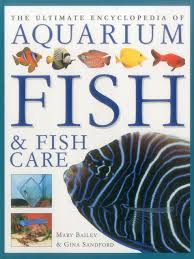
The Ultimate Encyclopedia of Aquarium Fish and Fish Care
by Mary Bailey and Gina Sandford
I have been slowly reading my way through this aquarium encyclopedia. It is all about fishkeeping (focus on freshwater), so starts off by outlining how to choose fish that suit your aquarium and are good companions. The sections about setup and maintenance tasks have good descriptions and nice, clear pictures showing what to do. Unlike most books the species profiles are all about type. Instead of showing pictures of as many fish as possible with very brief specs, there are descriptions of fish by families which describe their needs, habits, breeding strategies and interesting facts in more depth. The pictures are modest in number but very good quality. What makes it such a great book is that it's quite well-written, you can tell the authors enjoy their aquariums and they make this a nice read (the voice reminded me of Thalassa Cruso). Mine's a later edition, updated 1999.
Rating: 4/5 256 pages, 1995
I have been slowly reading my way through this aquarium encyclopedia. It is all about fishkeeping (focus on freshwater), so starts off by outlining how to choose fish that suit your aquarium and are good companions. The sections about setup and maintenance tasks have good descriptions and nice, clear pictures showing what to do. Unlike most books the species profiles are all about type. Instead of showing pictures of as many fish as possible with very brief specs, there are descriptions of fish by families which describe their needs, habits, breeding strategies and interesting facts in more depth. The pictures are modest in number but very good quality. What makes it such a great book is that it's quite well-written, you can tell the authors enjoy their aquariums and they make this a nice read (the voice reminded me of Thalassa Cruso). Mine's a later edition, updated 1999.
Rating: 4/5 256 pages, 1995
Mar 13, 2017
A Fox Called Sorrow
by Isobelle Carmody
--- spoiler alert ---
This is the second Little Fur book. I'm not sure why I read it through, except that I was curious about the character of the fox. So- Little Fur the half elf/half troll sets off on another quest to save Nature. She meets with the wise owl and learns that the troll king is planning something terrible, and the owl wants to send spies into the troll kingdom to find out what. There's a hopelessly miserable fox who wants to die but hasn't been able to quench his instinct to live. He comes asking the owl for advice and is told to go on this quest- he can protect the spies (a pair of ferrets) and the mission is so dangerous he will probably give his life doing so, and meet his desire with purpose. Initially Little Fur is not supposed to be part of this expedition, but she feels so much compassion for the fox she volunteers to go along. There's also a rude rat and one of Little Fur's cat friends on the journey. And the crow, for part of it. Once again they cross the human city and then go into the underground maze that is the troll's domain (part of it is train tunnels). It's just as dangerous as they had been warned. It looks like they won't obtain their goal or make it out alive- but all comes right in the end. They'd been warned someone would betray them, but it didn't turn out the way anyone guessed.
Overall, I found it hard to keep my attention on the story- it's just a bit simplistic, written for younger readers, in spite of the serious tone and there's a lot of negative feeling. In this story, it's all nature = good, humans = bad. The cats are suspicious but I like their humor, the rat is snarky, the dogs they meet have been badly mistreated by people, and the fox was just as I expected- deeply scarred and tormented from having been experimented on in a lab. (They also met a monkey near the end. This seemed a more likely animal for such a situation than a fox. Hm). You really think the fox is going to die, but at the very end (literally, nearly the last sentence) he lives. So he must feature in the next book of the series, and I would read that one just for the fox (I liked his character) but I think I won't.
Borrowed from the public library.
Rating: 2/5 245 pages, 2006
--- spoiler alert ---
This is the second Little Fur book. I'm not sure why I read it through, except that I was curious about the character of the fox. So- Little Fur the half elf/half troll sets off on another quest to save Nature. She meets with the wise owl and learns that the troll king is planning something terrible, and the owl wants to send spies into the troll kingdom to find out what. There's a hopelessly miserable fox who wants to die but hasn't been able to quench his instinct to live. He comes asking the owl for advice and is told to go on this quest- he can protect the spies (a pair of ferrets) and the mission is so dangerous he will probably give his life doing so, and meet his desire with purpose. Initially Little Fur is not supposed to be part of this expedition, but she feels so much compassion for the fox she volunteers to go along. There's also a rude rat and one of Little Fur's cat friends on the journey. And the crow, for part of it. Once again they cross the human city and then go into the underground maze that is the troll's domain (part of it is train tunnels). It's just as dangerous as they had been warned. It looks like they won't obtain their goal or make it out alive- but all comes right in the end. They'd been warned someone would betray them, but it didn't turn out the way anyone guessed.
Overall, I found it hard to keep my attention on the story- it's just a bit simplistic, written for younger readers, in spite of the serious tone and there's a lot of negative feeling. In this story, it's all nature = good, humans = bad. The cats are suspicious but I like their humor, the rat is snarky, the dogs they meet have been badly mistreated by people, and the fox was just as I expected- deeply scarred and tormented from having been experimented on in a lab. (They also met a monkey near the end. This seemed a more likely animal for such a situation than a fox. Hm). You really think the fox is going to die, but at the very end (literally, nearly the last sentence) he lives. So he must feature in the next book of the series, and I would read that one just for the fox (I liked his character) but I think I won't.
Borrowed from the public library.
Rating: 2/5 245 pages, 2006
Mar 9, 2017
Aquarium Fish Survival Manual
A Complete Guide to Keeping Freshwater and Marine Fish
by Brian Ward
It's another older aquarium book that I picked up at a library sale. Goes through all the basics. There's some illustrations showing how fish bodies function, including one of the best descriptions of how oxygen and blood pass through the gills that I've ever seen. Of course a lot of the info about technology is way out of date. And this one goes into enough detail about saltwater vs. fresh that I believe in my initial assessment: the salt side of the hobby is too darn complicated for me. It has a decent outline of how to incorporate live plants into the aquarium, although the photo gallery of plants was kind of amusing- I could guess they were all taken in a dealer's shop- most of the plants looked very recently stuck into the gravel and the same blurry pictus catfish was repeatedly swimming through the scene! While information about them is brief, the species profiles of freshwater fish were quite extensive, and the majority of photos here good quality. Saltwater section showcased fewer fish, but still very good pictures a real pleasure to look at. The kind of book that keeps me near the computer, to search more information or pictures of different fish varieties (not all species mentioned are shown in the book).
Rating: 3/5 175 pages, 1985
by Brian Ward
It's another older aquarium book that I picked up at a library sale. Goes through all the basics. There's some illustrations showing how fish bodies function, including one of the best descriptions of how oxygen and blood pass through the gills that I've ever seen. Of course a lot of the info about technology is way out of date. And this one goes into enough detail about saltwater vs. fresh that I believe in my initial assessment: the salt side of the hobby is too darn complicated for me. It has a decent outline of how to incorporate live plants into the aquarium, although the photo gallery of plants was kind of amusing- I could guess they were all taken in a dealer's shop- most of the plants looked very recently stuck into the gravel and the same blurry pictus catfish was repeatedly swimming through the scene! While information about them is brief, the species profiles of freshwater fish were quite extensive, and the majority of photos here good quality. Saltwater section showcased fewer fish, but still very good pictures a real pleasure to look at. The kind of book that keeps me near the computer, to search more information or pictures of different fish varieties (not all species mentioned are shown in the book).
Rating: 3/5 175 pages, 1985
Fantastic Beasts and Where to Find Them
by J. K. Rowling
This little book disappointed me. I was surprised at first how short it is. It's presented as a textbook on magical beasts, a copy owned by Harry Potter with his handwritten comments and jokes in the margins. Which were kind of lame. The text itself is too brief to be interesting. It's got more historical background and explanation that actual descriptions of the beasts. Which give less detail than the typical species profiles in my aquarium books! I'm guessing all these creatures are ones mentioned in the Harry Potter books, although I only recognized two-thirds of them. For me, it didn't really do much to add to the wizarding world Rowling created. Not impressed. I guess I'm too old to enjoy this kind of fan publication.
Anybody else read this one? Looking for more opinions online I was unable to find any decent reviews about the book since the film (of the same name but not the same material) is getting so much attention online right now.
Rating: 2/5 42 pages, 2001
This little book disappointed me. I was surprised at first how short it is. It's presented as a textbook on magical beasts, a copy owned by Harry Potter with his handwritten comments and jokes in the margins. Which were kind of lame. The text itself is too brief to be interesting. It's got more historical background and explanation that actual descriptions of the beasts. Which give less detail than the typical species profiles in my aquarium books! I'm guessing all these creatures are ones mentioned in the Harry Potter books, although I only recognized two-thirds of them. For me, it didn't really do much to add to the wizarding world Rowling created. Not impressed. I guess I'm too old to enjoy this kind of fan publication.
Anybody else read this one? Looking for more opinions online I was unable to find any decent reviews about the book since the film (of the same name but not the same material) is getting so much attention online right now.
Rating: 2/5 42 pages, 2001
Mar 2, 2017
Flight Behavior
by Barbara Kingsolver
I had forgotten how much I love reading this author. Her language is so rich, and precise. She's really got the details of what it's like being stuck at home all day with small children. I almost don't want to tell you what the book is about, because I didn't really know myself going in. So when I read the initial descriptions of the wonder of nature the main character Dellarobia finds in the woods above her family's farm, it was a beautiful puzzle to figure out what she was seeing before she figured it out herself. It's a finely crafted story. Dellarobia lives in rural Appalachia, kind of drifting through life, settling for less. She tends her two small children, chafes under her mother-in-law's criticism, and tolerates her endlessly patient, dull husband. She thinks of herself as stuck in a situation caused by an error made when she was younger- and is deliberately aiming to make another mistake that could ruin it all when she happens upon this wondrous thing up in the mountain. A discovery that might thwart her father-in-law's plans to log the hillside for some desperately-needed income. A discovery that draws strangers to their door- news reporters, sightseers, environmental activists and a scientist who opens her mind to the wider world. It's a story of family and community, of facing facts and changing perceptions. Very much about current issues, particularly climate change. Some might think it really heavy-handed with the environmental message, but I found it a perfect weight. Even though there are several long scenes where Dellarobia hashes out ideas and has long arguments- one with her husband, the other with her best friend- in public while shopping- so there are pages and pages of them going up and down the aisles, weaving their inspection of items on the shelf through their argument. Kind of odd.
And the ending made me sad. I was hoping that the main character would make a different decision, and not reveal it quite so abruptly to her young son... Regardless, I liked the book and it is one that will stick with me. If you want to go into it blind as I did- the first chapter is quite slow in building but worth it I think- then don't read most of the reviews I linked to below. Only the first avoids revealing the actual subject matter.
Rating: 4/5 436 pages, 2012
more opinions:
Book Chatter
Bookfoolery
Fyrefly's Book Blog
Fifty Books Project
I had forgotten how much I love reading this author. Her language is so rich, and precise. She's really got the details of what it's like being stuck at home all day with small children. I almost don't want to tell you what the book is about, because I didn't really know myself going in. So when I read the initial descriptions of the wonder of nature the main character Dellarobia finds in the woods above her family's farm, it was a beautiful puzzle to figure out what she was seeing before she figured it out herself. It's a finely crafted story. Dellarobia lives in rural Appalachia, kind of drifting through life, settling for less. She tends her two small children, chafes under her mother-in-law's criticism, and tolerates her endlessly patient, dull husband. She thinks of herself as stuck in a situation caused by an error made when she was younger- and is deliberately aiming to make another mistake that could ruin it all when she happens upon this wondrous thing up in the mountain. A discovery that might thwart her father-in-law's plans to log the hillside for some desperately-needed income. A discovery that draws strangers to their door- news reporters, sightseers, environmental activists and a scientist who opens her mind to the wider world. It's a story of family and community, of facing facts and changing perceptions. Very much about current issues, particularly climate change. Some might think it really heavy-handed with the environmental message, but I found it a perfect weight. Even though there are several long scenes where Dellarobia hashes out ideas and has long arguments- one with her husband, the other with her best friend- in public while shopping- so there are pages and pages of them going up and down the aisles, weaving their inspection of items on the shelf through their argument. Kind of odd.
And the ending made me sad. I was hoping that the main character would make a different decision, and not reveal it quite so abruptly to her young son... Regardless, I liked the book and it is one that will stick with me. If you want to go into it blind as I did- the first chapter is quite slow in building but worth it I think- then don't read most of the reviews I linked to below. Only the first avoids revealing the actual subject matter.
Rating: 4/5 436 pages, 2012
more opinions:
Book Chatter
Bookfoolery
Fyrefly's Book Blog
Fifty Books Project
Subscribe to:
Posts (Atom)