Jul 27, 2016

Madapple

by Christina Meldrum

This is a strange one. Aslaug is an unusual young woman- she has grown up in total isolation with her mother. They forage for food in the nearby forest, use herbs for medicines and live without most modern conveniences. She's not unintelligent- Aslaug's mother taught her to read (in several languages) and verses her in botany, science and the mythologies of numerous ancient religions. But the mother keeps secrets, blacks out passages from the books Aslaug has access to and presents some erratic behavior to say the least. When her mother dies, Aslaug is abruptly introduced to the modern world. She is very ignorant of cultural norms, her social skills are rough and her inability to judge others' intentions makes her seem endearingly innocent in one moment, rude in the next. What really charmed me was her way of filtering and describing everything via her understanding of botany- she attributed plant characteristics to all sorts of things around her. It was a very different way to see the world (a bit reminiscent to me of how the narrator in Aquarium described so many things as if they were in an aquatic realm).

The story really revolves around Aslaug's trial- when a neighbor sees her attempting to bury her mother's body in the backyard, he calls the cops and Aslaug is suspected of murder. A social worker assigned to her case looses track of her, but Aslaug herself locates her mother's family- their very existence had been kept secret from her- and finds herself in another place detached from reality. They are members of a fundamentalist christian sect. The second half of the book wasn't quite as engaging for me- but I kept reading to see what the end result would be. Not what I expected! When Aslaug first meets the family I kept wondering whose version was reality- her cousin kept telling her certain things, her aunt had a completely different take on it all, and then when things got really weird I started wondering if Aslaug herself was an unreliable narrator. I don't usually like mysteries, nor do I always enjoy books that jump around in time- this one skips constantly between the trial with snippets of others' testimony and versions of events, and Aslaug's more narrative description of what happened. But in this case it worked for me.

Borrowed from the public library.

Rating: 3/5        410 pages, 2008

more opinions:
A Patchwork of Books
The Well-Read Child
Becky's Book Reviews
Confessions of a Bibliophile
Bookshelves of Doom

Jul 25, 2016

Tropical Aquarium Fish

Comprehensive Edition
by Dr. Chris Andrews and Dr. Ulrich Baensch

General book on fishkeeping, an old version. It was kind of amusing to see hairstyles and decor in the photographs of kids leaning over their aquariums, that I recall from middle school years, several decades ago now. Most of the information about setup and maintenance was not new to me, but I kind of liked reading it anyway. I was a little surprised at some of the recommendations- such as running a light ten to fourteen hours a day- that seems way too much to me and I also noticed that lots of the photos of fish had serious algae in the background. Either someone didn't care about finding pictures of fish in clean living conditions for the publication, or it was just norm and accepted to have so much algae in your tank back then. One of the authors here invented tetra flake food, so it's no surprise that for each species profiled in the book, his products were listed as the best foods. Live and frozen foods were dismissed, for the risk of carrying disease. I think you'll find it different now- at least at the places I frequent online, many aquarists opine that live foods are best for the fishes, dried and flake food being of poorer quality overall. Also I was astonished to read a description on how to deal with unwanted snails in an aquarium- it involved stripping the ends of wires attached to a battery and dangling the exposed copper ends into the tank. What.

So those were things that jumped out at me, but really it is a standard book. Tells about essential equipment and how to set it up, explains the nitrogen cycle, how to introduce fish slowly, the benefits of growing live plants, dealing with vacation absence, identifying major diseases and how to attempt breeding certain species. But the majority of the book- over three quarters of it- is pages of species profiles. More than two hundred fishes are shown here and although the pictures are older and not always of the best clarity, I enjoyed looking through them. There were some fish in there that aren't popular now and I've never actually seen them in shops, some rare ones are mentioned and others are interesting because I recognize them even though their common names and appearance have changed through selective breeding, since this book was published.

Rating: 3/5       240 pages, 1993

Jul 20, 2016

The Girl Who Could Fly

by Victoria Forester

It starts out intriguing, with an inquisitive farm girl named Piper, who is born with the ability to float (I kept thinking of Princess Hyacinth) and teaches herself to fly. Her parents disapprove and the community is shocked when they find out. They decide it's best to send Piper to a secret institution for kids with special abilities. Where she meets children of all sorts (mind-reading, super strength, control over plants, etc) and gets involved in a government conspiracy. I thought this would be to learn from or manipulate the kids' abilities, but turns out it is to force them to conform instead. I liked Piper's character- someone else described this book as 'Little House on the Prairie meets X-Men' but she really reminded me of Anne of Green Gables. You'd think the story would get more intense when Piper gets to the special school but that's when it quickly went downhill. The telling got a lot more careless and suddenly I had no investment in continuing. I glanced at some of the reviews on amzn and it looks like I wouldn't have enjoyed where the story was going, anyway.

Borrowed from the public library. A better read on this theme would be Black and Blue Magic!

Abandoned        329 pages, 2008

Jul 16, 2016

Rosemary and Rue

by Seanan McGuire

Sixty pages in, and I'm done reading this one. Too bad, it was pretty good so far. It's an urban fantasy where fae (many kinds) inhabit our world, hiding their activites from humans. The main character, October, is half fae/half human, so she doesn't really fit into either side. After being trapped as a fish in a public pond for fourteen years when she crossed someone, she is shunning the fae and making her way best she can in the human world. But then she gets a horrific message from her old friend and mentor- in the moments of her death. Her friend lays a curse on October forcing her to investigate the murder. So she gets drawn back into the tangle of fae politics whether she likes it or not.

Well- I liked the voice of October. She's got spunk, and some wry humor. And I really liked the setting- McGuire depicts San Francisco very well. But- crime mysteries really aren't my thing, no matter how wrapped up in fantasy they are. And in spite of the main character's frequent asides to quickly explain things, the details of how things worked in this world of magic mixed with reality was a bit much for me to keep track of. I would have liked to read more about her imprisonment as a fish, haha! But of course that was just barely mentioned in the story.

This one had been on my older TBR for a long time- don't remember where I first saw it menitoned. Borrowed from the public library. Moving on now.

Abandoned       358 pages, 2009

more opinions:
Fantasy Cafe
Discriminating Fangirl
Fantasy and Sci Fi Lovin' Reviews

Jul 14, 2016

The Majesty of the Horse

by Dean Server

I have two coffee-table books on horses. When I started reading this one, I thought I might decide to keep it in place of the other- it's more up-to-date and has nicer quality photographs. But I'm holding onto both, because it turns out they have different focus. This book was an easier read, the prose is more casual and friendly and it's not as dense with information. Tells more about the biology and keeping of horses. It also has an overview of their history with mankind and a snapshot of various breeds, but gives me different details on those. For example, I noticed that the other book said Arabians have different body structure, the number of ribs and vertebrae, that makes them so unique among horses at one point scientists were going to consider them a different species. This book doesn't say anything about Arabian skeletons, but points out that Exmoor ponies, one of the oldest breeds, have a different jaw formation than other horses, including an extra molar. Also of note in a historic kind of sense- it tells of the Przewalski's horse being extinct in the wild, with captive populations growing in hopes that they would someday be introduced back into the wild. That is now a success story.

Great photographs. If I was still in the habit of making detailed drawings from photos, I'd definitely source these.

Rating: 3/5       128 pages, 1997

Jul 13, 2016

Fledgling

by Octavia Butler

The narrator wakes up alone, in the dark, with a severe head injury and a desperate hunger. She has no idea where she is, what has happened to her, or even her own name. She feeds on animals she catches (craving raw meat) and slowly healing, starts walking out of the forest. Gradually the names of items around her come back, and she starts to make sense of the world. But other things she cannot recall, so when she first meets a human she has no idea of their differences. She stumbles through the world unknowing, and so does the reader along with her.

She is Ina. An ancient species that lives by feeding on human blood, that cannot stand the daylight, that has extra-heightened senses and strength. Vampires, but not exactly the same as those in human folklore (even the characters in the book have misconceptions of the Ina). For example, they can't convert humans into their own kind, they are not undead, they raise their young and live in family groups separated by gender. The main character here- who looks like she's ten but in Ina years she's over fifty- gradually learns about herself as she comes across others of her own kind. It's an urgent matter, because almost as soon as she discovers what she is and where her people are, she finds out that someone is very seriously trying to kill them, and maybe they are targeting her in particular. Because it turns out she's not quite like the others of her kind. Her skin is darker and she can walk around in the daytime. She barely understands herself what these differences mean, but it's very apparent that someone else finds them threatening.

I liked the idea behind this book, and the themes it explores. Especially how it showed the Ina creating symbiotic relationships with the people they fed on- becoming bonded, giving something of value to the humans in return. Their social structure is different from what I expected, and it takes the humans in the story time to adjust to that as well.  Her first human partner is a grown man but oddly enough I didn't find it disturbing to read descriptions of this to-all-appearances pre-pubsecent girl being in such a relationship. I suppose because I expected a vampire story to be creepy or disturbing in some way. And this one doesn't really have any gross factors. But the other reason might be because I never really felt connected to the characters, it never felt real or engaging. The prose often felt stiff, the descriptions were not of things that interested me, and even though the backstory and explanations came through other characters, it felt like they were just there to do that: lots of people standing around telling each other stuff, in the most deadpan ways. I admit I skipped an entire chapter in the middle because I was loosing interest, then picked up reading again and skimmed more near the end.

Read more about it in the reviews linked to below- I didn't even tell you some of the more interesting points because I'm tired now.

Rating: 2/5        316 pages, 2005

more opinions:
Things Mean a Lot
Speculative Book Review
Amy Reads
Savidge Reads
Rhapsody in Books
Literary Omnivore

Jul 6, 2016

The Bird King

an artist's notebook
by Shaun Tan

I love looking at how other artists work, and that's exactly what this gives me. For it's not a book you read, it's one you look at. One I want to keep on looking at. A selection of quick drawings and detailed studies, from Shaun Tan's sketchbooks. Some are working studies for film and book projects he did, others are drawings that grew a life of their own- titles suggesting a story behind them, although he claims the pictures originate first. There are drawings from life- I particularly like the ones from museum figurines- people around him, landscapes made into wild abstractions. My favorites are among the final pages, little idle doodles and quick jottings that are full of half-formed thought and lively action. It's really inspirational. It makes me want to go spend hours drawing.

Borrowed from the public library.

Rating: 4/5        128 pages, 2010

more opinions:
Waking Brain Cells
Charlotte's Library
Apples with Many Seeds

Jul 5, 2016

The Girl's Guide to Homelessness

by Brianna Karp

There are many different reasons that people become homeless. Brianna Karp found herself in this situation in spite of being educated, skilled, and having kept regular jobs since she was a teen. She was laid off during the recession, and could not find new employment. Her friends were just as strained, and living with family did not work. She was molested as a child, routinely abused by her mother, and all her hard work did not earn her any savings- her mother took all her money and then some. She found herself in a parking lot, living in a trailer her estranged father had unexpectedly left behind when he committed suicide. I think I might have liked this book more if it was focused on how she put her life back together, which really is admirable considering what she went through. I don't at all judge her for having kept a laptop, a cell phone, a dog while she was homeless (eventually she found a new home for the dog). Other decisions really made me wonder. Early on the book is mostly about her attempts to escape the mindset and restrictions she'd been raised with- her family behind Jehovah's Witnesses- and deal with the abuse. Then the focus becomes a new relationship with a man she met online, who was an advocate for the homeless. She got a lot of attention and publicity from writing a blog (which I haven't seen) and then the future she'd hoped for starts to unravel. It's upsetting to read about some of the things that happened to her. It was a pretty good book and I like the way she writes, but I wish it had been more about the homeless situation. Instead I got rather tired of the drama near the end, and found myself skimming the last few chapters.

Borrowed from the public library.

Rating: 3/5         341 pages, 2011

more opinions:
Book Chase
Shannon's Book Bag
Book'd Out
Sarah Reads Too Much

Jul 3, 2016

The Hidden Half of Nature

Microbial Roots of Life and Health
by David R. Montgomery and Anne Biklé

The smallest living things on our planet can have the greatest impact on all those life forms we do see. This book is about microbes, what they do and how to cultivate them. In the soil, and in us. The first half is about soil microbes, how they interact with and benefit plants. How industrial agriculture decimates them. How that affects our health in turn, because the plants we eat have less micronutrients than they used to. The authors became interested in soil life when starting a new garden on barren property. Biklé started piling organic materials onto the soil, mulching with wood chips and whatever else she could find, and the results were stunning. The more she fed the soil, the healthier the plants got. The second half of the book discusses the microbes that live in our gut. Interest in this was triggered when Biklé herself was diagnosed with cancer and became concerned with how diet affected the climate of microbes inside her digestive system, which in turn can have serious implications on overall health. I'm amazed at the amount of details in this book, at connections between things I never realized influence each other. It's dense with information, but presented in a fashion that's easy enough for a casual reader like myself to understand (although it does merit a second or third read: I'm definitely shelving this one to keep).

The range of subjects discussed include how microbes evolved (I had never heard of the archaea before and they are one of the major groups), the development of vaccines (stories and connections I'd never heard of before here, too, although I recognized a lot from reading of Jonas Salk), how germ theory isn't quite what we imagined (or at least the basics I recall learning in highschool), how the populations of microbes in the soil and in our gut work with each other, agricultural practices from the past and how trends are (hopefully) changing, how what we eat changes the microbiome within us, how to encourage a good balance of them, etc.

There's no way I can explain this book in depth: you just have to read it! I found it very eye-opening, and incredibly encouraging too. It backs up and explains a lot of the things I've been trying to accomplish in my garden in my own small way, and spurs me with desire to change my eating habits for the better.

I'm really glad my father gave me a copy of this book.

Rating: 5/5        309 pages, 2016

Jun 30, 2016

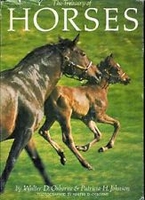
The Treasury of Horses

by Walter D. Osborne and Patricia H. Johnson

One of those older coffee-table style books I picked up at a library discard sale years ago. It's an overview of the horse- the origins of many different breeds, how they were developed and used through history. The presence of horses in mythology and art, their historic uses in warfare, agriculture, betting sports and now mostly as a leisure occupation. Some of it is dry reading- I started to loose attention when names of famous equines and horsemen paraded across the page. But the descriptions of how different breeds were developed and why, details on the evolution of hunting sports, explanations on how horse shows are run, harness racing and lots of other stuff was interesting just because I know so little about it. I didn't know, for example, how different from other horses is the physiology of the Arabian.  Anyone really into horses probably already knows more than this book offers- it's from the sixties after all. Still the pictures are good in spite of showing their age, and I learned more than I expected to.

Rating: 3/5          251 pages, 1966

Jun 28, 2016

Summer of Fire

Yellowstone 1988
by Patricia Lauber

In 1988, Yellowstone National Park had not seen any huge wildfires in over 200 years. Fire was managed in the park- manmade fires were put out, while naturally occurring ones were allowed to burn unless they threatened people or buildings. This book tells about the events during the wildfires of 1988, when an entire third of the park burned. It describes the dangers and benefits of wildfire, and how the park recovered.

Because it did. I was twelve when those fires occured, I had visited Yellowstone and I remember feeling devastated at the news. Reading this book puts it all in perspective- the land actually recovers fairly quickly from wildfire. Most animal species survived, some benefitted greatly (predators ate smaller mammals on the run, insects moved in to take advantage of dying trees, etc). The lodgepole pines, in particular, start to die back until fire revives the forests by allowing younger trees to thrive. Certain seeds will not germinate unless prompted to by high temperatures caused by fire. I was surprised to learn about the unique way aspen thickets grow- they send up shoots from root systems that are often interconnected throughout the grove. Aspen seeds are troublesome to germinate, and the young trees easily shaded out. So most aspen in the park did not grow from seed but instead exist because of stands that have been growing back from the root systems for hundreds of years. I think that's amazing.

This book is a bit old- I can tell from the quality of the photographs alone, although they are very nice. It's also a juvenile nonfiction book, which I didn't realize until I started reading it. As such, it doesn't offer a lot of in-depth information and poses lots of unanswered questions, because when it was written scientists were still studying the effects of the blaze and how the Yellowstone plants and wildlife recovered from fire. (In some cases, very systematically- blocking off sections that hadn't been burned, planting them with certain seeds or not, observing later to see what grew and didn't after the fire, etc.) It would be nice to know more of the answers, so it prompts me to look more stuff up online. A nice, fairly informative read I got through in one sitting.

Rating: 3/5          64 pages, 1991

The Day the Crayons Quit

by Drew Daywalt

I was babysitting for a friend and saw this book on her shelf. Pulled it out to read (just to myself, the kids weren't interested).

A little boy finds a stack of letters from his personified crayons. They each have a complaint. Some are tired of being over-used and worn down to stubs, others feel neglected. Yellow and orange argue over who should be used to color the sun, beige is unhappy at being second-best to brown, pink is upset at being considered a "girl" color (relegated to little sister borrowing it for princesses and unicorns), black is bored with only being used to make outlines. One crayon even criticizes the boy's ineptness at staying in the lines, and another freaks out because part of its wrapper is torn off and it feels naked. They really are a whiny bunch (except for green who seems content) but I got a chuckle out of it all- and thought it a good point that the crayons' complaints were about stereotypical uses. In the end the boy makes one big picture applying the crayon colors to all kinds of different things, which makes them happy.

I thought the book was funny, made a good point against stereotypes (even if it's just for what color things should be) and showed how when the crayons made their feelings known, things changed. I think my older daughter would be amused by it. I haven't tried it on my younger one. However, if you poke around some other reviews online (there's lots on amzn) you'll find many parents and teachers don't like this book. They think it shows kids that whining gets them what they want, and comes across with a lot of negativity. I think it's all in how you present it (or maybe on the child you read it to).

Rating: 3/5       40 pages, 2013

more opinions:
Rhapsody in Books
Playing by the Book

Jun 27, 2016

Monkey Town

the Summer of the Scopes Trial
by Ronald Kidd

Middle-grade novel about a famous trial that was staged in Dayton, Tennessee in 1925. The author had a friend whose mother was the girl Frances featured in the story; he gathered details doing interviews with people who actually remembered the trial from seventy years before. (A brief afterword delineates some of what was fact/what was fiction here).

In the novel, Frances is seventeen and swooning over the young schoolteacher Johnny Scopes. Her father owns the local drugstore, and he's always looking for ways to drum up business. Tennessee law at the time forbade state-run schools from teaching evolution, but the law had never been enforced. Scopes was a basketball and football coach. At one point he substituted a biology class and assigned some reading from the state-required textbook that included a chapter on Darwin's theory of evolution. Some scheming men (including Frances' father) saw this as reason to put him on trial for teaching evolution. It was all a stunt to get publicity and revitalize their quiet town. Scopes agreed to play his part. In fact (from a bit other reading I did online) it seems he encouraged students to testify against him. This story shows it all going sour on him, though in the end he had his own share of fame. Reporters and journalists swarm the town, everyone gets involved in heated arguments about evolution vs. creationism. Frances starts to question everything, too. But her main preoccupation is this infatuation with Johnny. It doesn't go anywhere. He always treats her like a kid.

And in the end, I got bored. I skimmed the last few chapters. I had heard of the Scopes trial before, but I was disappointed to discover it was all a big set-up. Frances gets enough glimpses of the trial to make a fair description of what happened, but those details did not quite hold my interest. Her child's view of how the townspeople respond to the implications of the trial could have been refreshing; there is plenty of contrast between small-town good-at-heart folks and big-city snobs that criticize and insult them. Frances also sees flaws among her familiar neighbors- those who want to sabotage the trial or who attack others for their beliefs. She's upset at discovering a side to her own father she never recognized before- he's often just out to make a buck. But her character felt rather flat to me. She was always questioning the status quo, always mooning over Johnny Scopes, and that was about it. I wanted a bit more depth. I'm probably being too hard on the book, after all it is written for middle grade or YA readers -kind of straddles the age groups in a way. The writing style and simplicity seem more appropriate for the younger set, but the discussions about God, evolution, questioning parental integrity, even some brief showing of early feminism, are more serious subject matter.

Rating: 2/5         259 pages, 2006

Jun 25, 2016

book sale haul

I had a grand day at a giant used-book sale that helps fund public libraries in the next town over. Spent the entire morning there, happily getting a crick in my neck and shoving a box that gradually got heavier, along the floor with my foot. I haven't done this kind of thing in three years (after all, there are still over a hundred and fifty unread books in my bedroom) so it felt like quite a splurge. I always try to be really picky, but of course you can't beat the price or the cause, so...
Found these which I've been wanting to read- quite a few are on my current TBR. The top two I've just heard about somewhere- the name Pyewacket is so lodged in my memory I must have heard of it when I was a kid, I really feel like it was mentioned by a character in another book, but no idea which. Whatever You Do, Don't Run is a book I saw in a shop during travels, more than a year ago. A few gardening books I've seen on other blogs, George Adamson's book I've been wanting to read since I finished The Searching Spirit and of course I have to mention Wendell Berry! My father is a big fan of Wendell Berry and has been telling me to read his books for years now, but I never got around to it yet. This is the very title that has been recommended to me. (Now I'm going to feel obligated to read it soon since I mentioned it here!)
These books I grabbed because I know the authors. The top one is My Way Was North by Frank Dufresne (author of No Room for Bears, a book I recall from growing up- it's on my dad's shelf). I've always wanted to read more Nevil Shute, more Norah Lofts (the one you can't read the spine of is her A Wayside Tavern). I can't believe I found a book by Attenborough. I love his films, haven't read any of his writing yet.
And these books I just got because they looked interesting! Snapper is fiction featuring a guy who studies birds. A few gardening books in here (memoir type), a book on aquarium fish. Roadrunners just because I don't know much about them. What's That Pig Outdoors? is about the author's experience with blindness.
These I already own but I wanted to replace some old falling-apart mass market paperbacks. It's becoming more and more common that I spot dear favorites at the books sales. I always want to snatch them up and buy them so I can give them to someone, but I just couldn't afford to. But one I pulled out from the press of spines and left it sitting faceup across them all. Maybe someone else will notice it and take it home and find out how good it is- Dalene Matthee's Circles in A Forest. Someday I will read it again and write about here. I still remember distinctly a day in high school when I was reading this in class (sitting in a mobile classroom because the buildings were being remodeled- it was hot) and the teacher plucked up my book to comment on it in front of the class. He asked me to tell everyone what it was about but I was rather tongue-tied!

Not pictured: four books I got for my kid.

Jun 22, 2016

Navy Seal Dogs

My Tale of Training Canines for Combat
by Mike Ritland

This book is about how military working dogs are trained and used. The author served as a Navy Seal and then became instrumental in training dogs for government and military use. There is a brief history of how dogs have been used in various wars in the appendix (which put into perspective some of the things I read in Cracker!) Main part of the book describes in detail how the dogs are trained. Ritland describes how carefully the dogs are bred and chosen, and the regiment they go through to prepare them for specific kinds of work. I found all this interesting, although some aspects of the training seemed to be skipped over or not explained very thoroughly. I think I found out why later on: this book is a re-issue of an earlier one the author wrote titled Trident K9 Warriors. It has been edited for a juvenile audience. That said, I didn't  find the writing style too simplified, and it kept me mostly interested throughout.

The second part of the book describes a number of handlers and the dogs they were paired with. To me it seemed like it went into more detail about the backgrounds of the men in service than describing the work the dogs actually did. The brief stories describe some incidents with dogs and handlers in Iraq, Afghanistan and other locations in the Middle East. It's pretty amazing what these animals can do. Impressive enough that they can scent and locate hidden bombs or weapons, alerting very specifically so that soldiers can avoid or address the danger. But then I read about a dog which indicated he'd found the scent of explosives- the men uncovered nothing. Through other means they found out the dog was indicating the exact location where explosives had recently been made. Even though the items were no longer there, this information was invaluable to the team. I was also enlightened to learn that military (and police) dogs trained to apprehend people actually save their lives- whether criminals, the enemy or an innocent. In many situations a cop or soldier would shoot at a presumably dangerous person fleeing or hiding- but if there is a dog who can apprehend them instead- holding and disarming them, but not trained to kill- then using firearms can be avoided.

At first glance through the book I mistakenly assumed that the dogs in the pictures were German shepherds. In the past, labrador retrievers, dobermans, rottweilers and pit bulls have also been used by the miliatry. Turns out most of the dogs in this book are Belgian Malinois, and the author explains why this breed is the best for his purpose. At the end there is a brief chapter about his foundation that helps find appropriate homes for retired military dogs- and cares for them in his training kennels in the meantime.

I kind of wish I'd found the earlier version of this book first. I probably would have appreciated it a bit more- but reviews tell me it has nearly all the same material, so I don't know if I would get much out of reading it now.

Rating: 3/5       190 pages, 2013

Jun 18, 2016

Cracker!

the Best Dog in Vietnam
by Cynthia Kadohata

Last week I saw a book on display at the library about dogs used in combat, written by a man who trains them for the Navy Seals. It made me think of this book, which I've seen on a few blogs and had a mild interest in reading. I decided to read them together, for two perspectives on the same subject.

This one is a fictional account about a dog that goes to Vietnam. Cracker's family can't keep her after moving into a small apartment, and her boy Willie especially is in despair when he fails to find her a new home. He can't bear to take her to the animal shelter. Then he sees a notice that the US Army is looking for good dogs to use in Vietnam. Willie feels sure that Cracker will be the best dog in Vietnam. It's still very hard for him to give up his dog, and he continually writes letters to Cracker's new handler, Rick Hanski. Rick for his part, is out to prove himself but never owned or trained a dog before. Together he and Cracker learn new skills and before they know it, are shipped out. The story is told through both viewpoints, so you get an idea of the confusion the dog faces, as well as the turmoil Rick is going through. Their trials in the war zone bring them closer together. Cracker's job is a very serious one- she is to sniff out the enemy, booby traps and other dangers, to clear an area for the men following behind. She saves hundreds of lives, but this is a war story and yes there are casualties. While Cracker does suffer injuries and trauma, I'll let you know that in this book the dog doesn't die.

It was a good story, but I grudgingly gave it a 3. The writing style is simplistic and many times I found myself rather bored with it. Of course, I'm not really the target audience so this is not a flaw of the book itself. It got more interesting towards the end, when I started learning more about the Vietnam War, and in particular one section where Cracker gets separated from the Army and is on her own. (I was intrigued by the descriptions of an elaborate tunnel system the Vietcong used to hide from their enemies -us- it sounds like entire populations lived underground for many years. Does anyone know of any books written from the their perspective, describing this?) Earlier in the book I was a bit surprised at the casual manner in which the dogs seemed to be trained. The guy Rick didn't seem to know what he was doing, and considering how the Army insisted that the dogs were "specialized military equipment" I'd have thought they were trained with more precision. But I know that wasn't the focus here, so maybe the training aspect was just glossed over.

The ending made me feel sad. While Cracker herself met a good outcome, the Army at the time considered dogs "surplus equipment" at the end of the war. The vast majority of them were either euthanized or left behind with the South Vietnamese Army. It's not like that anymore, as the next book (which I've just started) makes plain- dogs are now brought home and given a chance of quality life, after having served their country.

Rating: 3/5      312 pages, 2007

more opinions:
Becky's Book Reviews
A Year of Reading
The Reading Zone
Book Clutter
Semicolon

Jun 15, 2016

The Daughter of Time

by Josephine Tey

One of Scotland Yard's top detectives, Alan Grant, is recuperating in a hospital bed from an injury. He's known for his ability to "read faces" so a friend brings in a stack of portraits for him to look at. Grant is struck by the face of one particular man he assumes is a kindly judge. It's really Richard III, vilified in history books for the murder of his nephews the princes, in order to secure his own position. Grant becomes interested in digging into history to find out what really happened, because he can't imagine that a man with such a wise face would have murdered the Princes in the Tower (or ordered it done).

This book has been on my TBR list for ages- long before I started blogging. For some reason I always thought it was a sci-fi or speculative fiction novel, something to do with time-travel perhaps. Ha! was I ever wrong. I tried really hard to like it. I was particularly intrigued by Robert Barnard's introduction which told me a lot about the quality of this author's writing- she is not formulaic. It made me eager to read the book, and I did appreciate her skilled use of words. But the few main characters in the hospital room bored me, and unfortunately I don't know enough about British history to care about the mystery itself. The story itself introduces enough facts this shouldn't be a problem, but honestly it just did not hold my interest, thirty pages in my mind was seriously wandering. Too many names. I guess I just proved to myself that crime fiction is really not my thing. And this is supposed to be one of the best books of its genre!

Can anyone tell me the reason daughter is in the title? I'm curious because the man solving the mystery and the historical figure in question were both men...

Abandoned          206 pages, 1951

more opinions:
Things Mean a Lot
Read Warbler
She Reads Novels
Savidge Reads
A Penguin a Week
Truth, Beauty, Freedom and Books

Jun 14, 2016

TBR 61

Beautiful Minds by Maddalena Bearzi
Beyond Belief by Jenna Miscavige Hill- Bermudaonion
On Looking by Alexandra Horowitz
My Year of Meats by Ruth Ozeki - Shelf Love
Call of the Mild by Lily Raff McCaulou
Seeing Seeds by Teri Dunn Chace- Commonweeder
The Lost Memory of Skin by Russell Banks
Alex and Ada by Jonathan Luna- Work in Progress
The Call of the Farm by Rochelle Bilow- Shannon's Book Bag
The Goshawk by T.H. White
The Shock of the Fall by Nathan Filer- Reading the End
Auggie and Me by R.J. Palacio from Bermudaonion's Weblog
Greetings from Utopia Park by Claire Hoffman- Shelf Love
Gudgekin the Thistle Girl and Other Tales by John Gardner

Waterlog by Roger Deakin
Music at Long Verney by Sylvia Townsend Warner- Work in Progress
Feather Brained by Bob Tarte- Bookfoolery
Tales of the Metric System by Imran Coovadia- Reading the End
Magic Elizabeth by Norma Kassirer
Thursday 1:17 PM by Michael Landweber- Book Chase
Warchild by Karin Lowachee- Thistle-Chaser
The Interrogation of Ashala Wolf by Ambelin Kwaymullina- Reading the End

I have just found a new resource- Internet Archive, thanks to this post on The Neglected Books Page. I've now acquired texts of the following books to add to my e-reader. Between this and the Gutenberg Library, I could easily spend hours browsing through titles and add tons more material to the kindle. Is this a good or a bad thing? Who knows when I'll ever find time to get to the e-books again. I've even forgotten what's on there at this point. They wait patiently for another travel day...

Stone Wall by Mary Cassals
Modeling My Life by Janet Scudder
Out on a Limb by Louise Baker

These titles were gleaned from my reading of Black Swan, White Raven:

Snow White by Donald Barthelme
Pinocchio in Venice by Robert Coover
The Nightingale by Kara Dalkey
Blue Bamboo by Osamu Dazia
The Seventh Swan by Nicholas Stuart Gray
The Tricksters by Margaret Mahy
Sleeping Beauties by Susanna Moore
Kindergarten by Peter Rushford
The Armless Maiden edited Terri Windling
Snow White and Rose Red by Patricia C. Wrede
Dark Hills, Hollow Clocks by Gary Kilworth
Five Men and a Swan by Naomi Mitchison
Hearts of Wood by William Kotzwinkle
The White Deer by James Thurber

Jun 13, 2016

Black Swan, White Raven

edited by Ellen Datlow and Terri Windling

Snow White's stepmother is a well-meaning woman trying to remove a child from harm's way- because the king is a pedophile focused on his own daughter. Hansel and Gretel are put on trial for murder of a seemingly innocent old woman, and stealing her money. Sleeping Beauty is found by a man digging a new foundation for his shed- once wakened she becomes a fashion model who dreads ageing. These re-tellings of old fairy tales are placed in modern settings, the characters wearing new faces, the stories taking new forms. There are twenty-one of them in this collection. I recognized a few of the authors- Jane Yolen, Gary Kilworth, Joyce Carol Oates, Anne Bishop, Susanna Clarke. The others were new to me. The forward itself was of interest, and its explanation of the power of fairy tales reminiscent to me of that heavy tome, Women Who Run With the Wolves.

I found most of these re-tellings interesting, although there were a few I could not quite grasp or recognize any references to the original. Some were just very strange. These were my favorites:

"Rapunzel" by Anne Bishop- this story is told through several viewpoints, that of the mother who craves something from a neighbor's garden so much her husband feels compelled to steal it. That of the witch Gothel who keeps the young woman locked in a tower, and that of Rapunzel herself who in the end escapes and grows up good and strong, not at all marred by her strange upbringing.

"The Dog Rose" by Sten Westgard is a re-telling of Sleeping Beauty, but this story is about a peasant who lives in the nearby land, ravaged by drought. His grandfather's sweetheart was among the castle employees who also fell asleep with the curse, and when he hears the roses are blooming he goes to the castle to see if he can make a way open up through the thorns.

"The Reverend's Wife" by Midori Snyder is the most ribald of these stories- definitely an adult version (of a Sudanese tale). Two dissatisfied women trick each other's husbands into sleeping with them. Each man is unaware that his wife knows about the situation and moreover, they're made to think they are doing the women a favor! Well they were, but not the kind of favor they imagined. The men were pretty dumb in this story, but it was funny.

"True Thomas" by Bruce Glasco- Thomas the Rhymer visits the faerie world under the hill and stays many years. He learns to see and understand things far beyond human comprehension, and when he returns to the world (all his known family and friends long gone) uses his perception for "truth-telling" to those who ask- although they don't always hear what they want to. The depiction of faeries in this story is so very different from any I've come across before- very intriguing.

"On Lickerish Hill"- another story of fair folk living in a hill, but also with threads of the Rumplestiltskin story. This one is placed in seventeenth-century England, with magic and fact blending confusingly in the character's minds. The main figure in the tale -a young, rather ignorant woman newly married to an older respectable man- mistakenly called the fair folk 'Pharisees' throughout the story.

"In the Insomniac Night" by Joyce Carol Oates- this one I had trouble placing in context with any traditional stories I know. It's about a troubled single mother who worries that her ex-husband is trying to steal their children back from her. She sometimes goes running at night when the children are asleep, and starts to imagine that someone is stalking her on orders from her husband. I just kept thinking- is she crazy? who would go jogging at night leaving kids alone in the house sleeping, no matter how secure you think it's locked up.

A long time ago I read one or two books of re-told fairy tales edited by Terri Windling, and determined to someday to read them all. My library has a few, so I'm approaching them again. Also the recommended reading in the back of the book provides a lot more titles I'm adding to my list.

Rating: 3/5          366 pages, 1997

more opinions:
Rhinoa's Ramblings
anyone else?

Jun 3, 2016

The Time Machine

by H.G. Wells

This was a strange view of the far, distant future. It's projected from the Victorian era, where an eminent scientist announces to his friends and colleagues that he has built a machine which can travel through time. They are skeptical and the first chapter of the book is a detailed discussion between them about the nature of time and space, physical matter etc- a lot of it over my head, frankly. At the end of the discussion the Time Traveller (as he is identified throughout the novella) announces that he is going to experiment with his machine. When all the men arrive for a dinner party the following week, the Time Traveller arrives late for the meal, looking disheveled and shaken. He relates a detailed story about where he has been- to the year 800,701 and beyond.

It is a very strange report that he makes. The world he visited is practically unrecognizable. The people he encounters are small, mild-mannered and apparently unintelligent. They seem to live at ease in a world without disease, animals or any conflict. Of course he can't understand their language, and his first attempts at understanding the situation turn out to be greatly mistaken. He's only there for eight days but soon finds out that there is another population living underground- that, in effect, the human race evolved into two very distinct groups. Alarmingly, the Time Traveller discovers that his machine is missing- and he thinks that the underground people have stolen it...

I can't think of another story or premise that shows mankind becoming less advanced in the future. The idea that Wells posited of human abilities becoming atrophied and the entire population slowly falling into decline made sense when finally explained, but I also found it odd. And although the book is quite short, it feels very dense- full of ideas and theories and speculations.

Borrowed from the public library.

Rating: 3/5       122 pages, 1895

more opinions:
Things Mean a Lot
Melissa's Bookshelf
She Reads Novels
Annotation Nation
Fyrefly's Book Blog
Carol's Notebook
Come With Me If You Want to Read
Ardent Reader