by Donna Jo Napoli
I often enjoy re-tellings of fairy tales that have some new twist to them, or that tell it from the villain's point of view, like this one. It's the story of a midwife in a small village, a medieval setting as far as I could tell. She has a weakness for beautiful things, jewels in particular, but can rarely afford them. Which desire enables a manipulative neighbor to push her into seeking new skills of healing. This didn't mean using herbal remedies, but driving devils and evil spirits out of ill people. One mistake lets her fall into the clutches of the devils, and to flee their influence (voices in her head demanding that she eat a child she has just healed) she runs away to a remote forest, where by keeping her house meticulously clean (because spiders and other small creatures have eyes that spy for the devils) and shielded with homemade candies (not sure of the significance of this part, it might have just been nostalgia) she stays free of their controlling influence for years. Until two lost, starving children come across her sweet-bedecked house. Their names are Hansel and Gretel.
This story did not unfold the way I expected it to, and I enjoyed that. Some of the intuitive actions the midwife made while trying to heal people surprised me, I wondered if a person in her position would really have guessed at such measures. But no matter. It's the kind of intense, thought-provoking story you can read in one sitting. And the ending makes you want to cry.
Some parts of the story reminded me a lot of Barbara Hambly's Dragonshadow.
Rating: 3/5 118 pages, 1993
more opinions:
Reading Rants
Sep 9, 2016
Sep 8, 2016
Seaglass Summer
by Anjali Banerjee
I liked this book. It's about an eleven-year-old girl who goes to spend the summer with her uncle on Nisqually Island, which is off the coast of Washington state (where I grew up). Poppy Ray is excited to visit her uncle because he's a veterinarian, and she's always wanted to be one too. She is determined to help out at his clinic, even brings along her own instrument kit. But work at the clinic is harder than she thought- prickly clients to please, messes to clean up, creepy specimens in jars the tech's son shows her. She feels queasy watching her uncle do wound care and is emotionally shaken when an older, ailing pet is brought in to be put down. Poppy starts to wonder if she really wants to be a veterinarian after all.
The story is really well-told, author Banerjee has a nice voice authentic to a pre-teen's concerns and snarky remarks on things that don't seem right to her. I was glad that the story wasn't all completely focused on the vet clinic- there are walks on the beach, troublesome moments between Poppy Ray and the boy at the clinic (he teases her at first, then starts to befriend her, then puts her down in front of other kids...) and an interesting character in one of the clients, a woman who claims to be a clairvoyant, wants to give Poppy a palm reading and some advice on her life's path. Poppy isn't so sure about all that. She has some growing up to do, and comes to realize that, just as her uncle tells her, the wonderful moments in veterinary work- saving injured animals, helping at the birth of some puppies, etc- make up for the difficult ones.
I only wish there had been more pictures. The few pencil drawings that front the chapters - one shown on a simpler cover version I found- have a lot of charm and I would have liked to see more of them. Also one small annoying detail threw me off. I really liked all the descriptions of riding the ferry, whale-watching for orca pods and other details that place the story in a locale I know well. But quite a number of the characters call Poppy "hon" or "honey." I never heard anyone use that term, growing up. It took some getting used to when I moved to the east coast and heard people calling my then-toddler (or myself!) "hon". It's just an east coast thing, am I right?
Rating: 3/5 170 pages, 2010
more opinions:
Book Bits
Mother Reader
I liked this book. It's about an eleven-year-old girl who goes to spend the summer with her uncle on Nisqually Island, which is off the coast of Washington state (where I grew up). Poppy Ray is excited to visit her uncle because he's a veterinarian, and she's always wanted to be one too. She is determined to help out at his clinic, even brings along her own instrument kit. But work at the clinic is harder than she thought- prickly clients to please, messes to clean up, creepy specimens in jars the tech's son shows her. She feels queasy watching her uncle do wound care and is emotionally shaken when an older, ailing pet is brought in to be put down. Poppy starts to wonder if she really wants to be a veterinarian after all.
The story is really well-told, author Banerjee has a nice voice authentic to a pre-teen's concerns and snarky remarks on things that don't seem right to her. I was glad that the story wasn't all completely focused on the vet clinic- there are walks on the beach, troublesome moments between Poppy Ray and the boy at the clinic (he teases her at first, then starts to befriend her, then puts her down in front of other kids...) and an interesting character in one of the clients, a woman who claims to be a clairvoyant, wants to give Poppy a palm reading and some advice on her life's path. Poppy isn't so sure about all that. She has some growing up to do, and comes to realize that, just as her uncle tells her, the wonderful moments in veterinary work- saving injured animals, helping at the birth of some puppies, etc- make up for the difficult ones.
I only wish there had been more pictures. The few pencil drawings that front the chapters - one shown on a simpler cover version I found- have a lot of charm and I would have liked to see more of them. Also one small annoying detail threw me off. I really liked all the descriptions of riding the ferry, whale-watching for orca pods and other details that place the story in a locale I know well. But quite a number of the characters call Poppy "hon" or "honey." I never heard anyone use that term, growing up. It took some getting used to when I moved to the east coast and heard people calling my then-toddler (or myself!) "hon". It's just an east coast thing, am I right?
Rating: 3/5 170 pages, 2010
more opinions:
Book Bits
Mother Reader
Sep 6, 2016
There's an Owl in the Shower
by Jean Craighead George
Another middle-grade level book. I borrowed this one up from the library, saw it next to Julie of the Wolves on the shelf. It's about a kid whose father is a logger in the Northwest. He looses his job because of spotted owls, when they are declared an endangered species. Full of anger, the kid goes out to shoot a spotted owl, but instead rescues a young owlet that has fallen from its nest. He takes it home (thinking it is a barred owl- it doesn't have adult markings yet) and his family begins raising the owl. They don't quite know how to feed it at first but the daughter learns how to take care of raptors from one of her teachers- who also happens to be into falconry and who once got into a heated altercation with her father. Which resulted in a threat of a fine or jail time. The father decides he will care for the owl and take it with him to court, to soften the judge's heart and show all the environmentalists that he can be kind to owls (as long as they aren't the spotted owl). There's quite a bit of irony in that his daughter is learning about raptor care from the guy who got him in trouble, and also that he's really harboring a spotted owl. It all comes to a nice, tidy conclusion.
While there is a lot of information packed into the story about how baby owls grow, what they eat, how they behave, etc. most of it felt a little forced. Lots of characters take it upon themselves to explain it all to others, so the reader can learn. Didn't quite feel smooth. There is also a lot about how the owl is important to the ecology of the forest, what improper logging does to other parts of the ecosystem, how it affects the other wildlife and other people and industries and so on. The most interesting part about the owl is, of course, why it gets in the shower. Other than that, it's kind of dull. There are also a few parts of the story told from the viewpoint of the parent owls in the forest, and that feels pretty slow too.
So it was an okay read, I learned some things, but it wasn't terribly enjoyable.
Rating: 2/5 134 pages, 1995
more opinions:
Buried in Print
Another middle-grade level book. I borrowed this one up from the library, saw it next to Julie of the Wolves on the shelf. It's about a kid whose father is a logger in the Northwest. He looses his job because of spotted owls, when they are declared an endangered species. Full of anger, the kid goes out to shoot a spotted owl, but instead rescues a young owlet that has fallen from its nest. He takes it home (thinking it is a barred owl- it doesn't have adult markings yet) and his family begins raising the owl. They don't quite know how to feed it at first but the daughter learns how to take care of raptors from one of her teachers- who also happens to be into falconry and who once got into a heated altercation with her father. Which resulted in a threat of a fine or jail time. The father decides he will care for the owl and take it with him to court, to soften the judge's heart and show all the environmentalists that he can be kind to owls (as long as they aren't the spotted owl). There's quite a bit of irony in that his daughter is learning about raptor care from the guy who got him in trouble, and also that he's really harboring a spotted owl. It all comes to a nice, tidy conclusion.
While there is a lot of information packed into the story about how baby owls grow, what they eat, how they behave, etc. most of it felt a little forced. Lots of characters take it upon themselves to explain it all to others, so the reader can learn. Didn't quite feel smooth. There is also a lot about how the owl is important to the ecology of the forest, what improper logging does to other parts of the ecosystem, how it affects the other wildlife and other people and industries and so on. The most interesting part about the owl is, of course, why it gets in the shower. Other than that, it's kind of dull. There are also a few parts of the story told from the viewpoint of the parent owls in the forest, and that feels pretty slow too.
So it was an okay read, I learned some things, but it wasn't terribly enjoyable.
Rating: 2/5 134 pages, 1995
more opinions:
Buried in Print
Sep 5, 2016
Julie's Wolf Pack
by Jean Craighead George
This sequel to Julie of the Wolves and Julie continues the storyline from the wolves' perspective. There are frequent glimpses of Julie and other people, which informs the reader what is happening with her as well. Also some insight into research with wolves, and efforts made by Julie and wildlife biologists to protect the wolves from a rabies outbreak with vaccines. Disease is not the only challenge in the wolves' lives. The story follows them through several generations, showing how the animals adapt to shifting membership in their pack, to the movements of prey animals and the changing seasons. Some wolves die- young pups acting recklessly from inexperience, older adults running risks to feed their families and conflicts with rival packs at the boundaries. Overall it was a good picture of how wolves live and the concerns they must face in their everyday lives. It also shows the interconnectedness of the various wildlife species and the landscape itself.
It was just a little dry. Lots of the wolves went here and then they went there and then they did this. In the first book I found the author's understatement to be lyrical and fitting for the setting- the people speak in brief sentences and settle their problems quietly. But by the time I got to this third book in the series, the simple writing style and descriptions felt rather boring. However, I'm not the target audience it's written for middle grade readers- so that well could be the reason this one didn't quite captivate me. I'm still glad I read it, though.
Rating: 3/5 192 pages, 1997
This sequel to Julie of the Wolves and Julie continues the storyline from the wolves' perspective. There are frequent glimpses of Julie and other people, which informs the reader what is happening with her as well. Also some insight into research with wolves, and efforts made by Julie and wildlife biologists to protect the wolves from a rabies outbreak with vaccines. Disease is not the only challenge in the wolves' lives. The story follows them through several generations, showing how the animals adapt to shifting membership in their pack, to the movements of prey animals and the changing seasons. Some wolves die- young pups acting recklessly from inexperience, older adults running risks to feed their families and conflicts with rival packs at the boundaries. Overall it was a good picture of how wolves live and the concerns they must face in their everyday lives. It also shows the interconnectedness of the various wildlife species and the landscape itself.
It was just a little dry. Lots of the wolves went here and then they went there and then they did this. In the first book I found the author's understatement to be lyrical and fitting for the setting- the people speak in brief sentences and settle their problems quietly. But by the time I got to this third book in the series, the simple writing style and descriptions felt rather boring. However, I'm not the target audience it's written for middle grade readers- so that well could be the reason this one didn't quite captivate me. I'm still glad I read it, though.
Rating: 3/5 192 pages, 1997
Sep 3, 2016
What's Your Favorite Animal?
by Eric Carle, et al
When I saw the cover of this book at the library, I thought it was a story about some crazy made-up composite animal. Nope! It's a bunch of renowned children's illustrators telling what their favorite animal is, and why. Some share little stories about a beloved pet, others about why they like the animal, a few are just a poem or brief description of the animal. There are funny pages and more serious ones. I especially liked the story about the carp that was supposed to be christmas eve dinner, and on another page, appreciation for the snail. I recognized a lot of the artists and thoroughly enjoyed looking at their pictures- Eric Carle, Steven Kellogg, Lane Smith, Mo Willems, etc. My five-year-old has forgotten that we used to read many books by some of these illustrators, so this volume has inspired me to pull some old favorites off our shelves (she's usually going for something new at the library, not repeats).
Rating: 3/5
more opinions:
Waking Brain Cells
Kids' Book Review
When I saw the cover of this book at the library, I thought it was a story about some crazy made-up composite animal. Nope! It's a bunch of renowned children's illustrators telling what their favorite animal is, and why. Some share little stories about a beloved pet, others about why they like the animal, a few are just a poem or brief description of the animal. There are funny pages and more serious ones. I especially liked the story about the carp that was supposed to be christmas eve dinner, and on another page, appreciation for the snail. I recognized a lot of the artists and thoroughly enjoyed looking at their pictures- Eric Carle, Steven Kellogg, Lane Smith, Mo Willems, etc. My five-year-old has forgotten that we used to read many books by some of these illustrators, so this volume has inspired me to pull some old favorites off our shelves (she's usually going for something new at the library, not repeats).
Rating: 3/5
more opinions:
Waking Brain Cells
Kids' Book Review
Sep 1, 2016
Julie
by Jean Craighead George
This is the sequel to Julie of the Wolves. It should have been a quick read for me but I have just been busy. And I didn't enjoy the story quite as much, so I would put it aside for a day or two and kind of forget about it... It tells what happens when Julie goes back to live in her father's household, in an Inuit settlement. Shows a lot more of the native culture and how they are slowly adapting some modern ways, rejecting others. There are more characters and interactions between people. Julie has a deep conflict to resolve with her father- he is the one who killed the leader of her wolf pack in the prior book, because wolves kill the muskox his village raise for income. Julie is not sure if she wants to live in a place that embraces modern views which threaten the wolves she sees as brothers. But she gets involved helping her father with the muskoxen, slowly becomes friends with his new wife, and finds to her surprise that a young man in the village- from Russia- has fallen in love with her. When the caribou fail to arrive and animals around them suffer in famine, the wolf pack poses a threat to the muskox herd again, and Julie decides she must lead her wolves away in search of other game.
It was a good story, and I certainly learned some things about Inuit and Yupik cultures. Also about the muskox. I didn't realize they were so small! Of course I enjoyed the parts about wolf behavior, but some parts of the story seemed to resolve a little too quickly or easily. I think one of my favorite scenes was when Julie and her father were arguing with some white biologists, about whether a calf carcass they had found was caribou or moose, and if it had been killed by a wolf or a bear. Their reasoning showed a lot of painstaking observation of wildlife behavior.
I was glad of Julie's final decision at the end of the story. If she had gone the way her companion urged her, I would have been disappointed at how easy it was, and unlikely considering they barely knew each other. Appreciated that she had some foresight!
Rating: 3/5 226 pages, 1994
more opinions:
Inkweaver Review
anyone else?
This is the sequel to Julie of the Wolves. It should have been a quick read for me but I have just been busy. And I didn't enjoy the story quite as much, so I would put it aside for a day or two and kind of forget about it... It tells what happens when Julie goes back to live in her father's household, in an Inuit settlement. Shows a lot more of the native culture and how they are slowly adapting some modern ways, rejecting others. There are more characters and interactions between people. Julie has a deep conflict to resolve with her father- he is the one who killed the leader of her wolf pack in the prior book, because wolves kill the muskox his village raise for income. Julie is not sure if she wants to live in a place that embraces modern views which threaten the wolves she sees as brothers. But she gets involved helping her father with the muskoxen, slowly becomes friends with his new wife, and finds to her surprise that a young man in the village- from Russia- has fallen in love with her. When the caribou fail to arrive and animals around them suffer in famine, the wolf pack poses a threat to the muskox herd again, and Julie decides she must lead her wolves away in search of other game.
It was a good story, and I certainly learned some things about Inuit and Yupik cultures. Also about the muskox. I didn't realize they were so small! Of course I enjoyed the parts about wolf behavior, but some parts of the story seemed to resolve a little too quickly or easily. I think one of my favorite scenes was when Julie and her father were arguing with some white biologists, about whether a calf carcass they had found was caribou or moose, and if it had been killed by a wolf or a bear. Their reasoning showed a lot of painstaking observation of wildlife behavior.
I was glad of Julie's final decision at the end of the story. If she had gone the way her companion urged her, I would have been disappointed at how easy it was, and unlikely considering they barely knew each other. Appreciated that she had some foresight!
Rating: 3/5 226 pages, 1994
more opinions:
Inkweaver Review
anyone else?
Aug 25, 2016
Julie of the Wolves
by Jean Craighead George
The pains of growing up and culture clash meld into a story of animal communication and survival skills with some beautiful nature writing. No wonder this book is a classic. It is told in three parts, and the first one is about Julie's interactions with a wolf pack, which hooked me from the beginning. In the opening scene Julie, a thirteen-year-old Inuit (or Eskimo as they are called in the book) is lost on the Arctic tundra. She had run away from home, trying to reach the coast where a ship would take her to San Francisco. She ran out of food and in spite of finding ways to hunt and forage, is slowing starving. She comes across a small wolf pack and decides that her only hope is to gain their trust and share their food. Incredible patience and close attention to the subtle ways the wolves communicate allows her to do this. I really loved reading about how Julie integrated herself into the wolf pack, and how she lived alongside the animals. It felt quite plausible.
The second part of the book is a flashback to Julie's childhood, which tells how she got into her present predicament. Her father, a great hunter who taught her many traditional skills, disappears one day on a trip and is presumed dead. She is forced to move away and live with an aunt who only seems to want Julie in her household as a source of free labor. Julie escapes this situation via an arranged marriage to an Inuit boy, but this new home is also insufferable. Having run away, got lost in the wilderness and found ways to survive, Julie (whose Eskimo name is Miyax) gradually discovers that she loves living close to the land, that she has a deep appreciation for nature and finds satisfaction in using her skills (not without some major challenges, though). When she finally reaches populated areas again, she's no longer sure if she wants to live among men. Her value system is different now. She directly sees the threat modern man poses to her wolves (who follow along towards the village). And when she makes contact with people, she discovers that far more has changed than her own perceptions. I really felt like the ending was too quick, and I had forgotten what sad notes it contained.
But it does make me more eager to pick up the second book and see where the story goes. Julie of the Wolves was a re-read for me. I'm not sure if I read the sequel before. I have a dim memory of abandoning it, but will see how much is familiar.
Rating: 4/5 170 pages, 1972
more opinions:
Inkweaver Review
Rhapsody in Books
Smart Bitches Trashy Books
Skipping Along
The pains of growing up and culture clash meld into a story of animal communication and survival skills with some beautiful nature writing. No wonder this book is a classic. It is told in three parts, and the first one is about Julie's interactions with a wolf pack, which hooked me from the beginning. In the opening scene Julie, a thirteen-year-old Inuit (or Eskimo as they are called in the book) is lost on the Arctic tundra. She had run away from home, trying to reach the coast where a ship would take her to San Francisco. She ran out of food and in spite of finding ways to hunt and forage, is slowing starving. She comes across a small wolf pack and decides that her only hope is to gain their trust and share their food. Incredible patience and close attention to the subtle ways the wolves communicate allows her to do this. I really loved reading about how Julie integrated herself into the wolf pack, and how she lived alongside the animals. It felt quite plausible.
The second part of the book is a flashback to Julie's childhood, which tells how she got into her present predicament. Her father, a great hunter who taught her many traditional skills, disappears one day on a trip and is presumed dead. She is forced to move away and live with an aunt who only seems to want Julie in her household as a source of free labor. Julie escapes this situation via an arranged marriage to an Inuit boy, but this new home is also insufferable. Having run away, got lost in the wilderness and found ways to survive, Julie (whose Eskimo name is Miyax) gradually discovers that she loves living close to the land, that she has a deep appreciation for nature and finds satisfaction in using her skills (not without some major challenges, though). When she finally reaches populated areas again, she's no longer sure if she wants to live among men. Her value system is different now. She directly sees the threat modern man poses to her wolves (who follow along towards the village). And when she makes contact with people, she discovers that far more has changed than her own perceptions. I really felt like the ending was too quick, and I had forgotten what sad notes it contained.
But it does make me more eager to pick up the second book and see where the story goes. Julie of the Wolves was a re-read for me. I'm not sure if I read the sequel before. I have a dim memory of abandoning it, but will see how much is familiar.
Rating: 4/5 170 pages, 1972
more opinions:
Inkweaver Review
Rhapsody in Books
Smart Bitches Trashy Books
Skipping Along
Aug 22, 2016
Because of Winn-Dixie
by Kate DiCamillo
This is a really gentle, sweet story about a girl who lives in a trailer park in southern Florida. She's recently moved there with her father, the local preacher, and struggles to make friends. Until she spontaneously adopts a large, ugly dog that's causing trouble in the grocery store. She promptly names him Winn-Dixie and takes him home. The homely, friendly mutt makes his way into everyone's heart, his unassuming nature opening things up for our young protagonist. With Winn-Dixie at her side she starts meeting new people, from all walks of life. She lands a job in the pet shop. She gets her father to tell her more about her mother, who left them when she was only three. She discovers that Winn-Dixie also has his flaws, he needs her understanding and patience too. By the end of the story she's made friends among other children in the town, two older women and a man who usually keeps to himself (rumors say he's a criminal and local kids call him retarded, but neither is true). The voices of the children sound authentic- sassy, confused or insightful as the occasion calls for it. The bits about the library are nice, and the stories the elderly women share. It shows something of how everyone has pain in their lives, but together those moments can be overcome. I liked this story. It's heartwarming and kind.
Rating: 3/5 185 pages, 2000
more opinions:
Stuff as Dreams Are Made On
the Cheap Reader
This is a really gentle, sweet story about a girl who lives in a trailer park in southern Florida. She's recently moved there with her father, the local preacher, and struggles to make friends. Until she spontaneously adopts a large, ugly dog that's causing trouble in the grocery store. She promptly names him Winn-Dixie and takes him home. The homely, friendly mutt makes his way into everyone's heart, his unassuming nature opening things up for our young protagonist. With Winn-Dixie at her side she starts meeting new people, from all walks of life. She lands a job in the pet shop. She gets her father to tell her more about her mother, who left them when she was only three. She discovers that Winn-Dixie also has his flaws, he needs her understanding and patience too. By the end of the story she's made friends among other children in the town, two older women and a man who usually keeps to himself (rumors say he's a criminal and local kids call him retarded, but neither is true). The voices of the children sound authentic- sassy, confused or insightful as the occasion calls for it. The bits about the library are nice, and the stories the elderly women share. It shows something of how everyone has pain in their lives, but together those moments can be overcome. I liked this story. It's heartwarming and kind.
Rating: 3/5 185 pages, 2000
more opinions:
Stuff as Dreams Are Made On
the Cheap Reader
Aug 21, 2016
A Dog on His Own
by Mary Jane Auch
I was looking for some light reads, gathering up a handful of J fiction titles that have been on my TBR list for some time. Saw this one just sitting on the library shelf. It's aimed at a young audience- eight to ten-year-olds- but was a nice surprise. I found it a quick, enjoyable read and a pretty good story.
K-10 the dog has had a string of different owners and been in and out of animal shelters several times. He thinks he knows the ropes and is done with humans. He wants to make it on his own and enjoy the freedom of street life. After escaping from his latest encounter with animal control people, he is on the run with a few canine pals. But finds out that his street smarts don't quite cut it, and moreover he needs to learn how to choose his friends. After a series of adventures and mishaps, K-10 figures out who his true friends are, that it's okay to admit you need others, and humans might not be so bad after all. It's a well-told story with believable characters- the animal voices work in this case. It has funny parts, some touching and sad moments, and a lot of good lessons on friendship, loyalty and reserving judgement until you actually know someone. There was only one moment where I frowned at a too-convenient plot device, otherwise pretty darn good.
Rating: 3/5 153 pages, 2008
I was looking for some light reads, gathering up a handful of J fiction titles that have been on my TBR list for some time. Saw this one just sitting on the library shelf. It's aimed at a young audience- eight to ten-year-olds- but was a nice surprise. I found it a quick, enjoyable read and a pretty good story.
K-10 the dog has had a string of different owners and been in and out of animal shelters several times. He thinks he knows the ropes and is done with humans. He wants to make it on his own and enjoy the freedom of street life. After escaping from his latest encounter with animal control people, he is on the run with a few canine pals. But finds out that his street smarts don't quite cut it, and moreover he needs to learn how to choose his friends. After a series of adventures and mishaps, K-10 figures out who his true friends are, that it's okay to admit you need others, and humans might not be so bad after all. It's a well-told story with believable characters- the animal voices work in this case. It has funny parts, some touching and sad moments, and a lot of good lessons on friendship, loyalty and reserving judgement until you actually know someone. There was only one moment where I frowned at a too-convenient plot device, otherwise pretty darn good.
Rating: 3/5 153 pages, 2008
Aug 19, 2016
Aug 14, 2016
Yosemite
An American Treasure
by Kenneth Brower
Of all the National Geographic books I have, this one was the best. The writing is great. It's not as much about wildlife, but what there is of course I loved. Intriguing little snippets that throw exquisite details at me in a few sentences and make me want to go read more right away- for example about how gophers' winter snow leave soil deposits behind that in the spring look like giant worm castings- or so the author imagined as a child. He grew up in the park, his family having been closely tied to it for several generations. His great-grandfather was a contemporary of John Muir and in fact actively opposed Muir on many things, which gives lots of interesting insights into park management here.
There are details on all kinds of things. The history of geological formations- including early mistaken concepts about how they came to be. Controversies and different theologies on how wildlife should be managed in the park. Concerns over human use and the impacts of things like roads, campgrounds and the like. Issues from early decades, including sheepherding. How trails are designed and cut into the rock- the artistry (or lack) of them. Moutainclimbing, of course. Tree blazing, why it was done and what it indicates. Studies of fauna and flora- lichens, wildflowers, giant sequoias. I didn't realize there were so many various microclimates in Yosemite, that's part of what makes this place amazing. It's also about people. John Muir- lots about him. He was such a key figure in the early park's development. There's a close portrait of a Native American woman who learned the art of basketweaving, which plant fibers she gathers in the park, the reasons for their particular uses. Ansel Adams!! I loved that there was a whole chapter about artists who have visited the park, and what they created.
I think it's rather sad I could not find a single other review of this book online. Not on LibraryThing, or even Amzn. It's a book well worth reading. The pictures are stunning.
Rating: 4/5 200 pages, 1990
by Kenneth Brower
Of all the National Geographic books I have, this one was the best. The writing is great. It's not as much about wildlife, but what there is of course I loved. Intriguing little snippets that throw exquisite details at me in a few sentences and make me want to go read more right away- for example about how gophers' winter snow leave soil deposits behind that in the spring look like giant worm castings- or so the author imagined as a child. He grew up in the park, his family having been closely tied to it for several generations. His great-grandfather was a contemporary of John Muir and in fact actively opposed Muir on many things, which gives lots of interesting insights into park management here.
There are details on all kinds of things. The history of geological formations- including early mistaken concepts about how they came to be. Controversies and different theologies on how wildlife should be managed in the park. Concerns over human use and the impacts of things like roads, campgrounds and the like. Issues from early decades, including sheepherding. How trails are designed and cut into the rock- the artistry (or lack) of them. Moutainclimbing, of course. Tree blazing, why it was done and what it indicates. Studies of fauna and flora- lichens, wildflowers, giant sequoias. I didn't realize there were so many various microclimates in Yosemite, that's part of what makes this place amazing. It's also about people. John Muir- lots about him. He was such a key figure in the early park's development. There's a close portrait of a Native American woman who learned the art of basketweaving, which plant fibers she gathers in the park, the reasons for their particular uses. Ansel Adams!! I loved that there was a whole chapter about artists who have visited the park, and what they created.
I think it's rather sad I could not find a single other review of this book online. Not on LibraryThing, or even Amzn. It's a book well worth reading. The pictures are stunning.
Rating: 4/5 200 pages, 1990
Aug 10, 2016
Yellowstone Country
the Enduring Wonder
by Seymour L. Fishbien
This is a National Geographic publication. It's about the lands encompassing the greater Yellowstone ecosystem- including Yellowstone National Park, Grand Teton National Park and the surrounding forests and ranchlands. It's about the wildlife and park visitors, land use management and research programs. Several studies are mentioned- of bison and elk herds, of the timing of individual geysers, of the aftermath of wildfire. Some of the info here was really familiar, as I had already come across it in the book on wildlife refuges and in Summer of Fire. There's lots about the fantastic geothermal features that make Yellowstone famous (quotes from early explorers and visitors make it clear they found it a frightening and "hellish" place). And about debates over certain park features- where campgrounds should be located, how much development should be allowed, how to manage problematic bears and congested traffic, etc. It's clear that the nearby wedge of Grand Teton Nat'l Park has more commercial aspects- but it also has majestic peaks and there's a nice segment in there about mountain climbing, from the author's personal experience in the Tetons. Overall it's a good read describing a wide range of features, and issues faced by park management. And highlighting the awesome beauties of nature found there. Lots of photographs and they are very nice. Many of the landscapes are just stunning.
Rating: 3/5 200 pages, 1989
by Seymour L. Fishbien
This is a National Geographic publication. It's about the lands encompassing the greater Yellowstone ecosystem- including Yellowstone National Park, Grand Teton National Park and the surrounding forests and ranchlands. It's about the wildlife and park visitors, land use management and research programs. Several studies are mentioned- of bison and elk herds, of the timing of individual geysers, of the aftermath of wildfire. Some of the info here was really familiar, as I had already come across it in the book on wildlife refuges and in Summer of Fire. There's lots about the fantastic geothermal features that make Yellowstone famous (quotes from early explorers and visitors make it clear they found it a frightening and "hellish" place). And about debates over certain park features- where campgrounds should be located, how much development should be allowed, how to manage problematic bears and congested traffic, etc. It's clear that the nearby wedge of Grand Teton Nat'l Park has more commercial aspects- but it also has majestic peaks and there's a nice segment in there about mountain climbing, from the author's personal experience in the Tetons. Overall it's a good read describing a wide range of features, and issues faced by park management. And highlighting the awesome beauties of nature found there. Lots of photographs and they are very nice. Many of the landscapes are just stunning.
Rating: 3/5 200 pages, 1989
Aug 9, 2016
Majestic Island Worlds
by Leslie Allen, et al
The other authors of this book are Ron Fisher, Thomas O'Neill, Cynthia Ramsay, Tom Melham and Christine Eckstrom Lee. So it's a travel kind of book describing islands. Japan, the Galapagos, Bali, Ireland, New Zealand and the Seychelles. The writing is a bit uneven- I liked the voice of several of the authors, others were dull. My favorite chapter was the one about the Galapagos, it mentions lots of animal encounters. Did you know a few of the Galapagos Islands are inhabited? I didn't. Each chapter kind of has a different focus: the one about Bali tells a lot about religion, ceremony and culture. The one about New Zealand is mostly about its geography and how much the people there love the outdoors. The chapter on Ireland has a touching story about the author finding some long-lost relatives. The photographs are lovely throughout. But near the end of the book my attention was seriously waning. I just don't know if I'll ever read it again.
Rating: 3/5 200 pages, 1987
Aug 8, 2016
America's Wild Woodlands
edited by Donald J. Crump, et al.
I'm going through my National Geographic books. This one has numerous authors. It is, just as the title describes, a description of the various types of forests that cover North America. The chapters are about visits to different national parks and refuges, each encompassing a particular type of habitat. While the refuge book told me a lot about animals, this one is mostly focused on plants. Names of plants abound, their different communities and what makes them thrive and how people are managing woodlands to keep certain species from disappearing. There's frequent mention of harvesting methods, selective logging and thinning of trees, concerns about how to manage fires (which can be rejuvenating) and over other negative influences on forestland: insect infestations, tree diseases, acid rain. It reminds me a lot of Thoreau's Faith in a Seed, but this book is actually drier reading. Thankfully the text is brief, makes its point, and the pictures are numerous. Photographs are very nice and the illustrations by Alan Singer are exquisite in their tidy detail.
Disappointingly, only the cover illustration (hidden by the jacket) includes a bird, all the others show identifying tree foliage.
Rating: 2/5 200 pages, 1985
I'm going through my National Geographic books. This one has numerous authors. It is, just as the title describes, a description of the various types of forests that cover North America. The chapters are about visits to different national parks and refuges, each encompassing a particular type of habitat. While the refuge book told me a lot about animals, this one is mostly focused on plants. Names of plants abound, their different communities and what makes them thrive and how people are managing woodlands to keep certain species from disappearing. There's frequent mention of harvesting methods, selective logging and thinning of trees, concerns about how to manage fires (which can be rejuvenating) and over other negative influences on forestland: insect infestations, tree diseases, acid rain. It reminds me a lot of Thoreau's Faith in a Seed, but this book is actually drier reading. Thankfully the text is brief, makes its point, and the pictures are numerous. Photographs are very nice and the illustrations by Alan Singer are exquisite in their tidy detail.
Rating: 2/5 200 pages, 1985
Aug 7, 2016
The Other Wind
by Ursula K. LeGuin
I loved LeGuin's books of Earthsea as a teen. I was ecstatic when years after reading the original trilogy I came across her collection of short stories set in the same world, and much later, the fourth book Tehanu. A number of years back when I heard The Other Wind was published, I was so eager to read it, but somehow never got around to it until now.
Now Ged is an old man. He used to be Archmage but those powers have left him and he lives on his mountaintop on Gont, keeping goats and tending a garden. A young sorcerer comes to him, a man whose skill is mending things- broken pots and fences, the like. His beloved wife had died and he is harrowed by dreams where he stands at a low wall, his wife reaching to him across it from the dry land. The dreams become more distressing, with other dead figures troubling him until he can no longer sleep and frightens those around him- shouting in the dark at nightmares. He comes to Ged for help but the old man points him to Roke- he senses that these dreams show a significant change coming to their world, something gone wrong in the basic order of things. The young man's journey takes him to the center of their world, where me meets Tehanu the burnt girl, a foreign princess offered in political marraige, and the young king himself. I had forgotten how much I liked Lebannen's character, even though when I first met him in an earlier book I thought he was something of a brat! There are delicate relationships between the characters, strangers and friends, foriegners and those familiar to us. I had forgotten than in this world, some people exist who are really dragons, and some dragons can take human form. The depth LeGuin goes to exploring the foundations of her island world explains why that is so. It's very satisfying in that regard, and I liked that her final version of the distinction between life and death wasn't the expected one, that it took into consideration the ancient tales and superstitions of her foreign, 'barbaric' characters as well. It's very good at looking at how opposing cultures view each other. Most of all, this is a story about the relationship between life and death.
It was a good read, but somehow did not touch me vividly as the earlier books have done. LeGuin is a master of understatement- when I was a kid this let my imagination free to fill in the gaps, to invent all the details. Now I find it just a little bit flat. I was more interested in the ideas presented, than the characters themselves. I admit I had a sudden throb of nostalgia when I first opened the book and saw the map. How I remember poring over that map as a younger reader, following the characters on their journeys between the islands, imagining the different peoples and customs on each. A lot of it came back, reading this final novel. I have a borrowed library copy in hand, but will have to get another to add to my own collection, just to have this series complete.
Rating: 3/5 273 pages, 2001
more opinions:
have you written about this book? let me know and I'll link to your post
I loved LeGuin's books of Earthsea as a teen. I was ecstatic when years after reading the original trilogy I came across her collection of short stories set in the same world, and much later, the fourth book Tehanu. A number of years back when I heard The Other Wind was published, I was so eager to read it, but somehow never got around to it until now.
Now Ged is an old man. He used to be Archmage but those powers have left him and he lives on his mountaintop on Gont, keeping goats and tending a garden. A young sorcerer comes to him, a man whose skill is mending things- broken pots and fences, the like. His beloved wife had died and he is harrowed by dreams where he stands at a low wall, his wife reaching to him across it from the dry land. The dreams become more distressing, with other dead figures troubling him until he can no longer sleep and frightens those around him- shouting in the dark at nightmares. He comes to Ged for help but the old man points him to Roke- he senses that these dreams show a significant change coming to their world, something gone wrong in the basic order of things. The young man's journey takes him to the center of their world, where me meets Tehanu the burnt girl, a foreign princess offered in political marraige, and the young king himself. I had forgotten how much I liked Lebannen's character, even though when I first met him in an earlier book I thought he was something of a brat! There are delicate relationships between the characters, strangers and friends, foriegners and those familiar to us. I had forgotten than in this world, some people exist who are really dragons, and some dragons can take human form. The depth LeGuin goes to exploring the foundations of her island world explains why that is so. It's very satisfying in that regard, and I liked that her final version of the distinction between life and death wasn't the expected one, that it took into consideration the ancient tales and superstitions of her foreign, 'barbaric' characters as well. It's very good at looking at how opposing cultures view each other. Most of all, this is a story about the relationship between life and death.
It was a good read, but somehow did not touch me vividly as the earlier books have done. LeGuin is a master of understatement- when I was a kid this let my imagination free to fill in the gaps, to invent all the details. Now I find it just a little bit flat. I was more interested in the ideas presented, than the characters themselves. I admit I had a sudden throb of nostalgia when I first opened the book and saw the map. How I remember poring over that map as a younger reader, following the characters on their journeys between the islands, imagining the different peoples and customs on each. A lot of it came back, reading this final novel. I have a borrowed library copy in hand, but will have to get another to add to my own collection, just to have this series complete.
Rating: 3/5 273 pages, 2001
more opinions:
have you written about this book? let me know and I'll link to your post
Aug 3, 2016
Wild Lands for Wildlife
America's National Refuges
by Noel Grove
This National Geographic book is about the National Wildlife Refuges. When it was written there were about 400 of them, in almost every sate. They are areas set aside specifically for wildlife- not recreation or sightseeing. Yet many allow visitors- hiking, limited hunting, even camping. Although a few- Alaska a pointed example- have vast areas of wilderness untouched by man, most of them are closely managed with areas periodically burned to restore certain plant species, or farmland strictly monitored to leave stubble for migrating waterfowl to forage in or work done to restore depleted wetlands. The book describes numerous refuges that the author visited, and tells descriptive stories about the various, sometimes conflicting ways they are run (quite individually, it turns out). Some of the reading is a bit dry, when it veers into politics and management details, but most of it interested me- the layout of the land, its purpose, the animals it strives to protect. There are passages about Florida Key deer, whooping cranes, bison, ruffed grouse, tule elk, longhorn cattle, alligators and more. There are stories of mistakes, pollution, overhunting, battles over land rights and efforts to educate the public. There are stories of success- wildlife multiplying and returning to lands they had forsaken. There is the comeback of bald eagles and peregrine falcons, the questionable future of Hawaiian monk seals. Wolves are barely mentioned as they had not yet been introduced back into the lower '48. Photographs are by Bates Littlehales. They're very good, crisp and vivid.
The book is divided into five sections by the different habitat types and areas: prairies, coastal lands and islands, Eastern forests, the interior West, Alaska. Mostly graced by pictures, but the text is a decent portion too.
Rating: 3/5 208 pages, 1984
by Noel Grove
This National Geographic book is about the National Wildlife Refuges. When it was written there were about 400 of them, in almost every sate. They are areas set aside specifically for wildlife- not recreation or sightseeing. Yet many allow visitors- hiking, limited hunting, even camping. Although a few- Alaska a pointed example- have vast areas of wilderness untouched by man, most of them are closely managed with areas periodically burned to restore certain plant species, or farmland strictly monitored to leave stubble for migrating waterfowl to forage in or work done to restore depleted wetlands. The book describes numerous refuges that the author visited, and tells descriptive stories about the various, sometimes conflicting ways they are run (quite individually, it turns out). Some of the reading is a bit dry, when it veers into politics and management details, but most of it interested me- the layout of the land, its purpose, the animals it strives to protect. There are passages about Florida Key deer, whooping cranes, bison, ruffed grouse, tule elk, longhorn cattle, alligators and more. There are stories of mistakes, pollution, overhunting, battles over land rights and efforts to educate the public. There are stories of success- wildlife multiplying and returning to lands they had forsaken. There is the comeback of bald eagles and peregrine falcons, the questionable future of Hawaiian monk seals. Wolves are barely mentioned as they had not yet been introduced back into the lower '48. Photographs are by Bates Littlehales. They're very good, crisp and vivid.
The book is divided into five sections by the different habitat types and areas: prairies, coastal lands and islands, Eastern forests, the interior West, Alaska. Mostly graced by pictures, but the text is a decent portion too.
Rating: 3/5 208 pages, 1984
Aug 2, 2016
This Good Earth
edited by Les Line
I didn't realize it until I actually started reading, but this large format, photo-heavy book features articles from past years of the Audubon magazine. It has a brief outline of the publication's origins and history, especially highlighting the efforts made to save birds from millinery interests in the 1800's. Least you think Audubon is only about bird conservation, the essays cover a wide range of subjects celebrating natural wonders and wildlife (mostly in North America). Including: the formation of fossils, lava flows on Hawaii, how wind shapes coral sand dunes in southern Utah, tortoises on Isabela Island, views from a fire lookout peak in Idaho, the persistence of ice, the beauty of life that thrives in cold-water oceans, patterns weathered in rock by wind and water at Point Lobos, and a broad picture of Alaska.
You know me- my favorite chapters were those featuring wildlife. The longest one is about osprey, and had a lot to do with their decline- this book was published just after DDT was banned and it speculates on the role of pesticides in weakening raptors' eggshells, but had no solid conclusions. It mentions numerous other things that contributed to falling numbers of osprey and other birds of prey (I always though ospery were solitary birds; learned here that they sometimes nest in colonies of several dozen adult pairs.) I enjoyed the essays on tallgrass prairie, chaparral forests and a marsh locked in winter's chill- very well-written and descriptive of environments I'm not too familiar with. There is an interesting chapter by Hal Borland on the names of wildflowers and herbs- just as much about wordplay and nomenclature as it is about nature. The article on bighorn sheep was too short- I wanted more! Another on lichens was really intriguing. Some of the articles however, did not hold my interest.
Funny thing is, I wasn't paying much attention to who the authors were until browsing the credits at the end of the book I noticed Peter Matthiessen among them. This is an author I've always felt like I should like but the few times I've tried reading his books I couldn't get through them. And one of the few articles in this volume that I skipped over was also by him- it describes an arduous hike down a volcanic slope in Hawaii. I guess his writing is just not for me.
The photographs are nice but not spectacular, mostly because they show their age.
Rating: 3/5 256 pages, 1974
I didn't realize it until I actually started reading, but this large format, photo-heavy book features articles from past years of the Audubon magazine. It has a brief outline of the publication's origins and history, especially highlighting the efforts made to save birds from millinery interests in the 1800's. Least you think Audubon is only about bird conservation, the essays cover a wide range of subjects celebrating natural wonders and wildlife (mostly in North America). Including: the formation of fossils, lava flows on Hawaii, how wind shapes coral sand dunes in southern Utah, tortoises on Isabela Island, views from a fire lookout peak in Idaho, the persistence of ice, the beauty of life that thrives in cold-water oceans, patterns weathered in rock by wind and water at Point Lobos, and a broad picture of Alaska.
You know me- my favorite chapters were those featuring wildlife. The longest one is about osprey, and had a lot to do with their decline- this book was published just after DDT was banned and it speculates on the role of pesticides in weakening raptors' eggshells, but had no solid conclusions. It mentions numerous other things that contributed to falling numbers of osprey and other birds of prey (I always though ospery were solitary birds; learned here that they sometimes nest in colonies of several dozen adult pairs.) I enjoyed the essays on tallgrass prairie, chaparral forests and a marsh locked in winter's chill- very well-written and descriptive of environments I'm not too familiar with. There is an interesting chapter by Hal Borland on the names of wildflowers and herbs- just as much about wordplay and nomenclature as it is about nature. The article on bighorn sheep was too short- I wanted more! Another on lichens was really intriguing. Some of the articles however, did not hold my interest.
Funny thing is, I wasn't paying much attention to who the authors were until browsing the credits at the end of the book I noticed Peter Matthiessen among them. This is an author I've always felt like I should like but the few times I've tried reading his books I couldn't get through them. And one of the few articles in this volume that I skipped over was also by him- it describes an arduous hike down a volcanic slope in Hawaii. I guess his writing is just not for me.
The photographs are nice but not spectacular, mostly because they show their age.
Rating: 3/5 256 pages, 1974
Jul 29, 2016
Girlchild
by Tupelo Hassman
It's about a girl who grows up poor in a trailer park. All the miserableness you'd expect to find. I liked the author's voice, the way she makes pictures with words in a new way really intrigued me. I liked the idea that the main character fixated on a girl scout handbook and yearned to integrate its moral code into her life- but it turned out that was such a small part of the story. I started dreading it was going to be a story about sexual abuse, and it was. I could not read more than one description about that- even though at first what was really going on was only hinted at, the character couldn't even bear to describe things herself. Some of the chapters are just pages full of blacked out lines with a word or two visible here- I have never seen that in a novel before and it baffled me. It's told in bits and pieces, diary entries, social worker's reports and the like- which I suppose could work but here didn't give me any connection at all.
Borrowed from the public library.
Abandoned 275 pages, 2012
more opinions:
Regular Rumination
It's about a girl who grows up poor in a trailer park. All the miserableness you'd expect to find. I liked the author's voice, the way she makes pictures with words in a new way really intrigued me. I liked the idea that the main character fixated on a girl scout handbook and yearned to integrate its moral code into her life- but it turned out that was such a small part of the story. I started dreading it was going to be a story about sexual abuse, and it was. I could not read more than one description about that- even though at first what was really going on was only hinted at, the character couldn't even bear to describe things herself. Some of the chapters are just pages full of blacked out lines with a word or two visible here- I have never seen that in a novel before and it baffled me. It's told in bits and pieces, diary entries, social worker's reports and the like- which I suppose could work but here didn't give me any connection at all.
Borrowed from the public library.
Abandoned 275 pages, 2012
more opinions:
Regular Rumination
Jul 28, 2016
TBR 62
The Wicked Boy by Kate Summerscale- Shelf Love
Pit Bull by Dickey Bronwyn- Reading the End
How to Read Literature Like a Professor by Thomas Foster
The Dawn of the Deed by John A. Long
Something New by Lucy Knisley- Bermudaonion
The Invention of Nature by Andrea Wulf- So Many Books
Guide to Bird Behavior by Donald Stokes
Unearthed by Alexandra Risen- Bermudaonion
The Shepherd's Life by James Rebanks- Farm Lane Books Blog
The Sound of Gravel by Ruth Wariner- Bermudaonion
100 Birds and How They Got Their Names by Diana Wells
The Underdogs by Melissa Fay Greene- Bermudaonion
Finding Wild by Megan Wagner Lloyd- It's All About Books
The War That Saved my Life by Kimberly Brubaker Bradley- Reading the End
A Kind of Intimacy by Jenn Ashworth- Shelf Love
A General Theory of Oblivion by José Eduardo Agualusa- Reading the End
Never Look An American in the Eye by Okey Ndibe- Caroline Bookbinder
The Book of Memory by Petina Gappah- Reading the End
Pit Bull by Dickey Bronwyn- Reading the End
How to Read Literature Like a Professor by Thomas Foster
The Dawn of the Deed by John A. Long
Something New by Lucy Knisley- Bermudaonion
The Invention of Nature by Andrea Wulf- So Many Books
Guide to Bird Behavior by Donald Stokes
Unearthed by Alexandra Risen- Bermudaonion
The Shepherd's Life by James Rebanks- Farm Lane Books Blog
The Sound of Gravel by Ruth Wariner- Bermudaonion
100 Birds and How They Got Their Names by Diana Wells
The Underdogs by Melissa Fay Greene- Bermudaonion
Finding Wild by Megan Wagner Lloyd- It's All About Books
The War That Saved my Life by Kimberly Brubaker Bradley- Reading the End
A Kind of Intimacy by Jenn Ashworth- Shelf Love
A General Theory of Oblivion by José Eduardo Agualusa- Reading the End
Never Look An American in the Eye by Okey Ndibe- Caroline Bookbinder
The Book of Memory by Petina Gappah- Reading the End
Jul 27, 2016
Madapple
by Christina Meldrum
This is a strange one. Aslaug is an unusual young woman- she has grown up in total isolation with her mother. They forage for food in the nearby forest, use herbs for medicines and live without most modern conveniences. She's not unintelligent- Aslaug's mother taught her to read (in several languages) and verses her in botany, science and the mythologies of numerous ancient religions. But the mother keeps secrets, blacks out passages from the books Aslaug has access to and presents some erratic behavior to say the least. When her mother dies, Aslaug is abruptly introduced to the modern world. She is very ignorant of cultural norms, her social skills are rough and her inability to judge others' intentions makes her seem endearingly innocent in one moment, rude in the next. What really charmed me was her way of filtering and describing everything via her understanding of botany- she attributed plant characteristics to all sorts of things around her. It was a very different way to see the world (a bit reminiscent to me of how the narrator in Aquarium described so many things as if they were in an aquatic realm).
The story really revolves around Aslaug's trial- when a neighbor sees her attempting to bury her mother's body in the backyard, he calls the cops and Aslaug is suspected of murder. A social worker assigned to her case looses track of her, but Aslaug herself locates her mother's family- their very existence had been kept secret from her- and finds herself in another place detached from reality. They are members of a fundamentalist christian sect. The second half of the book wasn't quite as engaging for me- but I kept reading to see what the end result would be. Not what I expected! When Aslaug first meets the family I kept wondering whose version was reality- her cousin kept telling her certain things, her aunt had a completely different take on it all, and then when things got really weird I started wondering if Aslaug herself was an unreliable narrator. I don't usually like mysteries, nor do I always enjoy books that jump around in time- this one skips constantly between the trial with snippets of others' testimony and versions of events, and Aslaug's more narrative description of what happened. But in this case it worked for me.
Borrowed from the public library.
Rating: 3/5 410 pages, 2008
more opinions:
A Patchwork of Books
The Well-Read Child
Becky's Book Reviews
Confessions of a Bibliophile
Bookshelves of Doom
This is a strange one. Aslaug is an unusual young woman- she has grown up in total isolation with her mother. They forage for food in the nearby forest, use herbs for medicines and live without most modern conveniences. She's not unintelligent- Aslaug's mother taught her to read (in several languages) and verses her in botany, science and the mythologies of numerous ancient religions. But the mother keeps secrets, blacks out passages from the books Aslaug has access to and presents some erratic behavior to say the least. When her mother dies, Aslaug is abruptly introduced to the modern world. She is very ignorant of cultural norms, her social skills are rough and her inability to judge others' intentions makes her seem endearingly innocent in one moment, rude in the next. What really charmed me was her way of filtering and describing everything via her understanding of botany- she attributed plant characteristics to all sorts of things around her. It was a very different way to see the world (a bit reminiscent to me of how the narrator in Aquarium described so many things as if they were in an aquatic realm).
The story really revolves around Aslaug's trial- when a neighbor sees her attempting to bury her mother's body in the backyard, he calls the cops and Aslaug is suspected of murder. A social worker assigned to her case looses track of her, but Aslaug herself locates her mother's family- their very existence had been kept secret from her- and finds herself in another place detached from reality. They are members of a fundamentalist christian sect. The second half of the book wasn't quite as engaging for me- but I kept reading to see what the end result would be. Not what I expected! When Aslaug first meets the family I kept wondering whose version was reality- her cousin kept telling her certain things, her aunt had a completely different take on it all, and then when things got really weird I started wondering if Aslaug herself was an unreliable narrator. I don't usually like mysteries, nor do I always enjoy books that jump around in time- this one skips constantly between the trial with snippets of others' testimony and versions of events, and Aslaug's more narrative description of what happened. But in this case it worked for me.
Borrowed from the public library.
Rating: 3/5 410 pages, 2008
more opinions:
A Patchwork of Books
The Well-Read Child
Becky's Book Reviews
Confessions of a Bibliophile
Bookshelves of Doom
Jul 25, 2016
Tropical Aquarium Fish
Comprehensive Edition
by Dr. Chris Andrews and Dr. Ulrich Baensch
General book on fishkeeping, an old version. It was kind of amusing to see hairstyles and decor in the photographs of kids leaning over their aquariums, that I recall from middle school years, several decades ago now. Most of the information about setup and maintenance was not new to me, but I kind of liked reading it anyway. I was a little surprised at some of the recommendations- such as running a light ten to fourteen hours a day- that seems way too much to me and I also noticed that lots of the photos of fish had serious algae in the background. Either someone didn't care about finding pictures of fish in clean living conditions for the publication, or it was just norm and accepted to have so much algae in your tank back then. One of the authors here invented tetra flake food, so it's no surprise that for each species profiled in the book, his products were listed as the best foods. Live and frozen foods were dismissed, for the risk of carrying disease. I think you'll find it different now- at least at the places I frequent online, many aquarists opine that live foods are best for the fishes, dried and flake food being of poorer quality overall. Also I was astonished to read a description on how to deal with unwanted snails in an aquarium- it involved stripping the ends of wires attached to a battery and dangling the exposed copper ends into the tank. What.
So those were things that jumped out at me, but really it is a standard book. Tells about essential equipment and how to set it up, explains the nitrogen cycle, how to introduce fish slowly, the benefits of growing live plants, dealing with vacation absence, identifying major diseases and how to attempt breeding certain species. But the majority of the book- over three quarters of it- is pages of species profiles. More than two hundred fishes are shown here and although the pictures are older and not always of the best clarity, I enjoyed looking through them. There were some fish in there that aren't popular now and I've never actually seen them in shops, some rare ones are mentioned and others are interesting because I recognize them even though their common names and appearance have changed through selective breeding, since this book was published.
Rating: 3/5 240 pages, 1993
by Dr. Chris Andrews and Dr. Ulrich Baensch
General book on fishkeeping, an old version. It was kind of amusing to see hairstyles and decor in the photographs of kids leaning over their aquariums, that I recall from middle school years, several decades ago now. Most of the information about setup and maintenance was not new to me, but I kind of liked reading it anyway. I was a little surprised at some of the recommendations- such as running a light ten to fourteen hours a day- that seems way too much to me and I also noticed that lots of the photos of fish had serious algae in the background. Either someone didn't care about finding pictures of fish in clean living conditions for the publication, or it was just norm and accepted to have so much algae in your tank back then. One of the authors here invented tetra flake food, so it's no surprise that for each species profiled in the book, his products were listed as the best foods. Live and frozen foods were dismissed, for the risk of carrying disease. I think you'll find it different now- at least at the places I frequent online, many aquarists opine that live foods are best for the fishes, dried and flake food being of poorer quality overall. Also I was astonished to read a description on how to deal with unwanted snails in an aquarium- it involved stripping the ends of wires attached to a battery and dangling the exposed copper ends into the tank. What.
So those were things that jumped out at me, but really it is a standard book. Tells about essential equipment and how to set it up, explains the nitrogen cycle, how to introduce fish slowly, the benefits of growing live plants, dealing with vacation absence, identifying major diseases and how to attempt breeding certain species. But the majority of the book- over three quarters of it- is pages of species profiles. More than two hundred fishes are shown here and although the pictures are older and not always of the best clarity, I enjoyed looking through them. There were some fish in there that aren't popular now and I've never actually seen them in shops, some rare ones are mentioned and others are interesting because I recognize them even though their common names and appearance have changed through selective breeding, since this book was published.
Rating: 3/5 240 pages, 1993
Jul 20, 2016
The Girl Who Could Fly
by Victoria Forester
It starts out intriguing, with an inquisitive farm girl named Piper, who is born with the ability to float (I kept thinking of Princess Hyacinth) and teaches herself to fly. Her parents disapprove and the community is shocked when they find out. They decide it's best to send Piper to a secret institution for kids with special abilities. Where she meets children of all sorts (mind-reading, super strength, control over plants, etc) and gets involved in a government conspiracy. I thought this would be to learn from or manipulate the kids' abilities, but turns out it is to force them to conform instead. I liked Piper's character- someone else described this book as 'Little House on the Prairie meets X-Men' but she really reminded me of Anne of Green Gables. You'd think the story would get more intense when Piper gets to the special school but that's when it quickly went downhill. The telling got a lot more careless and suddenly I had no investment in continuing. I glanced at some of the reviews on amzn and it looks like I wouldn't have enjoyed where the story was going, anyway.
Borrowed from the public library. A better read on this theme would be Black and Blue Magic!
Abandoned 329 pages, 2008
It starts out intriguing, with an inquisitive farm girl named Piper, who is born with the ability to float (I kept thinking of Princess Hyacinth) and teaches herself to fly. Her parents disapprove and the community is shocked when they find out. They decide it's best to send Piper to a secret institution for kids with special abilities. Where she meets children of all sorts (mind-reading, super strength, control over plants, etc) and gets involved in a government conspiracy. I thought this would be to learn from or manipulate the kids' abilities, but turns out it is to force them to conform instead. I liked Piper's character- someone else described this book as 'Little House on the Prairie meets X-Men' but she really reminded me of Anne of Green Gables. You'd think the story would get more intense when Piper gets to the special school but that's when it quickly went downhill. The telling got a lot more careless and suddenly I had no investment in continuing. I glanced at some of the reviews on amzn and it looks like I wouldn't have enjoyed where the story was going, anyway.
Borrowed from the public library. A better read on this theme would be Black and Blue Magic!
Abandoned 329 pages, 2008
Jul 16, 2016
Rosemary and Rue
by Seanan McGuire
Sixty pages in, and I'm done reading this one. Too bad, it was pretty good so far. It's an urban fantasy where fae (many kinds) inhabit our world, hiding their activites from humans. The main character, October, is half fae/half human, so she doesn't really fit into either side. After being trapped as a fish in a public pond for fourteen years when she crossed someone, she is shunning the fae and making her way best she can in the human world. But then she gets a horrific message from her old friend and mentor- in the moments of her death. Her friend lays a curse on October forcing her to investigate the murder. So she gets drawn back into the tangle of fae politics whether she likes it or not.
Well- I liked the voice of October. She's got spunk, and some wry humor. And I really liked the setting- McGuire depicts San Francisco very well. But- crime mysteries really aren't my thing, no matter how wrapped up in fantasy they are. And in spite of the main character's frequent asides to quickly explain things, the details of how things worked in this world of magic mixed with reality was a bit much for me to keep track of. I would have liked to read more about her imprisonment as a fish, haha! But of course that was just barely mentioned in the story.
This one had been on my older TBR for a long time- don't remember where I first saw it menitoned. Borrowed from the public library. Moving on now.
Abandoned 358 pages, 2009
more opinions:
Fantasy Cafe
Discriminating Fangirl
Fantasy and Sci Fi Lovin' Reviews
Sixty pages in, and I'm done reading this one. Too bad, it was pretty good so far. It's an urban fantasy where fae (many kinds) inhabit our world, hiding their activites from humans. The main character, October, is half fae/half human, so she doesn't really fit into either side. After being trapped as a fish in a public pond for fourteen years when she crossed someone, she is shunning the fae and making her way best she can in the human world. But then she gets a horrific message from her old friend and mentor- in the moments of her death. Her friend lays a curse on October forcing her to investigate the murder. So she gets drawn back into the tangle of fae politics whether she likes it or not.
Well- I liked the voice of October. She's got spunk, and some wry humor. And I really liked the setting- McGuire depicts San Francisco very well. But- crime mysteries really aren't my thing, no matter how wrapped up in fantasy they are. And in spite of the main character's frequent asides to quickly explain things, the details of how things worked in this world of magic mixed with reality was a bit much for me to keep track of. I would have liked to read more about her imprisonment as a fish, haha! But of course that was just barely mentioned in the story.
This one had been on my older TBR for a long time- don't remember where I first saw it menitoned. Borrowed from the public library. Moving on now.
Abandoned 358 pages, 2009
more opinions:
Fantasy Cafe
Discriminating Fangirl
Fantasy and Sci Fi Lovin' Reviews
Jul 14, 2016
The Majesty of the Horse
by Dean Server
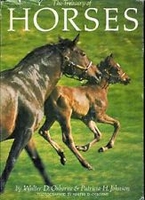
I have two coffee-table books on horses. When I started reading this one, I thought I might decide to keep it in place of the other- it's more up-to-date and has nicer quality photographs. But I'm holding onto both, because it turns out they have different focus. This book was an easier read, the prose is more casual and friendly and it's not as dense with information. Tells more about the biology and keeping of horses. It also has an overview of their history with mankind and a snapshot of various breeds, but gives me different details on those. For example, I noticed that the other book said Arabians have different body structure, the number of ribs and vertebrae, that makes them so unique among horses at one point scientists were going to consider them a different species. This book doesn't say anything about Arabian skeletons, but points out that Exmoor ponies, one of the oldest breeds, have a different jaw formation than other horses, including an extra molar. Also of note in a historic kind of sense- it tells of the Przewalski's horse being extinct in the wild, with captive populations growing in hopes that they would someday be introduced back into the wild. That is now a success story.
Great photographs. If I was still in the habit of making detailed drawings from photos, I'd definitely source these.
Rating: 3/5 128 pages, 1997
I have two coffee-table books on horses. When I started reading this one, I thought I might decide to keep it in place of the other- it's more up-to-date and has nicer quality photographs. But I'm holding onto both, because it turns out they have different focus. This book was an easier read, the prose is more casual and friendly and it's not as dense with information. Tells more about the biology and keeping of horses. It also has an overview of their history with mankind and a snapshot of various breeds, but gives me different details on those. For example, I noticed that the other book said Arabians have different body structure, the number of ribs and vertebrae, that makes them so unique among horses at one point scientists were going to consider them a different species. This book doesn't say anything about Arabian skeletons, but points out that Exmoor ponies, one of the oldest breeds, have a different jaw formation than other horses, including an extra molar. Also of note in a historic kind of sense- it tells of the Przewalski's horse being extinct in the wild, with captive populations growing in hopes that they would someday be introduced back into the wild. That is now a success story.
Great photographs. If I was still in the habit of making detailed drawings from photos, I'd definitely source these.
Rating: 3/5 128 pages, 1997
Jul 13, 2016
Fledgling
by Octavia Butler
The narrator wakes up alone, in the dark, with a severe head injury and a desperate hunger. She has no idea where she is, what has happened to her, or even her own name. She feeds on animals she catches (craving raw meat) and slowly healing, starts walking out of the forest. Gradually the names of items around her come back, and she starts to make sense of the world. But other things she cannot recall, so when she first meets a human she has no idea of their differences. She stumbles through the world unknowing, and so does the reader along with her.
She is Ina. An ancient species that lives by feeding on human blood, that cannot stand the daylight, that has extra-heightened senses and strength. Vampires, but not exactly the same as those in human folklore (even the characters in the book have misconceptions of the Ina). For example, they can't convert humans into their own kind, they are not undead, they raise their young and live in family groups separated by gender. The main character here- who looks like she's ten but in Ina years she's over fifty- gradually learns about herself as she comes across others of her own kind. It's an urgent matter, because almost as soon as she discovers what she is and where her people are, she finds out that someone is very seriously trying to kill them, and maybe they are targeting her in particular. Because it turns out she's not quite like the others of her kind. Her skin is darker and she can walk around in the daytime. She barely understands herself what these differences mean, but it's very apparent that someone else finds them threatening.
I liked the idea behind this book, and the themes it explores. Especially how it showed the Ina creating symbiotic relationships with the people they fed on- becoming bonded, giving something of value to the humans in return. Their social structure is different from what I expected, and it takes the humans in the story time to adjust to that as well. Her first human partner is a grown man but oddly enough I didn't find it disturbing to read descriptions of this to-all-appearances pre-pubsecent girl being in such a relationship. I suppose because I expected a vampire story to be creepy or disturbing in some way. And this one doesn't really have any gross factors. But the other reason might be because I never really felt connected to the characters, it never felt real or engaging. The prose often felt stiff, the descriptions were not of things that interested me, and even though the backstory and explanations came through other characters, it felt like they were just there to do that: lots of people standing around telling each other stuff, in the most deadpan ways. I admit I skipped an entire chapter in the middle because I was loosing interest, then picked up reading again and skimmed more near the end.
Read more about it in the reviews linked to below- I didn't even tell you some of the more interesting points because I'm tired now.
Rating: 2/5 316 pages, 2005
more opinions:
Things Mean a Lot
Speculative Book Review
Amy Reads
Savidge Reads
Rhapsody in Books
Literary Omnivore
The narrator wakes up alone, in the dark, with a severe head injury and a desperate hunger. She has no idea where she is, what has happened to her, or even her own name. She feeds on animals she catches (craving raw meat) and slowly healing, starts walking out of the forest. Gradually the names of items around her come back, and she starts to make sense of the world. But other things she cannot recall, so when she first meets a human she has no idea of their differences. She stumbles through the world unknowing, and so does the reader along with her.
She is Ina. An ancient species that lives by feeding on human blood, that cannot stand the daylight, that has extra-heightened senses and strength. Vampires, but not exactly the same as those in human folklore (even the characters in the book have misconceptions of the Ina). For example, they can't convert humans into their own kind, they are not undead, they raise their young and live in family groups separated by gender. The main character here- who looks like she's ten but in Ina years she's over fifty- gradually learns about herself as she comes across others of her own kind. It's an urgent matter, because almost as soon as she discovers what she is and where her people are, she finds out that someone is very seriously trying to kill them, and maybe they are targeting her in particular. Because it turns out she's not quite like the others of her kind. Her skin is darker and she can walk around in the daytime. She barely understands herself what these differences mean, but it's very apparent that someone else finds them threatening.
I liked the idea behind this book, and the themes it explores. Especially how it showed the Ina creating symbiotic relationships with the people they fed on- becoming bonded, giving something of value to the humans in return. Their social structure is different from what I expected, and it takes the humans in the story time to adjust to that as well. Her first human partner is a grown man but oddly enough I didn't find it disturbing to read descriptions of this to-all-appearances pre-pubsecent girl being in such a relationship. I suppose because I expected a vampire story to be creepy or disturbing in some way. And this one doesn't really have any gross factors. But the other reason might be because I never really felt connected to the characters, it never felt real or engaging. The prose often felt stiff, the descriptions were not of things that interested me, and even though the backstory and explanations came through other characters, it felt like they were just there to do that: lots of people standing around telling each other stuff, in the most deadpan ways. I admit I skipped an entire chapter in the middle because I was loosing interest, then picked up reading again and skimmed more near the end.
Read more about it in the reviews linked to below- I didn't even tell you some of the more interesting points because I'm tired now.
Rating: 2/5 316 pages, 2005
more opinions:
Things Mean a Lot
Speculative Book Review
Amy Reads
Savidge Reads
Rhapsody in Books
Literary Omnivore
Jul 6, 2016
The Bird King
an artist's notebook
by Shaun Tan
I love looking at how other artists work, and that's exactly what this gives me. For it's not a book you read, it's one you look at. One I want to keep on looking at. A selection of quick drawings and detailed studies, from Shaun Tan's sketchbooks. Some are working studies for film and book projects he did, others are drawings that grew a life of their own- titles suggesting a story behind them, although he claims the pictures originate first. There are drawings from life- I particularly like the ones from museum figurines- people around him, landscapes made into wild abstractions. My favorites are among the final pages, little idle doodles and quick jottings that are full of half-formed thought and lively action. It's really inspirational. It makes me want to go spend hours drawing.
Borrowed from the public library.
Rating: 4/5 128 pages, 2010
more opinions:
Waking Brain Cells
Charlotte's Library
Apples with Many Seeds
by Shaun Tan
I love looking at how other artists work, and that's exactly what this gives me. For it's not a book you read, it's one you look at. One I want to keep on looking at. A selection of quick drawings and detailed studies, from Shaun Tan's sketchbooks. Some are working studies for film and book projects he did, others are drawings that grew a life of their own- titles suggesting a story behind them, although he claims the pictures originate first. There are drawings from life- I particularly like the ones from museum figurines- people around him, landscapes made into wild abstractions. My favorites are among the final pages, little idle doodles and quick jottings that are full of half-formed thought and lively action. It's really inspirational. It makes me want to go spend hours drawing.
Borrowed from the public library.
Rating: 4/5 128 pages, 2010
more opinions:
Waking Brain Cells
Charlotte's Library
Apples with Many Seeds
Jul 5, 2016
The Girl's Guide to Homelessness
by Brianna Karp
There are many different reasons that people become homeless. Brianna Karp found herself in this situation in spite of being educated, skilled, and having kept regular jobs since she was a teen. She was laid off during the recession, and could not find new employment. Her friends were just as strained, and living with family did not work. She was molested as a child, routinely abused by her mother, and all her hard work did not earn her any savings- her mother took all her money and then some. She found herself in a parking lot, living in a trailer her estranged father had unexpectedly left behind when he committed suicide. I think I might have liked this book more if it was focused on how she put her life back together, which really is admirable considering what she went through. I don't at all judge her for having kept a laptop, a cell phone, a dog while she was homeless (eventually she found a new home for the dog). Other decisions really made me wonder. Early on the book is mostly about her attempts to escape the mindset and restrictions she'd been raised with- her family behind Jehovah's Witnesses- and deal with the abuse. Then the focus becomes a new relationship with a man she met online, who was an advocate for the homeless. She got a lot of attention and publicity from writing a blog (which I haven't seen) and then the future she'd hoped for starts to unravel. It's upsetting to read about some of the things that happened to her. It was a pretty good book and I like the way she writes, but I wish it had been more about the homeless situation. Instead I got rather tired of the drama near the end, and found myself skimming the last few chapters.
Borrowed from the public library.
Rating: 3/5 341 pages, 2011
more opinions:
Book Chase
Shannon's Book Bag
Book'd Out
Sarah Reads Too Much
There are many different reasons that people become homeless. Brianna Karp found herself in this situation in spite of being educated, skilled, and having kept regular jobs since she was a teen. She was laid off during the recession, and could not find new employment. Her friends were just as strained, and living with family did not work. She was molested as a child, routinely abused by her mother, and all her hard work did not earn her any savings- her mother took all her money and then some. She found herself in a parking lot, living in a trailer her estranged father had unexpectedly left behind when he committed suicide. I think I might have liked this book more if it was focused on how she put her life back together, which really is admirable considering what she went through. I don't at all judge her for having kept a laptop, a cell phone, a dog while she was homeless (eventually she found a new home for the dog). Other decisions really made me wonder. Early on the book is mostly about her attempts to escape the mindset and restrictions she'd been raised with- her family behind Jehovah's Witnesses- and deal with the abuse. Then the focus becomes a new relationship with a man she met online, who was an advocate for the homeless. She got a lot of attention and publicity from writing a blog (which I haven't seen) and then the future she'd hoped for starts to unravel. It's upsetting to read about some of the things that happened to her. It was a pretty good book and I like the way she writes, but I wish it had been more about the homeless situation. Instead I got rather tired of the drama near the end, and found myself skimming the last few chapters.
Borrowed from the public library.
Rating: 3/5 341 pages, 2011
more opinions:
Book Chase
Shannon's Book Bag
Book'd Out
Sarah Reads Too Much
Jul 3, 2016
The Hidden Half of Nature
Microbial Roots of Life and Health
by David R. Montgomery and Anne Biklé
The smallest living things on our planet can have the greatest impact on all those life forms we do see. This book is about microbes, what they do and how to cultivate them. In the soil, and in us. The first half is about soil microbes, how they interact with and benefit plants. How industrial agriculture decimates them. How that affects our health in turn, because the plants we eat have less micronutrients than they used to. The authors became interested in soil life when starting a new garden on barren property. Biklé started piling organic materials onto the soil, mulching with wood chips and whatever else she could find, and the results were stunning. The more she fed the soil, the healthier the plants got. The second half of the book discusses the microbes that live in our gut. Interest in this was triggered when Biklé herself was diagnosed with cancer and became concerned with how diet affected the climate of microbes inside her digestive system, which in turn can have serious implications on overall health. I'm amazed at the amount of details in this book, at connections between things I never realized influence each other. It's dense with information, but presented in a fashion that's easy enough for a casual reader like myself to understand (although it does merit a second or third read: I'm definitely shelving this one to keep).
The range of subjects discussed include how microbes evolved (I had never heard of the archaea before and they are one of the major groups), the development of vaccines (stories and connections I'd never heard of before here, too, although I recognized a lot from reading of Jonas Salk), how germ theory isn't quite what we imagined (or at least the basics I recall learning in highschool), how the populations of microbes in the soil and in our gut work with each other, agricultural practices from the past and how trends are (hopefully) changing, how what we eat changes the microbiome within us, how to encourage a good balance of them, etc.
There's no way I can explain this book in depth: you just have to read it! I found it very eye-opening, and incredibly encouraging too. It backs up and explains a lot of the things I've been trying to accomplish in my garden in my own small way, and spurs me with desire to change my eating habits for the better.
I'm really glad my father gave me a copy of this book.
Rating: 5/5 309 pages, 2016
by David R. Montgomery and Anne Biklé
The smallest living things on our planet can have the greatest impact on all those life forms we do see. This book is about microbes, what they do and how to cultivate them. In the soil, and in us. The first half is about soil microbes, how they interact with and benefit plants. How industrial agriculture decimates them. How that affects our health in turn, because the plants we eat have less micronutrients than they used to. The authors became interested in soil life when starting a new garden on barren property. Biklé started piling organic materials onto the soil, mulching with wood chips and whatever else she could find, and the results were stunning. The more she fed the soil, the healthier the plants got. The second half of the book discusses the microbes that live in our gut. Interest in this was triggered when Biklé herself was diagnosed with cancer and became concerned with how diet affected the climate of microbes inside her digestive system, which in turn can have serious implications on overall health. I'm amazed at the amount of details in this book, at connections between things I never realized influence each other. It's dense with information, but presented in a fashion that's easy enough for a casual reader like myself to understand (although it does merit a second or third read: I'm definitely shelving this one to keep).
The range of subjects discussed include how microbes evolved (I had never heard of the archaea before and they are one of the major groups), the development of vaccines (stories and connections I'd never heard of before here, too, although I recognized a lot from reading of Jonas Salk), how germ theory isn't quite what we imagined (or at least the basics I recall learning in highschool), how the populations of microbes in the soil and in our gut work with each other, agricultural practices from the past and how trends are (hopefully) changing, how what we eat changes the microbiome within us, how to encourage a good balance of them, etc.
There's no way I can explain this book in depth: you just have to read it! I found it very eye-opening, and incredibly encouraging too. It backs up and explains a lot of the things I've been trying to accomplish in my garden in my own small way, and spurs me with desire to change my eating habits for the better.
I'm really glad my father gave me a copy of this book.
Rating: 5/5 309 pages, 2016
Jun 30, 2016
The Treasury of Horses
by Walter D. Osborne and Patricia H. Johnson
One of those older coffee-table style books I picked up at a library discard sale years ago. It's an overview of the horse- the origins of many different breeds, how they were developed and used through history. The presence of horses in mythology and art, their historic uses in warfare, agriculture, betting sports and now mostly as a leisure occupation. Some of it is dry reading- I started to loose attention when names of famous equines and horsemen paraded across the page. But the descriptions of how different breeds were developed and why, details on the evolution of hunting sports, explanations on how horse shows are run, harness racing and lots of other stuff was interesting just because I know so little about it. I didn't know, for example, how different from other horses is the physiology of the Arabian. Anyone really into horses probably already knows more than this book offers- it's from the sixties after all. Still the pictures are good in spite of showing their age, and I learned more than I expected to.
Rating: 3/5 251 pages, 1966
One of those older coffee-table style books I picked up at a library discard sale years ago. It's an overview of the horse- the origins of many different breeds, how they were developed and used through history. The presence of horses in mythology and art, their historic uses in warfare, agriculture, betting sports and now mostly as a leisure occupation. Some of it is dry reading- I started to loose attention when names of famous equines and horsemen paraded across the page. But the descriptions of how different breeds were developed and why, details on the evolution of hunting sports, explanations on how horse shows are run, harness racing and lots of other stuff was interesting just because I know so little about it. I didn't know, for example, how different from other horses is the physiology of the Arabian. Anyone really into horses probably already knows more than this book offers- it's from the sixties after all. Still the pictures are good in spite of showing their age, and I learned more than I expected to.
Rating: 3/5 251 pages, 1966
Jun 28, 2016
Summer of Fire
Yellowstone 1988
by Patricia Lauber
In 1988, Yellowstone National Park had not seen any huge wildfires in over 200 years. Fire was managed in the park- manmade fires were put out, while naturally occurring ones were allowed to burn unless they threatened people or buildings. This book tells about the events during the wildfires of 1988, when an entire third of the park burned. It describes the dangers and benefits of wildfire, and how the park recovered.
Because it did. I was twelve when those fires occured, I had visited Yellowstone and I remember feeling devastated at the news. Reading this book puts it all in perspective- the land actually recovers fairly quickly from wildfire. Most animal species survived, some benefitted greatly (predators ate smaller mammals on the run, insects moved in to take advantage of dying trees, etc). The lodgepole pines, in particular, start to die back until fire revives the forests by allowing younger trees to thrive. Certain seeds will not germinate unless prompted to by high temperatures caused by fire. I was surprised to learn about the unique way aspen thickets grow- they send up shoots from root systems that are often interconnected throughout the grove. Aspen seeds are troublesome to germinate, and the young trees easily shaded out. So most aspen in the park did not grow from seed but instead exist because of stands that have been growing back from the root systems for hundreds of years. I think that's amazing.
This book is a bit old- I can tell from the quality of the photographs alone, although they are very nice. It's also a juvenile nonfiction book, which I didn't realize until I started reading it. As such, it doesn't offer a lot of in-depth information and poses lots of unanswered questions, because when it was written scientists were still studying the effects of the blaze and how the Yellowstone plants and wildlife recovered from fire. (In some cases, very systematically- blocking off sections that hadn't been burned, planting them with certain seeds or not, observing later to see what grew and didn't after the fire, etc.) It would be nice to know more of the answers, so it prompts me to look more stuff up online. A nice, fairly informative read I got through in one sitting.
Rating: 3/5 64 pages, 1991
by Patricia Lauber
In 1988, Yellowstone National Park had not seen any huge wildfires in over 200 years. Fire was managed in the park- manmade fires were put out, while naturally occurring ones were allowed to burn unless they threatened people or buildings. This book tells about the events during the wildfires of 1988, when an entire third of the park burned. It describes the dangers and benefits of wildfire, and how the park recovered.
Because it did. I was twelve when those fires occured, I had visited Yellowstone and I remember feeling devastated at the news. Reading this book puts it all in perspective- the land actually recovers fairly quickly from wildfire. Most animal species survived, some benefitted greatly (predators ate smaller mammals on the run, insects moved in to take advantage of dying trees, etc). The lodgepole pines, in particular, start to die back until fire revives the forests by allowing younger trees to thrive. Certain seeds will not germinate unless prompted to by high temperatures caused by fire. I was surprised to learn about the unique way aspen thickets grow- they send up shoots from root systems that are often interconnected throughout the grove. Aspen seeds are troublesome to germinate, and the young trees easily shaded out. So most aspen in the park did not grow from seed but instead exist because of stands that have been growing back from the root systems for hundreds of years. I think that's amazing.
This book is a bit old- I can tell from the quality of the photographs alone, although they are very nice. It's also a juvenile nonfiction book, which I didn't realize until I started reading it. As such, it doesn't offer a lot of in-depth information and poses lots of unanswered questions, because when it was written scientists were still studying the effects of the blaze and how the Yellowstone plants and wildlife recovered from fire. (In some cases, very systematically- blocking off sections that hadn't been burned, planting them with certain seeds or not, observing later to see what grew and didn't after the fire, etc.) It would be nice to know more of the answers, so it prompts me to look more stuff up online. A nice, fairly informative read I got through in one sitting.
Rating: 3/5 64 pages, 1991
The Day the Crayons Quit
by Drew Daywalt
I was babysitting for a friend and saw this book on her shelf. Pulled it out to read (just to myself, the kids weren't interested).
A little boy finds a stack of letters from his personified crayons. They each have a complaint. Some are tired of being over-used and worn down to stubs, others feel neglected. Yellow and orange argue over who should be used to color the sun, beige is unhappy at being second-best to brown, pink is upset at being considered a "girl" color (relegated to little sister borrowing it for princesses and unicorns), black is bored with only being used to make outlines. One crayon even criticizes the boy's ineptness at staying in the lines, and another freaks out because part of its wrapper is torn off and it feels naked. They really are a whiny bunch (except for green who seems content) but I got a chuckle out of it all- and thought it a good point that the crayons' complaints were about stereotypical uses. In the end the boy makes one big picture applying the crayon colors to all kinds of different things, which makes them happy.
I thought the book was funny, made a good point against stereotypes (even if it's just for what color things should be) and showed how when the crayons made their feelings known, things changed. I think my older daughter would be amused by it. I haven't tried it on my younger one. However, if you poke around some other reviews online (there's lots on amzn) you'll find many parents and teachers don't like this book. They think it shows kids that whining gets them what they want, and comes across with a lot of negativity. I think it's all in how you present it (or maybe on the child you read it to).
Rating: 3/5 40 pages, 2013
more opinions:
Rhapsody in Books
Playing by the Book
I was babysitting for a friend and saw this book on her shelf. Pulled it out to read (just to myself, the kids weren't interested).
A little boy finds a stack of letters from his personified crayons. They each have a complaint. Some are tired of being over-used and worn down to stubs, others feel neglected. Yellow and orange argue over who should be used to color the sun, beige is unhappy at being second-best to brown, pink is upset at being considered a "girl" color (relegated to little sister borrowing it for princesses and unicorns), black is bored with only being used to make outlines. One crayon even criticizes the boy's ineptness at staying in the lines, and another freaks out because part of its wrapper is torn off and it feels naked. They really are a whiny bunch (except for green who seems content) but I got a chuckle out of it all- and thought it a good point that the crayons' complaints were about stereotypical uses. In the end the boy makes one big picture applying the crayon colors to all kinds of different things, which makes them happy.
I thought the book was funny, made a good point against stereotypes (even if it's just for what color things should be) and showed how when the crayons made their feelings known, things changed. I think my older daughter would be amused by it. I haven't tried it on my younger one. However, if you poke around some other reviews online (there's lots on amzn) you'll find many parents and teachers don't like this book. They think it shows kids that whining gets them what they want, and comes across with a lot of negativity. I think it's all in how you present it (or maybe on the child you read it to).
Rating: 3/5 40 pages, 2013
more opinions:
Rhapsody in Books
Playing by the Book
Jun 27, 2016
Monkey Town
the Summer of the Scopes Trial
by Ronald Kidd
Middle-grade novel about a famous trial that was staged in Dayton, Tennessee in 1925. The author had a friend whose mother was the girl Frances featured in the story; he gathered details doing interviews with people who actually remembered the trial from seventy years before. (A brief afterword delineates some of what was fact/what was fiction here).
In the novel, Frances is seventeen and swooning over the young schoolteacher Johnny Scopes. Her father owns the local drugstore, and he's always looking for ways to drum up business. Tennessee law at the time forbade state-run schools from teaching evolution, but the law had never been enforced. Scopes was a basketball and football coach. At one point he substituted a biology class and assigned some reading from the state-required textbook that included a chapter on Darwin's theory of evolution. Some scheming men (including Frances' father) saw this as reason to put him on trial for teaching evolution. It was all a stunt to get publicity and revitalize their quiet town. Scopes agreed to play his part. In fact (from a bit other reading I did online) it seems he encouraged students to testify against him. This story shows it all going sour on him, though in the end he had his own share of fame. Reporters and journalists swarm the town, everyone gets involved in heated arguments about evolution vs. creationism. Frances starts to question everything, too. But her main preoccupation is this infatuation with Johnny. It doesn't go anywhere. He always treats her like a kid.
And in the end, I got bored. I skimmed the last few chapters. I had heard of the Scopes trial before, but I was disappointed to discover it was all a big set-up. Frances gets enough glimpses of the trial to make a fair description of what happened, but those details did not quite hold my interest. Her child's view of how the townspeople respond to the implications of the trial could have been refreshing; there is plenty of contrast between small-town good-at-heart folks and big-city snobs that criticize and insult them. Frances also sees flaws among her familiar neighbors- those who want to sabotage the trial or who attack others for their beliefs. She's upset at discovering a side to her own father she never recognized before- he's often just out to make a buck. But her character felt rather flat to me. She was always questioning the status quo, always mooning over Johnny Scopes, and that was about it. I wanted a bit more depth. I'm probably being too hard on the book, after all it is written for middle grade or YA readers -kind of straddles the age groups in a way. The writing style and simplicity seem more appropriate for the younger set, but the discussions about God, evolution, questioning parental integrity, even some brief showing of early feminism, are more serious subject matter.
Rating: 2/5 259 pages, 2006
by Ronald Kidd
Middle-grade novel about a famous trial that was staged in Dayton, Tennessee in 1925. The author had a friend whose mother was the girl Frances featured in the story; he gathered details doing interviews with people who actually remembered the trial from seventy years before. (A brief afterword delineates some of what was fact/what was fiction here).
In the novel, Frances is seventeen and swooning over the young schoolteacher Johnny Scopes. Her father owns the local drugstore, and he's always looking for ways to drum up business. Tennessee law at the time forbade state-run schools from teaching evolution, but the law had never been enforced. Scopes was a basketball and football coach. At one point he substituted a biology class and assigned some reading from the state-required textbook that included a chapter on Darwin's theory of evolution. Some scheming men (including Frances' father) saw this as reason to put him on trial for teaching evolution. It was all a stunt to get publicity and revitalize their quiet town. Scopes agreed to play his part. In fact (from a bit other reading I did online) it seems he encouraged students to testify against him. This story shows it all going sour on him, though in the end he had his own share of fame. Reporters and journalists swarm the town, everyone gets involved in heated arguments about evolution vs. creationism. Frances starts to question everything, too. But her main preoccupation is this infatuation with Johnny. It doesn't go anywhere. He always treats her like a kid.
And in the end, I got bored. I skimmed the last few chapters. I had heard of the Scopes trial before, but I was disappointed to discover it was all a big set-up. Frances gets enough glimpses of the trial to make a fair description of what happened, but those details did not quite hold my interest. Her child's view of how the townspeople respond to the implications of the trial could have been refreshing; there is plenty of contrast between small-town good-at-heart folks and big-city snobs that criticize and insult them. Frances also sees flaws among her familiar neighbors- those who want to sabotage the trial or who attack others for their beliefs. She's upset at discovering a side to her own father she never recognized before- he's often just out to make a buck. But her character felt rather flat to me. She was always questioning the status quo, always mooning over Johnny Scopes, and that was about it. I wanted a bit more depth. I'm probably being too hard on the book, after all it is written for middle grade or YA readers -kind of straddles the age groups in a way. The writing style and simplicity seem more appropriate for the younger set, but the discussions about God, evolution, questioning parental integrity, even some brief showing of early feminism, are more serious subject matter.
Rating: 2/5 259 pages, 2006
Jun 25, 2016
book sale haul
I had a grand day at a giant used-book sale that helps fund public libraries in the next town over. Spent the entire morning there, happily getting a crick in my neck and shoving a box that gradually got heavier, along the floor with my foot. I haven't done this kind of thing in three years (after all, there are still over a hundred and fifty unread books in my bedroom) so it felt like quite a splurge. I always try to be really picky, but of course you can't beat the price or the cause, so...
Found these which I've been wanting to read- quite a few are on my current TBR. The top two I've just heard about somewhere- the name Pyewacket is so lodged in my memory I must have heard of it when I was a kid, I really feel like it was mentioned by a character in another book, but no idea which. Whatever You Do, Don't Run is a book I saw in a shop during travels, more than a year ago. A few gardening books I've seen on other blogs, George Adamson's book I've been wanting to read since I finished The Searching Spirit and of course I have to mention Wendell Berry! My father is a big fan of Wendell Berry and has been telling me to read his books for years now, but I never got around to it yet. This is the very title that has been recommended to me. (Now I'm going to feel obligated to read it soon since I mentioned it here!)
These books I grabbed because I know the authors. The top one is My Way Was North by Frank Dufresne (author of No Room for Bears, a book I recall from growing up- it's on my dad's shelf). I've always wanted to read more Nevil Shute, more Norah Lofts (the one you can't read the spine of is her A Wayside Tavern). I can't believe I found a book by Attenborough. I love his films, haven't read any of his writing yet.
And these books I just got because they looked interesting! Snapper is fiction featuring a guy who studies birds. A few gardening books in here (memoir type), a book on aquarium fish. Roadrunners just because I don't know much about them. What's That Pig Outdoors? is about the author's experience with blindness.
These I already own but I wanted to replace some old falling-apart mass market paperbacks. It's becoming more and more common that I spot dear favorites at the books sales. I always want to snatch them up and buy them so I can give them to someone, but I just couldn't afford to. But one I pulled out from the press of spines and left it sitting faceup across them all. Maybe someone else will notice it and take it home and find out how good it is- Dalene Matthee's Circles in A Forest. Someday I will read it again and write about here. I still remember distinctly a day in high school when I was reading this in class (sitting in a mobile classroom because the buildings were being remodeled- it was hot) and the teacher plucked up my book to comment on it in front of the class. He asked me to tell everyone what it was about but I was rather tongue-tied!
Not pictured: four books I got for my kid.
Found these which I've been wanting to read- quite a few are on my current TBR. The top two I've just heard about somewhere- the name Pyewacket is so lodged in my memory I must have heard of it when I was a kid, I really feel like it was mentioned by a character in another book, but no idea which. Whatever You Do, Don't Run is a book I saw in a shop during travels, more than a year ago. A few gardening books I've seen on other blogs, George Adamson's book I've been wanting to read since I finished The Searching Spirit and of course I have to mention Wendell Berry! My father is a big fan of Wendell Berry and has been telling me to read his books for years now, but I never got around to it yet. This is the very title that has been recommended to me. (Now I'm going to feel obligated to read it soon since I mentioned it here!)
These books I grabbed because I know the authors. The top one is My Way Was North by Frank Dufresne (author of No Room for Bears, a book I recall from growing up- it's on my dad's shelf). I've always wanted to read more Nevil Shute, more Norah Lofts (the one you can't read the spine of is her A Wayside Tavern). I can't believe I found a book by Attenborough. I love his films, haven't read any of his writing yet.
And these books I just got because they looked interesting! Snapper is fiction featuring a guy who studies birds. A few gardening books in here (memoir type), a book on aquarium fish. Roadrunners just because I don't know much about them. What's That Pig Outdoors? is about the author's experience with blindness.
These I already own but I wanted to replace some old falling-apart mass market paperbacks. It's becoming more and more common that I spot dear favorites at the books sales. I always want to snatch them up and buy them so I can give them to someone, but I just couldn't afford to. But one I pulled out from the press of spines and left it sitting faceup across them all. Maybe someone else will notice it and take it home and find out how good it is- Dalene Matthee's Circles in A Forest. Someday I will read it again and write about here. I still remember distinctly a day in high school when I was reading this in class (sitting in a mobile classroom because the buildings were being remodeled- it was hot) and the teacher plucked up my book to comment on it in front of the class. He asked me to tell everyone what it was about but I was rather tongue-tied!
Not pictured: four books I got for my kid.
Jun 22, 2016
Navy Seal Dogs
My Tale of Training Canines for Combat
by Mike Ritland
This book is about how military working dogs are trained and used. The author served as a Navy Seal and then became instrumental in training dogs for government and military use. There is a brief history of how dogs have been used in various wars in the appendix (which put into perspective some of the things I read in Cracker!) Main part of the book describes in detail how the dogs are trained. Ritland describes how carefully the dogs are bred and chosen, and the regiment they go through to prepare them for specific kinds of work. I found all this interesting, although some aspects of the training seemed to be skipped over or not explained very thoroughly. I think I found out why later on: this book is a re-issue of an earlier one the author wrote titled Trident K9 Warriors. It has been edited for a juvenile audience. That said, I didn't find the writing style too simplified, and it kept me mostly interested throughout.
The second part of the book describes a number of handlers and the dogs they were paired with. To me it seemed like it went into more detail about the backgrounds of the men in service than describing the work the dogs actually did. The brief stories describe some incidents with dogs and handlers in Iraq, Afghanistan and other locations in the Middle East. It's pretty amazing what these animals can do. Impressive enough that they can scent and locate hidden bombs or weapons, alerting very specifically so that soldiers can avoid or address the danger. But then I read about a dog which indicated he'd found the scent of explosives- the men uncovered nothing. Through other means they found out the dog was indicating the exact location where explosives had recently been made. Even though the items were no longer there, this information was invaluable to the team. I was also enlightened to learn that military (and police) dogs trained to apprehend people actually save their lives- whether criminals, the enemy or an innocent. In many situations a cop or soldier would shoot at a presumably dangerous person fleeing or hiding- but if there is a dog who can apprehend them instead- holding and disarming them, but not trained to kill- then using firearms can be avoided.
At first glance through the book I mistakenly assumed that the dogs in the pictures were German shepherds. In the past, labrador retrievers, dobermans, rottweilers and pit bulls have also been used by the miliatry. Turns out most of the dogs in this book are Belgian Malinois, and the author explains why this breed is the best for his purpose. At the end there is a brief chapter about his foundation that helps find appropriate homes for retired military dogs- and cares for them in his training kennels in the meantime.
I kind of wish I'd found the earlier version of this book first. I probably would have appreciated it a bit more- but reviews tell me it has nearly all the same material, so I don't know if I would get much out of reading it now.
Rating: 3/5 190 pages, 2013
by Mike Ritland
This book is about how military working dogs are trained and used. The author served as a Navy Seal and then became instrumental in training dogs for government and military use. There is a brief history of how dogs have been used in various wars in the appendix (which put into perspective some of the things I read in Cracker!) Main part of the book describes in detail how the dogs are trained. Ritland describes how carefully the dogs are bred and chosen, and the regiment they go through to prepare them for specific kinds of work. I found all this interesting, although some aspects of the training seemed to be skipped over or not explained very thoroughly. I think I found out why later on: this book is a re-issue of an earlier one the author wrote titled Trident K9 Warriors. It has been edited for a juvenile audience. That said, I didn't find the writing style too simplified, and it kept me mostly interested throughout.
The second part of the book describes a number of handlers and the dogs they were paired with. To me it seemed like it went into more detail about the backgrounds of the men in service than describing the work the dogs actually did. The brief stories describe some incidents with dogs and handlers in Iraq, Afghanistan and other locations in the Middle East. It's pretty amazing what these animals can do. Impressive enough that they can scent and locate hidden bombs or weapons, alerting very specifically so that soldiers can avoid or address the danger. But then I read about a dog which indicated he'd found the scent of explosives- the men uncovered nothing. Through other means they found out the dog was indicating the exact location where explosives had recently been made. Even though the items were no longer there, this information was invaluable to the team. I was also enlightened to learn that military (and police) dogs trained to apprehend people actually save their lives- whether criminals, the enemy or an innocent. In many situations a cop or soldier would shoot at a presumably dangerous person fleeing or hiding- but if there is a dog who can apprehend them instead- holding and disarming them, but not trained to kill- then using firearms can be avoided.
At first glance through the book I mistakenly assumed that the dogs in the pictures were German shepherds. In the past, labrador retrievers, dobermans, rottweilers and pit bulls have also been used by the miliatry. Turns out most of the dogs in this book are Belgian Malinois, and the author explains why this breed is the best for his purpose. At the end there is a brief chapter about his foundation that helps find appropriate homes for retired military dogs- and cares for them in his training kennels in the meantime.
I kind of wish I'd found the earlier version of this book first. I probably would have appreciated it a bit more- but reviews tell me it has nearly all the same material, so I don't know if I would get much out of reading it now.
Rating: 3/5 190 pages, 2013
Subscribe to:
Posts (Atom)